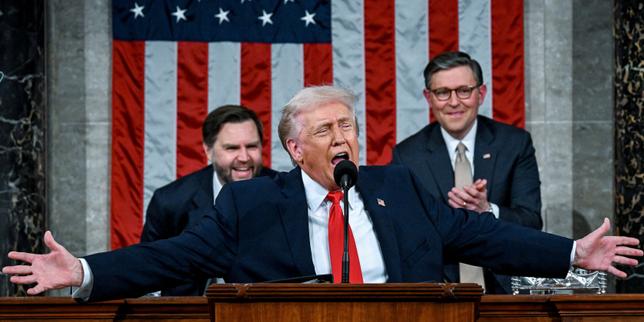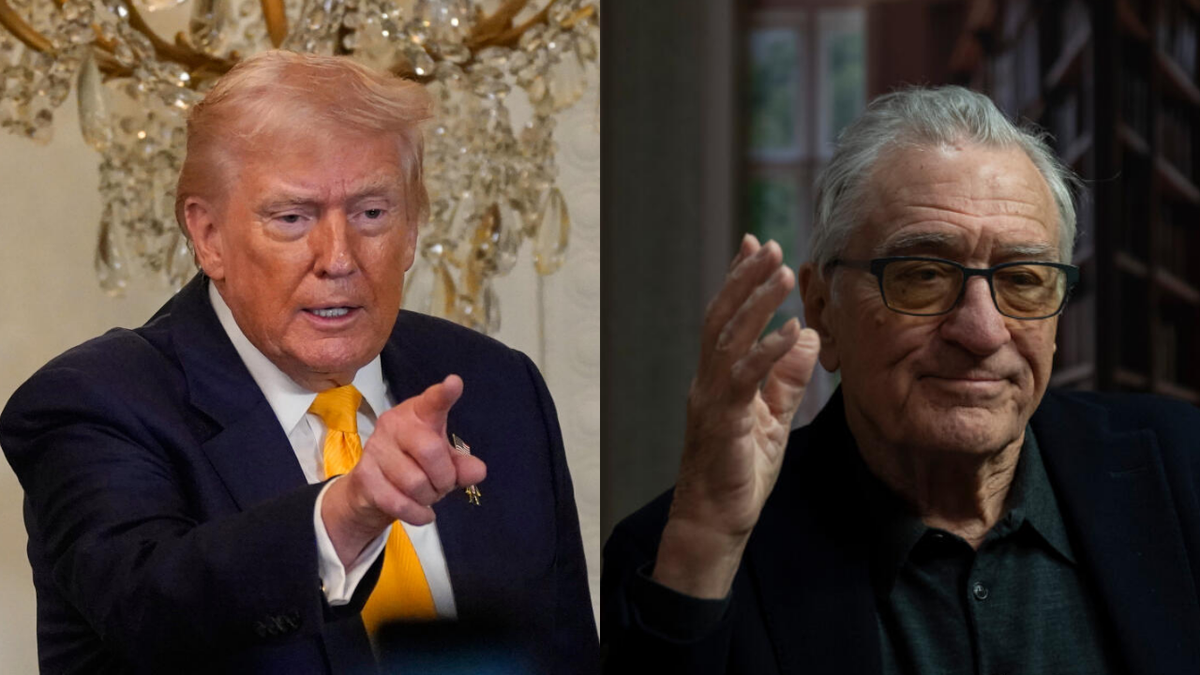
The media treats the ongoing spat between Robert De Niro and Donald Trump as a tragic symptom of a fractured nation. They call it "the breakdown of civil discourse." They lament the "lowering of the bar." They are, as usual, completely wrong.
This isn’t a tragedy. It’s a masterclass in brand-to-brand synergy.
While the "demented" and "sick" labels fly back and forth, both men are laughing all the way to the bank—not because they like each other, but because they are the same creature. They are two New York relics who understand that in the current attention economy, conflict isn't just a byproduct of success; it is the product itself.
Stop asking why they can't get along. They can’t afford to.
The Mutual Parasitism of Outrage
The lazy consensus suggests that Trump and De Niro are polar opposites. One is a populist politician; the other is a cinematic legend. In reality, they are locked in a symbiotic embrace.
When Trump calls De Niro "demented" on Truth Social, he isn't trying to win a debate. He is feeding his base exactly what they crave: a populist hero taking a swing at the "out-of-touch Hollywood elite." It’s a layup. It’s cheap, effective marketing that keeps his name at the top of the news cycle without him having to spend a dime on ad buys.
Conversely, when De Niro stands outside a courthouse and calls Trump a "clown," he isn't just being a concerned citizen. He is reinforcing his brand as the ultimate moral arbiter of the "Old Guard." For a man whose recent filmography includes Dirty Grandpa and The War with Grandpa, these political outbursts provide a gravitas that his agents haven't been able to secure in years.
I’ve seen this play out in corporate boardrooms for decades. When two competing brands realize they are losing market share to younger, more agile competitors, they pick a fight with each other. It forces the public to choose a side, effectively erasing the "none of the above" option. By making the conversation about Trump vs. De Niro, they ensure that the conversation is never about The Relevance of 80-year-olds in 2026.
The Death of the "Quiet Legend"
There is a persistent myth that celebrities used to be "above" this kind of brawling. People point to the era of Cary Grant or Paul Newman as a time of dignified silence. That world is dead, and it was killed by the democratization of the microphone.
De Niro isn't "diminishing his legacy" by screaming on a street corner. He is protecting it. In a world where a 19-year-old YouTuber has more cultural reach than an Oscar winner, the only way for a legacy star to remain relevant is to attach themselves to the most high-voltage wire available. Right now, that wire is Donald Trump.
The Math of Conflict
Look at the metrics. Every time these two trade insults:
- Search Volume Spikes: Data shows that mentions of De Niro’s latest projects or Trump’s latest rallies jump by triple-digit percentages following a "feud" event.
- Fundraising/Ticket Sales: Outrage is a conversion tool. Trump sees a spike in small-dollar donations; De Niro sees a surge in "prestige" interest that keeps him in the conversation for awards and high-end roles.
- Network Efficiency: The media gets a week of "analysis" for free. It’s a closed loop where everyone wins except the consumer of the news.
Why "Civil Discourse" is a Failed Business Model
The most annoying question I hear is: "Why can't they just talk about policy/film craft?"
Because nobody buys that.
The "People Also Ask" sections of search engines are filled with variations of "Why does De Niro hate Trump?" and "What did Trump say about De Niro?" People aren't searching for "De Niro's thoughts on Method Acting" or "Trump's 2026 tax proposal." They want the blood.
If De Niro gave a nuanced, 40-minute interview on the dangers of populism, it would get 50,000 views on a niche YouTube channel. If he calls Trump "sick," it gets 50 million views across every major network.
The Outsider’s Edge: Why We Fall For It
The trick is that we want to believe the anger is real. We want to believe that De Niro is a "brave voice" or that Trump is "telling it like it is."
The truth is far more clinical. They are both performers. One is an actor playing a politician; the other is an actor playing a hero. They are following the same script that has governed New York tabloid culture since the 1970s. It’s the "Five Families" logic applied to the digital age: keep the fight in the family, keep the public looking at the fight, and nobody looks at the ledger.
The Scars of the Industry
I’ve sat in meetings where the strategy was explicitly to "piss off the right people." If you aren't being called "demented" by one side or "a fascist" by the other, you are invisible. Being liked is a mid-tier strategy. Being hated by the "right" person is elite-tier branding.
De Niro knows this. Trump invented this.
Stop Waiting for the "Grown-ups" to Arrive
The mistake you’re making is thinking there’s a version of this story where someone "wins." There is no winner because the game is rigged to continue forever.
If Trump goes away, De Niro loses his most effective foil. If De Niro stops talking, Trump loses one of his most reliable "elite" punching bags. They are two sides of the same gold coin. They need the noise. They need the "sick" and the "demented" labels because the alternative is silence.
And in their business, silence is the only thing that actually kills.
Turn off the news. Stop analyzing the "rhetoric." Stop looking for the "deeper meaning" in a street fight between two men who have spent their entire lives perfecting the art of the sell.
The feud isn't the problem. Your belief that it's anything more than a PR stunt is.
Go watch a movie. Or don't. Just stop pretending this is politics. It’s theater. And you’re the one paying for the tickets.
Stop giving them your attention and watch how fast they both disappear.