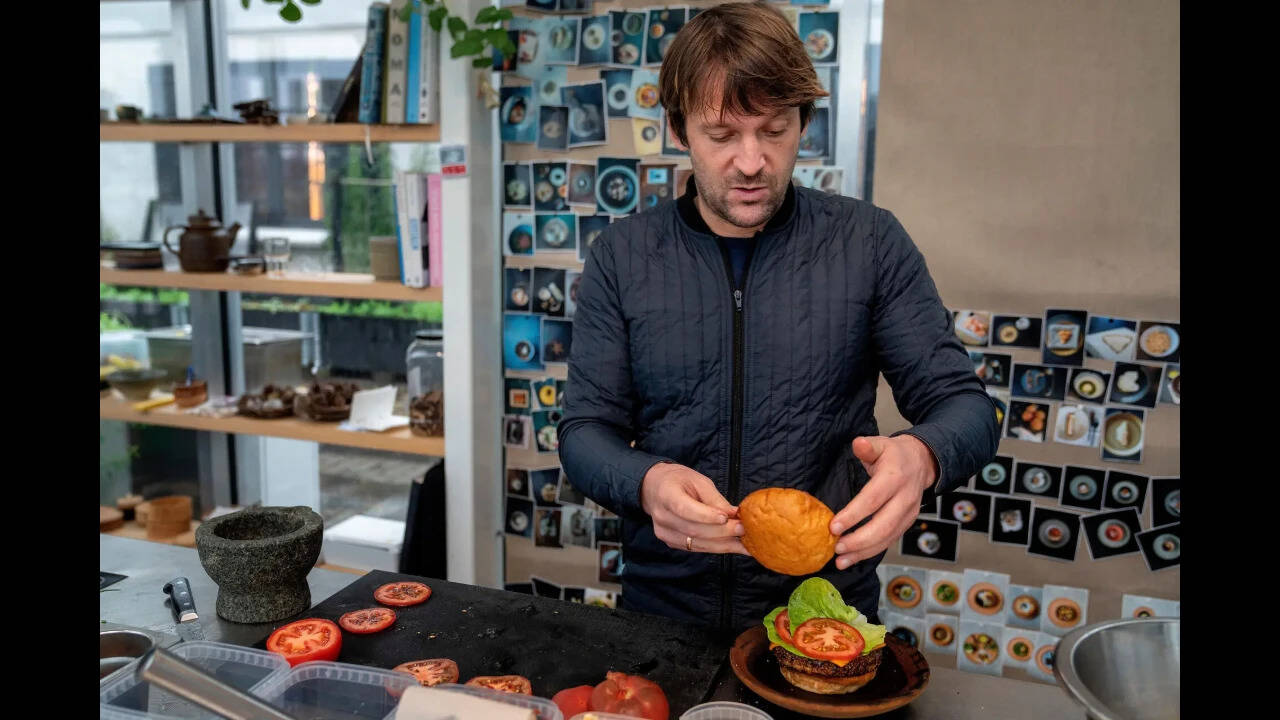
The air in a three-Michelin-star kitchen does not smell like rosemary or roasting duck. It smells like ozone and suppressed adrenaline. It is the scent of a high-voltage wire vibrating just before it snaps. For decades, the world’s most celebrated chef, René Redzepi, was the current running through that wire.
Then, he turned the power off.
The resignation of Redzepi from Noma—a restaurant that didn’t just serve food, but defined a decade of global culture—wasn’t a standard corporate exit. There were no gold watches or polite press releases about spending more time with family. Instead, there was a confession. The man who taught the world to eat moss and ants admitted that the culture he built was, at its core, broken. He walked away from the altar of his own making because the cost of the sacrifice had become too high.
The Anatomy of a Screamer
To understand why this matters, you have to understand the "Screamer."
In the high-pressure ecosystem of elite gastronomy, the Screamer is a trope, a legend, and a nightmare. He is the chef who throws copper pots when a brunoise is two millimeters off. He is the genius whose brilliance supposedly justifies the psychological evisceration of a twenty-year-old intern. For years, the culinary world accepted this as a law of nature. You wanted the best meal in the world? Someone had to bleed for it.
Redzepi was the king of this world. Noma, located in Copenhagen, was voted the best restaurant in the world five times. It was a pilgrimage site. But behind the fermented plums and the reindeer heart lay a darker reality. Allegations of a toxic, abusive work environment had been circling the restaurant like sharks for years. The "Noma style" wasn't just about foraging; it was about a grueling, unsustainable pace that chewed through human beings.
When Redzepi finally stepped down, his words were startlingly blunt. He didn't just apologize for specific incidents. He acknowledged that an apology is not enough. He admitted that the very model of the modern fine-dining kitchen is "unsustainable."
Consider a hypothetical young chef named Elias. Elias spends months' salary to fly to Copenhagen. He works eighteen hours a day for free, picking the stems off individual leaves of wild thyme until his fingers cramp into claws. He does this because he believes he is part of a revolution. But when the "god" of the kitchen screams in his face for a minor error, the revolution starts to feel like a sweatshop with better plating.
Redzepi’s departure is the moment the god looked in the mirror and realized he was the villain of the story.
The Invisible Stakes of a Tasting Menu
We often treat restaurants as theater. We pay for the performance, the lighting, and the taste. We rarely think about the supply chain of misery that powers the "experience."
The business of Noma was built on a foundation of unpaid labor. Hundreds of stagiaires—interns—flew in from across the globe to work for the prestige of having the Noma name on their resume. They were the engine of the restaurant. When Noma finally started paying its interns in 2022, the labor costs added approximately $50,000 to the monthly overhead.
The math of "genius" suddenly stopped adding up.
This isn't just about one man in Copenhagen. It’s about the lie we’ve told ourselves about greatness. We’ve been conditioned to believe that brilliance requires brutality. We see it in tech founders who sleep under their desks and demand their employees do the same. We see it in film directors who traumatize actresses to get a "real" performance. We’ve turned the "tortured genius" into a cultural hero, forgetting that the people being tortured are usually the ones working for the genius.
Redzepi’s resignation is a crack in that facade. He didn't leave because he ran out of ideas. He left because he realized that the "Tenth Muse"—the spirit of the kitchen—was actually a ghost of his own making.
The Weight of the Apology
"An apology is not enough."
Those five words carry more weight than the thousands of apologies that preceded them in the "Me Too" era. Most public figures apologize to save their careers. They treat the apology as a transaction: I give you these words, you give me back my reputation.
Redzepi’s statement suggests something different. It suggests a realization that you cannot fix a house built on a rotten foundation by simply repainting the walls. You have to tear the house down.
The industry is currently reeling. If the most successful chef of a generation says the system is broken, where does that leave the thousands of smaller restaurants trying to emulate him? The stakes are not just about who gets a Michelin star. The stakes are about the mental health, dignity, and physical well-being of millions of hospitality workers worldwide.
The "Noma era" is ending, and it’s ending not with a bang, but with a weary sigh of a man who realized his legacy was curdling.
The New Recipe
What happens when the North Star of the culinary world goes dark?
For a long time, the kitchen was a paramilitary organization. It was "Yes, Chef," or the door. But the next generation of cooks is looking for something else. They want a career that doesn't require them to sacrifice their soul for a garnish. They are looking for a "New Nordic" approach to human beings, not just ingredients.
Redzepi’s exit creates a vacuum, but also a space for a different kind of leadership. It challenges the idea that a restaurant must be a pressure cooker to produce excellence. It asks a terrifying question: Is it possible to be the best in the world and be kind at the same time?
The answer to that question will determine the future of how we eat, work, and value human labor.
Redzepi once famously said that "everything starts with a discovery." Perhaps his greatest discovery wasn't a new way to ferment grasshoppers or a hidden berry in the Danish woods. Perhaps his greatest discovery was the humanity he had stepped over on his way to the top.
The kitchen is quiet now. The pots are polished, the foraging baskets are empty, and the Screamer has left the room.
The lights in Copenhagen are still on, but the theater is closed. We are left sitting in the dark, wondering if the meal was ever worth the price of the ticket. The taste of the food eventually fades from the tongue, but the way a person is treated stays in the marrow of their bones forever.
Redzepi finally looked at the bones. And he couldn't look away.