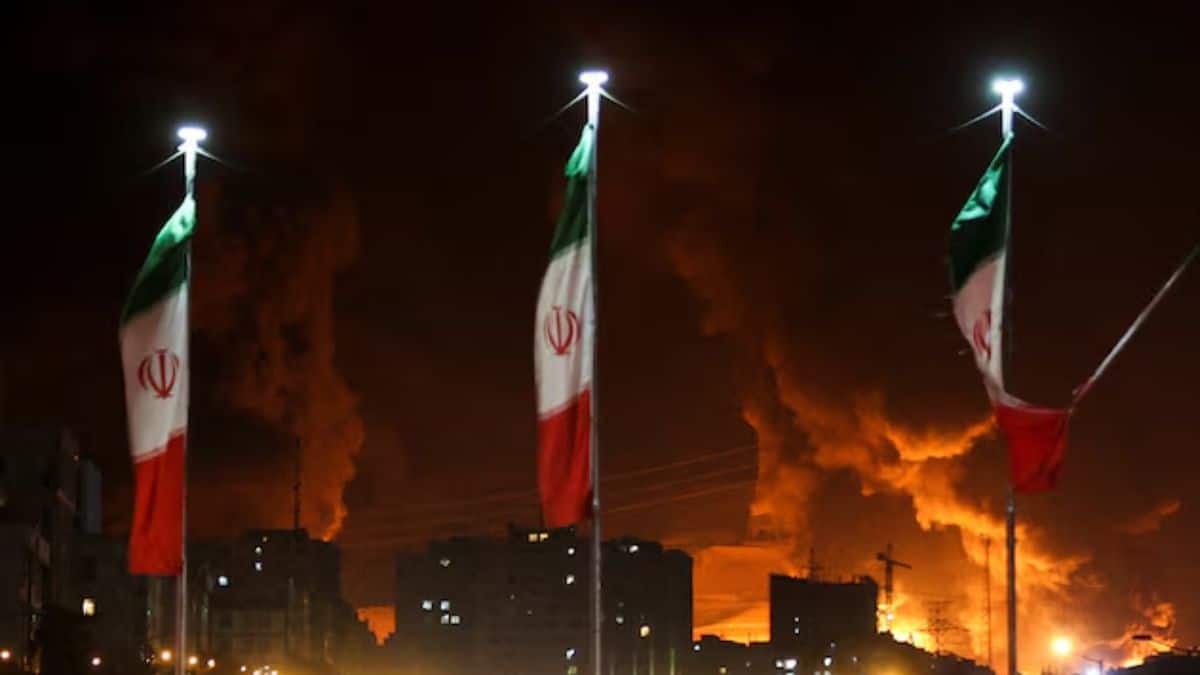
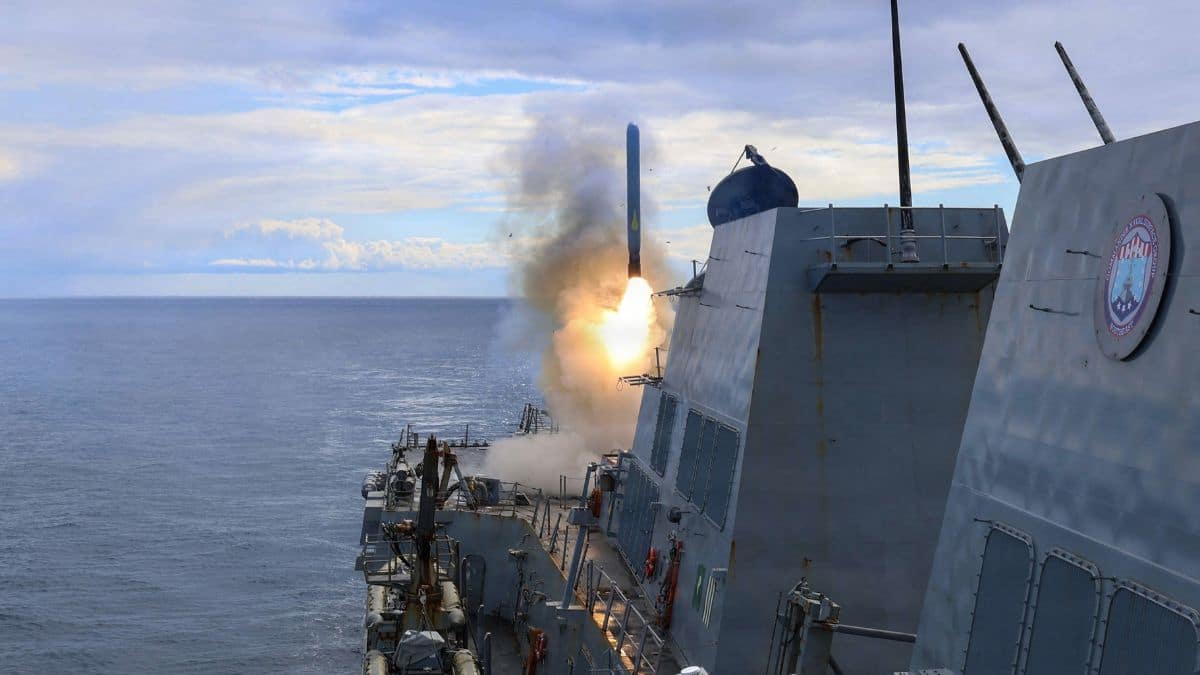
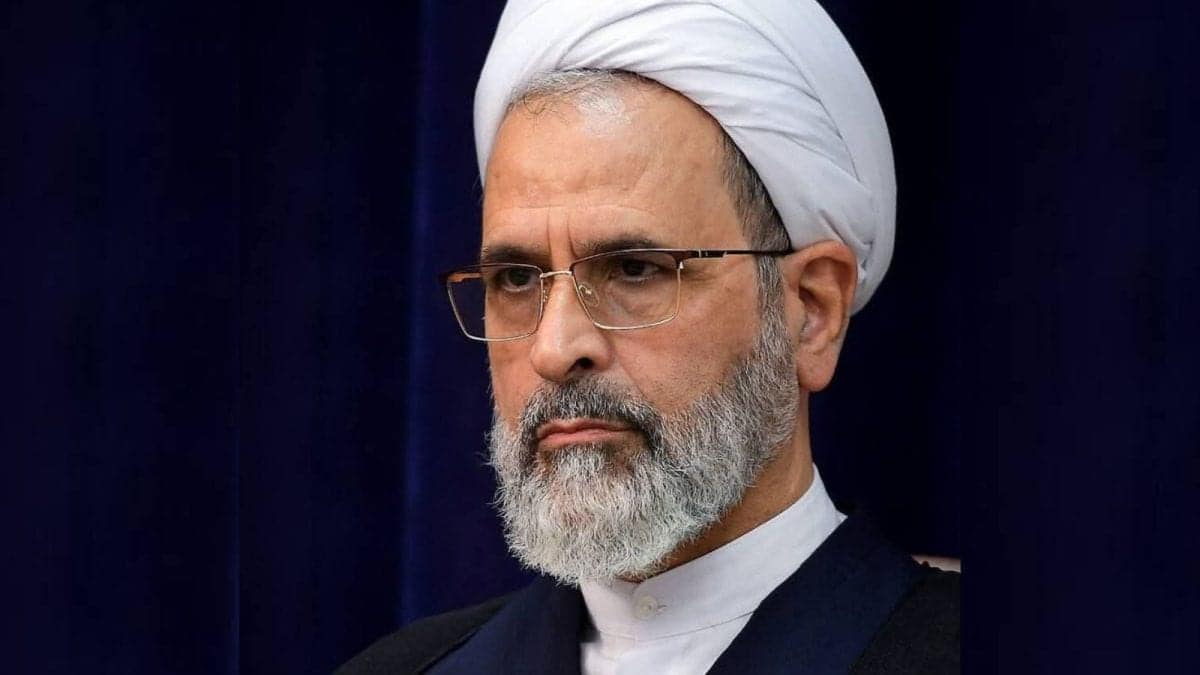
The tactical success of a high-value assassination often masks a strategic failure of imagination. Following the coordinated U.S.-Israeli operation that eliminated the supreme leader of a key regional adversary, the immediate expectation in Western capitals was a fractured command structure and a cooling of hostilities. Instead, the strikes have not only continued but have intensified in their technical complexity. This is the reality of modern asymmetrical warfare. Kinetic operations that target the head of an organization assume the body will stop moving, yet the current escalation proves that these networks have evolved into decentralized, self-correcting organisms.
Intelligence circles often refer to this as "the martyr's momentum." When a figurehead is removed, the vacuum is not filled by chaos, but by a pre-planned succession and a visceral need for the remaining cadre to prove their continued relevance. The strikes we are seeing across the Levant and the Gulf are a direct response to the perceived vulnerability created by the assassination. It is a violent rebuttal to the notion that a single person was the sole architect of the resistance.
The Myth of the Irreplaceable Leader
Military planners have long obsessed over the "Center of Gravity" theory, popularized by Clausewitz. The idea is simple. If you hit the specific point where an enemy derives their power, the entire structure collapses. In the 20th century, this often meant a dictator or a high-ranking general. In the 21st century, this theory is hitting a brick wall.
The supreme leader killed in the recent joint operation was undoubtedly a strategist of high caliber, but he presided over a system built on redundancy. These groups have watched the U.S. "High Value Target" program for two decades. They have adapted. They have shifted from a vertical command-and-control model to a horizontal one. When the top level is wiped out, mid-level commanders—often younger, more radical, and more tech-savvy—step into the light.
These new actors are not burdened by the historical baggage or the diplomatic back-channels that the old guard might have maintained. They have one mission. They must demonstrate that the organization is still capable of inflicting pain. This explains why the volume of rocket fire and drone incursions has spiked in the 48 hours following the strike. It is not a coordinated military campaign in the traditional sense; it is a frantic, distributed display of survival.
Bureaucracy of the Underground
We often mistake these groups for ragtag militias. They are not. They function with a level of bureaucratic precision that would rival a mid-sized corporation. There are logistics branches, media wings, and weapon development departments that operate independently of the central leadership.
- Financial Redundancy: Funds are rarely held in a single account or controlled by one person. They are distributed through a web of shell companies and informal "hawala" networks.
- Technical Sovereignty: The blueprints for the drones and missiles currently being fired are already in the hands of local assembly cells. You cannot kill a CAD file with a Hellfire missile.
- Succession Protocols: In many of these organizations, the next three "generations" of leadership are already vetted and waiting.
Intelligence Failures in the Aftermath
The U.S. and Israeli intelligence apparatus likely celebrated the precision of the strike. From a purely technical standpoint, it was a marvel of signals intelligence and human assets. However, the intelligence failure lies in the prediction of the "Day After."
The assumption was that the adversary would retreat to mourn and reorganize. This failed to account for the psychological state of the rank-and-file. For the foot soldier, the death of a supreme leader is a radicalizing event, not a demoralizing one. It simplifies the battlefield. There is no longer a need for complex political maneuvering or long-term strategy; there is only the immediate demand for retribution.
Furthermore, the joint nature of the assault has solidified the narrative of a "global conspiracy" among the local population. This makes recruitment easier. While the U.S. and Israel view this as a surgical strike against a terrorist entity, the local optics are that of a foreign superpower and a regional rival teaming up to crush a symbol of national or religious identity. The blowback from this narrative will likely outlive the strategic benefits of the leader's death.
The Drone Dilemma and Modern Attrition
The strikes currently hitting regional targets are utilizing a high ratio of loitering munitions, commonly known as "suicide drones." These are cheap. They are hard to track. Most importantly, they are numerous.
Israel’s Iron Dome and the U.S. Navy’s Aegis systems are the best in the world. They are also incredibly expensive to operate. We are currently witnessing an economic mismatch where a $50,000 drone is being engaged by a $2 million interceptor. This is the new war of attrition. The adversary knows they don't need to win a head-to-head battle. They only need to keep the sirens wailing and the defense budgets hemorrhaging.
By continuing the strikes after the loss of their leader, the group is signaling that their inventory is deep and their resolve is unaffected. They are forcing the U.S. and Israel to stay on high alert, which is a state that is difficult to maintain indefinitely without making mistakes. The psychological fatigue of a civilian population under constant, if intermittent, fire is a potent weapon that no assassination can truly neutralize.
The Role of Third-Party Enablers
No discussion of these strikes is complete without looking at the regional backers. The supreme leader was a bridge between the local militia and the state sponsors who provided the hardware. Washington hoped his death would sever this link.
The opposite has happened. The state sponsors are now forced to double down to ensure their investment doesn't crumble. If they allow the group to wither after the assassination, they lose their primary lever of regional influence. Consequently, we are seeing a surge in "resupply" activity. Satellite imagery suggests that the corridors used for smuggling parts and fuel remain active, perhaps even more so now as the sponsors rush to shore up the new leadership.
Why This Cycle Never Ends
The fundamental problem with the "decapitation" strategy is that it addresses the symptom, not the disease. The grievances that fueled the rise of the supreme leader—land disputes, religious friction, historical interventionism—remain exactly where they were before the missile hit the target.
In fact, the assassination provides a new focal point for these grievances. It creates a martyr. In the Middle East, a martyr is often more dangerous than a living leader. A living leader can be negotiated with, pressured, or discredited. A martyr is a static, perfect symbol that cannot be compromised.
Western policy often treats these conflicts as a game of chess. If you take the king, the game is over. The reality is more like a game of Go. You can capture a piece, but the board is vast, and the enemy is constantly surrounding your positions from angles you hadn't considered. The strikes will continue because the infrastructure of the conflict is baked into the geography and the politics of the region, not just the mind of one man.
The Escalation Ladder
We are now on a dangerous rung of the escalation ladder. With the supreme leader gone, the "rules of the game" have been discarded. For years, there was a silent understanding of what targets were off-limits. Both sides operated within certain boundaries to avoid a full-scale regional war.
That "gentleman’s agreement" died with the leader. The current strikes are targeting infrastructure and areas that were previously considered relatively safe. This forces the U.S. and Israel into a cycle of "retaliation for the retaliation."
If the goal of the assassination was to bring stability or force a surrender, it has achieved the exact opposite. It has signaled to every mid-level commander in the region that there is nothing left to lose. When an enemy feels they have no path to a negotiated peace, they settle for a maximum-damage war.
The Technological Evolution of the Resistance
One overlooked factor is how the loss of a traditional leader accelerates the adoption of autonomous warfare. Without a central figure to sign off on every operation, local cells are turning to AI-enabled targeting and pre-programmed flight paths for their munitions.
This removes the "human in the loop" who might have exercised restraint for political reasons. We are entering an era of automated escalation. The strikes are becoming more frequent because the decision-making process has been outsourced to the software and the mid-level operatives who have a direct incentive to keep the conflict hot.
The Hard Truth of Kinetic Diplomacy
The belief that we can kill our way to a solution is a recurring fever in foreign policy. It offers the illusion of progress. A successful strike provides a clear "win" for the evening news and a boost for political incumbents. But as the smoke clears and the rockets continue to fly, the hollowness of that victory becomes apparent.
Real security in the region would require a dismantling of the logistical and social networks that support these groups. That is a slow, boring, and expensive process that lacks the cinematic appeal of a precision strike. It involves counter-finance, diplomatic isolation, and addressing the underlying socio-economic drivers of radicalization.
Until that shift occurs, the "Supreme Leader" will simply be replaced by the "Acting Supreme Leader," and the strikes will continue as a grim testament to the limits of military power. The U.S. and Israel have proven they can find and kill anyone, anywhere. They have yet to prove they can kill the idea that makes those people take up arms in the first place.
Check the logistical hubs in the neighboring sectors to see where the next wave of drone components is being staged.