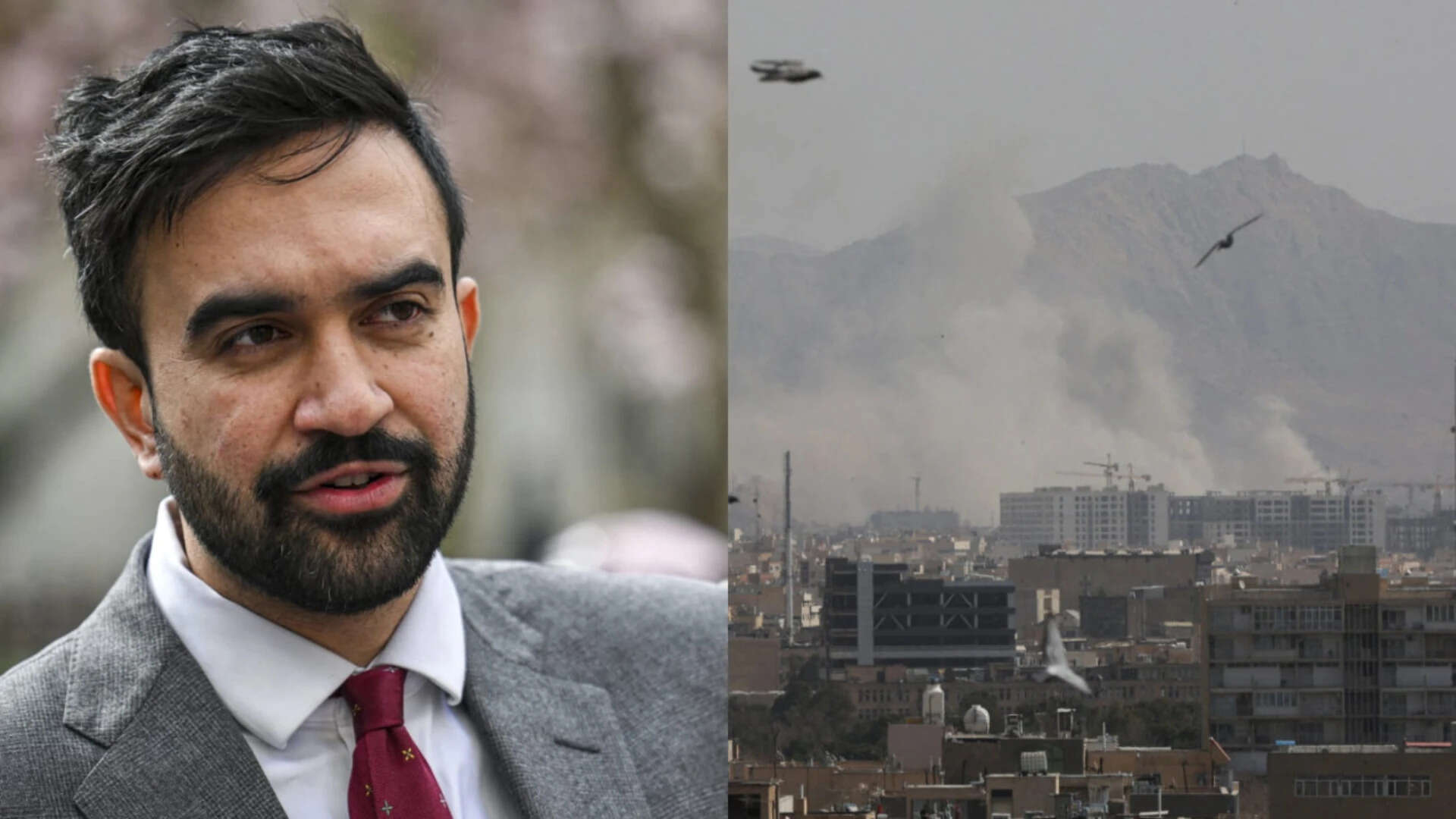
The death of Ayatollah Ali Khamenei via a kinetic strike represents more than the removal of a head of state; it is the instantaneous shattering of a centralized theological-political architecture known as the Velayat-e Faqih. This system, designed to concentrate absolute authority in a single "Jurist," possesses no horizontal load-sharing mechanisms. When the apex of this pyramid is removed, the remaining structural components—the Islamic Revolutionary Guard Corps (IRGC), the clerical establishment in Qom, and the traditional bureaucracy—enter a zero-sum competition for survival. The following analysis deconstructs the mechanics of this collapse and the specific vectors of instability that now define the Iranian theater.
The Single Point of Failure The Jurist as the Systemic Linchpin
The Iranian constitution vests the Supreme Leader with "Absolute Guardianship." Unlike Westphalian systems with institutionalized succession or democratic checks, the Velayat-e Faqih functions as a proprietary operating system where Khamenei served as the sole administrator. His authority was not merely symbolic; it was the final arbiter for the three critical pillars of Iranian power:
- The Security Monopoly: Command over the IRGC and the regular military (Artesh).
- The Economic Engine: Control of the Bonyads (charitable foundations) and Setad, which manage an estimated $95 billion in assets, effectively functioning as a shadow economy independent of the state budget.
- The Theological Mandate: The ideological justification that keeps the Basij paramilitary mobilized.
The removal of the Supreme Leader creates an immediate "Authority Gap." While the Assembly of Experts is constitutionally mandated to select a successor, the body has become a rubber-stamp institution populated by octogenarians. The lack of a clear, pre-vetted heir-apparent creates a vacuum where the IRGC is incentivized to bypass the clerical selection process to protect its economic and physical security.
IRGC Preemption and the Praetorian Shift
The IRGC is the primary beneficiary of the status quo and the actor with the most to lose in a transition. We can quantify their likely response through the lens of "Institutional Preservation." The IRGC controls approximately 30% to 50% of the Iranian economy, spanning telecommunications, construction, and oil.
A transition to a weak clerical successor would be a tactical liability for the IRGC. They face a "Security Dilemma": if they allow a moderate cleric to take power, they risk a rapprochement with the West that could dismantle the sanctions-evasion networks they manage. If they install a hardline puppet, they risk domestic uprising.
The most probable kinetic outcome is a shift toward a military junta masked by a clerical facade. This transition changes the nature of the Iranian state from a "Theocratic Republic" to a "Praetorian Autocracy." The IRGC's command structure is decentralized enough to maintain local order in the short term, but the loss of Khamenei’s mediating influence means that internal rivalries between the IRGC-Qods Force (external operations) and the IRGC-Saramad (internal security) will likely surface.
The Proxy Feedback Loop and Regional Kinetic Contraction
Iran’s "Forward Defense" strategy relies on the "Axis of Resistance"—a network of non-state actors including Hezbollah, the Houthis, and various PMFs in Iraq. This network operates on a "Hub-and-Spoke" model, where Tehran provides the strategic intent and technical hardware, and the proxies provide the local manpower.
Khamenei was the ultimate signatory for the funding and strategic escalation ladders of these groups. Without his direct oversight, the Axis of Resistance faces three immediate degradations:
- Command Fragmentation: Proxy leaders, such as Hassan Nasrallah, often held personal allegiances to Khamenei. Without a peer-level authority in Tehran, these groups may begin prioritizing local survival over Tehran’s regional objectives.
- Logistical Friction: The transfer of advanced weaponry—specifically Precision-Guided Munitions (PGMs)—requires high-level authorization. A distracted or divided IRGC command in Tehran will naturally see a drop in the efficiency of these supply lines.
- Financial Volatility: If the Bonyads face internal audits or leadership struggles during the transition, the liquidity provided to proxies will be the first "discretionary" expense to be cut.
The risk for the West is not necessarily a planned Iranian retaliation, but a "Desperation Strike" from a proxy that feels its lifeline is being severed, leading to an uncoordinated regional escalation.
The Technical Vulnerability of the Succession Mechanism
The Assembly of Experts is the formal mechanism for transition, but it is currently a "Black Box." The selection of the next leader requires a two-thirds majority. The absence of a consensus candidate like Ebrahim Raisi (who died in 2024) leaves two primary paths, both of which are fraught with systemic risk:
- The Mojtaba Khamenei Path: The Supreme Leader’s son represents continuity but violates the revolutionary principle of anti-hereditary rule. His appointment would likely trigger massive civil unrest, as it mirrors the Pahlavi monarchy the 1979 revolution sought to destroy.
- The Committee Path: A council of three to five leaders. History suggests that such "Leadership Committees" in authoritarian regimes are inherently unstable, usually resulting in a "Purge Phase" where one member eventually liquidates the others to consolidate power.
Economic Contraction and the Hyper-Inflationary Trigger
Markets react to uncertainty with capital flight. Iran's Rial (IRR) is already under extreme pressure. The removal of the Supreme Leader triggers a "Confidence Shock" that the Central Bank of Iran (CBI) is ill-equipped to handle.
- Currency Devaluation: Expect an immediate 20-40% drop in the unofficial Rial rate as citizens move to hard assets (Gold, USD, USDT).
- Capital Flight: The elite "Aghazadehs" (children of the regime) will attempt to move assets out of the country via crypto-exchanges and hawala networks, further draining domestic reserves.
- Supply Chain Paralysis: Import-export licenses are often tied to political patronage. As the patronage networks re-align, the flow of essential goods will likely stutter, leading to localized shortages and potential "Bread Riots."
The Logic of Domestic Insurrection
The Iranian population is demographically disconnected from the regime’s ideology. With 70% of the population under the age of 40, the "Revolutionary Spirit" is a historical abstraction rather than a lived reality. The removal of the "Shadow of God" (Khamenei) breaks the psychological barrier of fear.
The state’s repressive apparatus, the Basij, relies on a clear chain of command and the belief that the regime is permanent. If the IRGC leadership appears fractured, the mid-level Basij officers may hesitate to use lethal force against protesters, fearing future prosecution by a successor government. This "Hesitation Interval" is the window where a localized protest scales into a national revolution.
The Strategic Play for Global Actors
For the United States and its allies, the objective is not to fill the vacuum, but to contain the spray. The primary strategic imperative is the securing of Iran’s nuclear infrastructure. During a transition, the "Command and Control" (C2) over the nuclear program becomes opaque. There is a non-zero risk that rogue elements within the IRGC could attempt a "Breakout" (enrichment to 90%) as a final deterrent against foreign intervention or as a bargaining chip for their own survival.
Simultaneously, the global energy market must price in the potential for a temporary shutdown of the Strait of Hormuz. While the IRGC is unlikely to engage in a total blockade—which would be an act of economic suicide—even a 5% "Harassment Increase" in the Strait would send Brent crude prices into a volatility spiral.
The optimal strategic move for external powers is "Information Saturation." By communicating directly to the Iranian professional military (Artesh) and the mid-level IRGC bureaucracy that their personal safety and institutional relevance are guaranteed if they refrain from mass violence, the West can drive a wedge between the "Old Guard" and the "Operational Layer." The goal is to facilitate a transition from a theological autocracy to a more predictable nationalistic state, avoiding the "Libyan Scenario" of total institutional evaporation.
The era of the Velayat-e Faqih is functionally over; the current struggle is merely the friction of the machine grinding to a halt. The strategic priority is now the management of the debris.
Would you like me to analyze the specific economic indicators that would signal a total Iranian state collapse?