A Resting Place Found Two Thousand Feet Beneath the Surface
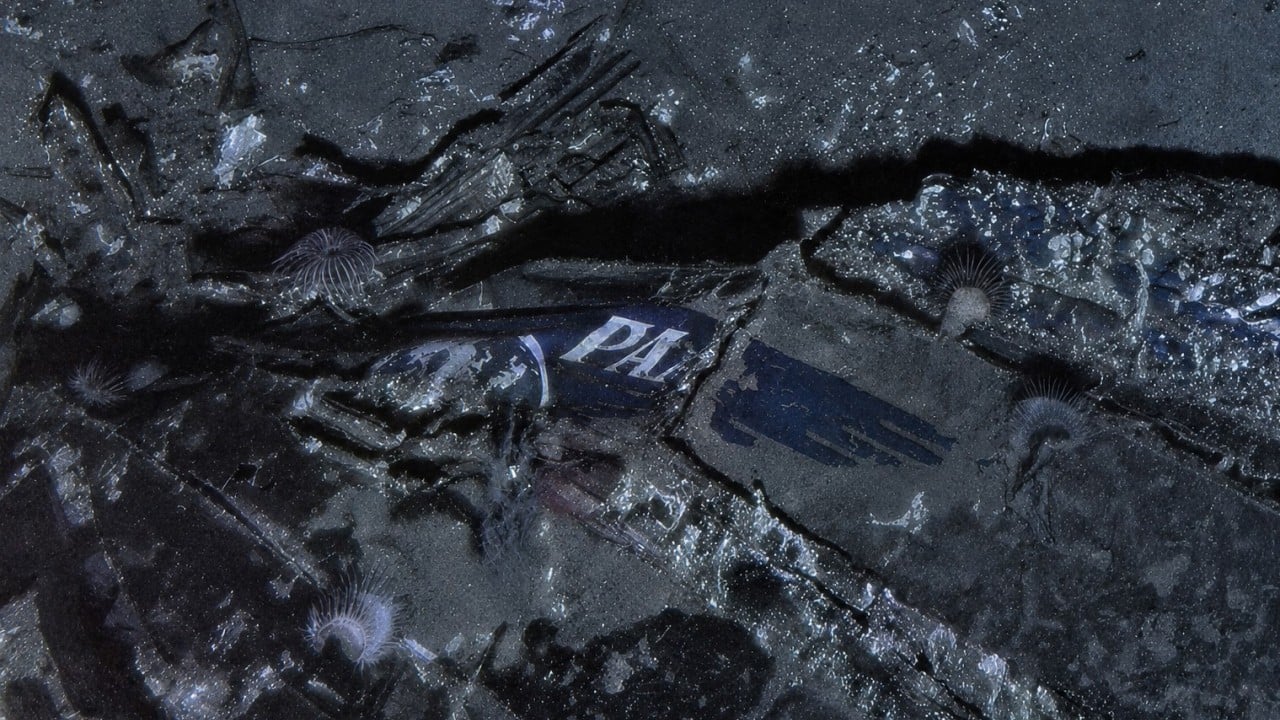
The ocean floor off San Juan, Puerto Rico, has finally surrendered one of aviation history’s most haunting artifacts. Researchers utilizing autonomous underwater drones equipped with high-resolution sonar located the submerged wreckage of Pan American World Airways Flight 526A, an ocean-going Douglas DC-4 known as the Clipper Endeavor. Sitting nearly 2,000 feet beneath the waves, split into two main sections with its iconic corporate logo still legible across the aluminum hull, the aircraft lay undisturbed for 74 years.
The discovery answers a long-standing geographical mystery, but the true significance of the Clipper Endeavor lies in the horrific, avoidable aftermath of its April 11, 1952 crash. On that Good Friday, 69 passengers and crew plunged into the Atlantic minutes after taking off for New York. Remarkably, every single person on board survived the violent water landing. Yet within minutes, 52 of those passengers drowned in the dark water.
That staggering death toll on a survivable crash shattered the industry's belief that passengers would instinctively know how to save themselves in an emergency. The catastrophe forced federal authorities to re-evaluate commercial passenger safety, creating the mandatory safety demonstrations and life-vest briefings that every traveler hears before takeoff.
Ten Minutes Over the Atlantic
The flight was routine until it was not. Shortly after lifting off from San Juan International Airport, the four-engine Douglas DC-4 experienced an abrupt vibration. Engine number three began overspeeding, its propeller turning faster than designed as mechanical components failed.
The flight crew attempted to feather the propeller—a procedure designed to turn the blades parallel to the airflow to reduce drag—but the mechanism failed. Seconds later, engine number four failed entirely. With both right-side engines useless and generating massive aerodynamic drag, the airliner was unable to maintain altitude.
Captain John Burn realized returning to the runway was impossible. The aircraft was losing height rapidly. He maneuvered the heavy airliner toward the ocean surface, executing a controlled ditching in rough seas four miles off the coast of Puerto Rico.
Impact came fast.
Despite heavy swells pounding the airframe, Captain Burn set the airliner down flat. The landing was an absolute technical success. The fuselage remained intact, the cabin did not disintegrate, and initial structural damage was minimal considering the forces involved. Every passenger and crew member unbuckled their seatbelts alive.
Darkness, Water, and Total Chaos
Chaos exploded immediately inside the darkened cabin. Water poured through minor breaches in the floorboards as the heavy airplane began settling into the Atlantic. Passengers had no instructions on what to do next.
In 1952, airlines treated emergency procedures as bad PR. Executives believed that explaining emergency exits or demonstrating life jackets prior to takeoff would terrify paying customers and hurt ticket sales. Consequently, passengers sat in total darkness without a clear idea of where emergency life vests were stowed or how to operate them.
Panic took over. Passengers scrambled aimlessly in the cabin as water rose past their knees. Many could not locate the life jackets tucked under their seats. Those who did find them struggled to put them on in the dark, failing to understand how to inflate the canvas and rubber garments.
Outside, the aircrew struggled against time to deploy the heavy rubber life rafts stored in upper wing compartments and cabin storage. The aircraft was taking on water too fast.
Surviving crew members urged passengers to leap into the ocean toward the rafts. Many refused. Terrified of the rough waves and the looming ocean darkness, dozens of passengers remained inside the cabin, freezing in fear as the aircraft tilted steeply backward.
Nine minutes after touching down on the sea, the Clipper Endeavor slipped beneath the waves, pulling dozens of trapped, conscious passengers down into the abyss.
When the U.S. Coast Guard and military vessels arrived at the site, they pulled 17 survivors from the water, including all five crew members and 12 passengers. Thirty-nine bodies were never recovered from the ocean floor.
The Investigation That Exposed Operational Neglect
The Civil Aeronautics Board, the predecessor to the Federal Aviation Administration and the National Transportation Safety Board, launched an exhaustive inquiry into the catastrophe. Investigators quickly discovered that the disaster was built on a series of systemic operational failures.
First came maintenance neglect. Mechanical checks revealed that the right-side engine failures were preventable. Pan Am ground crews in San Juan had failed to properly service spark plugs and valve assemblies, leading directly to the double engine failure during climbout.
Second was the handling of onboard emergency equipment. While Pan Am had equipped the Douglas DC-4 with required flotation devices and life rafts, the layout was utterly impractical for a night emergency. The life rafts were heavy, difficult to extract, and required specialized training to deploy rapidly under pressure.
Most damningly, the report exposed the lethal consequence of passenger ignorance. The Civil Aeronautics Board concluded that the majority of the 52 fatalities occurred not from mechanical force, but because passengers lacked basic familiarity with the location and operation of emergency gear.
The board recognized a grim truth. Surviving an airplane crash is useless if passengers cannot evacuate the airframe before it sinks or burns.
Mandatory Pre-Flight Briefings Are Born
The Clipper Endeavor disaster became a watershed moment for civil aviation. Outraged regulators realized that passive safety features were useless without passenger education.
In the months following the official accident report, the Civil Aeronautics Board issued new regulations that altered the commercial flying experience forever.
Airlines were mandated to conduct clear, spoken pre-flight safety demonstrations before every takeoff. Flight attendants were required to physically demonstrate how to put on and inflate life vests, point out every emergency exit, and explain cabin depressurization procedures.
Airlines were forced to standardize seat pocket information cards, replacing dense text with illustrated diagrams showing exit paths and brace positions.
Emergency equipment placement was completely re-engineered. Life vests were moved to easily accessible pouches beneath every seat, and life rafts were redesigned with automatic deployment triggers and brighter colors for high visibility in open water.
Evacuation time limits were established. Aircraft manufacturers were forced to design cabins and exit doors that allowed a full load of passengers to evacuate within 90 seconds, even if half the exits were blocked or unusable.
Every time a flight attendant stands in the aisle today holding a seatbelt buckle and pointing to floor-level lighting, they are performing a ritual born directly out of the panic off San Juan in 1952.
Unearthing a Hidden Grave Seven Decades Later
For seven decades, the physical remains of the Clipper Endeavor remained missing. While investigators knew the general area where the airliner went down, the deep underwater topography north of Puerto Rico made pinpointing the target extremely difficult with mid-century sonar.
The trail went cold until 2019, when an obscure detail caught the attention of Russ Matthews, president of the non-profit Air/Sea Heritage Foundation. A vintage luggage tag from the 1952 flight had washed ashore in Florida decades after the crash. Matthews began sifting through dusty archives held by Pan Am, the U.S. Coast Guard, and the Civil Aeronautics Board.
The breakthrough came from unexpected archival records in Puerto Rico. During search-and-rescue hearings held in 1952, U.S. Air Force pilots who were flying a training mission nearby had sketched a crude map estimating the ditching coordinate based on smoke flares and oil slicks.
Armed with historical data and ocean current modeling from the day of the crash, Matthews partnered with ocean exploration firm Deep Sea Vision, led by Tony Romeo.
Using an advanced autonomous underwater vehicle deployed from a research vessel, the team surveyed a 10-square-nautical-mile search grid. Equipping the underwater drone with synthetic aperture sonar allowed the team to map the ocean floor with extreme accuracy.
On June 2, 2026, the drone returned to the surface with high-definition acoustic images.
Sitting in nearly 2,000 feet of water, the survey showed the fuselage of the Douglas DC-4 intact from the cockpit to the aft passenger door, with the severed tail assembly resting nearby. The iconic blue Pan Am logo remained clearly visible against the bare metal fuselage, preserved by the cold, low-oxygen conditions of the deep ocean.
The Cost of Progress in the Skies
The discovery of the Clipper Endeavor serves as a stark reminder of how modern air travel achieved its safety record. Safety standards were not created by corporate benevolence or foresight. They were built on hardware failures, administrative oversights, and human panic.
Today, commercial aviation is statistical proof of engineering success. Millions of passengers board flights daily, casually ignoring flight attendants as they demonstrate oxygen masks and life vests, scrolling on smartphones or looking out cabin windows.
Yet those mundane safety briefings exist because 52 people survived a ditching in 1952, only to perish in the ocean because nobody showed them how to find a life vest in the dark.