Sending humans back to the moon sounds glamorous until you remember that deep space is basically an invisible microwave oven. Earth shields us with a thick magnetic blanket, but lunar astronauts lose that safety net the moment they clear our orbit. When the sun burps out a violent wave of high-energy protons, astronauts face acute radiation sickness and long-term cancer risks that can quietly end lives.
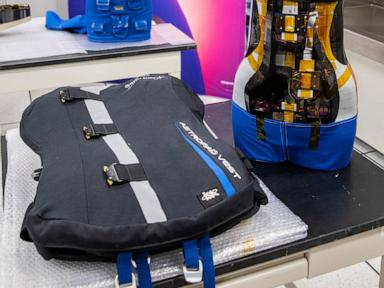
Enter the AstroRad vest. Recently published data from a massive study analyzing the uncrewed Artemis I flight proves that this 57-pound wearable shield can dramatically cut radiation exposure during severe solar storms. If we want permanent moon bases and eventual trips to Mars, gear like this isn't optional. It's life or death.
The Real Danger Beyond Low Earth Orbit
Space weather isn't a sci-fi trope. Solar particle events throw out lethal doses of radiation that make routine space walks terrifyingly risky. During the Artemis I mission in 2022, NASA didn't send a human crew, but they did send two plastic-and-rubber manikins named Zohar and Helga.
Zohar wore the AstroRad vest—developed by StemRad and Lockheed Martin—while Helga flew unprotected. Both torsos were packed with thousands of radiation sensors. While the spacecraft didn't encounter a major solar eruption during its trip, researchers used the baseline data from the inner Van Allen radiation belt to simulate historical catastrophes like the massive solar storms of 1972 and 1989.
The results published in Science Advances blew past expectations. The vest slashed radiation doses by roughly sixty percent during a storm matching the intensity of the 1972 event. For a solar blast mirroring 1989, it cut exposure by nearly forty percent.
To put that in plain English, wearing the vest during a 1972-level solar outburst saves an astronaut from the equivalent of 193 days of background deep space radiation. That is massive.
Why Smart Shielding Beats Heavy Lead
Most people assume space radiation protection works like an x-ray apron at the dentist's office. Just slap some heavy lead on it and call it a day.
Space physics doesn't work that way. Lead is terrible for cosmic rays because high-energy protons smash into heavy elements and create dangerous secondary radiation scatter. Instead, the AstroRad relies on high-hydrogen polymer materials. Hydrogen nuclei are brilliant at stopping charged particles without creating a radioactive ricochet effect.
The engineers also used selective protection mapping. The vest doesn't cover every square inch of the body because that would make it impossibly heavy for microgravity. Instead, it targets the body's most sensitive real estate:
- Lungs and stomach
- Bone marrow
- Breasts and ovaries
Protecting these specific organ hubs prevents acute radiation syndrome and dramatically lowers the mutation rates of stem cells that trigger cancer down the line.
Solving the Mobility Problem in Zero Gravity
Building a heavy vest in a lab is easy. Getting an astronaut to wear a fifty-seven-pound piece of kit while crawling through a cramped spacecraft is entirely different.
Earlier prototypes focused heavily on pelvic protection for terrestrial nuclear disaster responders. But space radiation hits from all angles. Lockheed Martin and StemRad redesigned the garment into a full-torso configuration while using a scale-like structural architecture. This overlapping scale design allows astronauts to bend, twist, and work without getting pinned in place.
Astronauts tested early versions on the International Space Station to check ergonomics, air circulation, and flammability. Because spacecraft interiors are hyper-oxygenated environments, material safety is brutal. Off-gassing and fire risks mean every single fabric weave has to pass intense stress tests. Crew members even reported sleeping in the prototypes during comfort evaluations, proving the fit works.
Moving Beyond the Emergency Shelter
Spacecraft already have built-in storm shelters, usually packed tight behind water walls and equipment storage. The catch? Once a solar particle event hits, astronauts are forced to cram inside those tiny designated boxes and stay put until the sun calms down. Missions grind to a halt.
The AstroRad changes how crews handle emergencies. Because the vest provides localized protection equivalent to an onboard storm shelter, an astronaut can actually leave the safe room. They can walk around the cabin, fix a broken life-support system, or manage critical ship controls while remaining fully guarded against acute radiation poisoning.
As NASA pushes toward permanent lunar habitats and multi-month surface stays, missions will inevitably overlap with active solar cycles. Crew members cannot afford to hide in a closet for a week every time the sun acts up. Wearable tech bridges that gap.
Engineers are already working on shaving off excess weight from future iterations without losing structural integrity. Some research teams are even exploring how to manufacture radiation shielding using recycled materials already floating around inside long-haul spacecraft.
The data from Artemis I has given aerospace scientists the high-fidelity metrics they need. Space exploration is unforgiving, but smart engineering is finally catching up to the hazards of the cosmos.