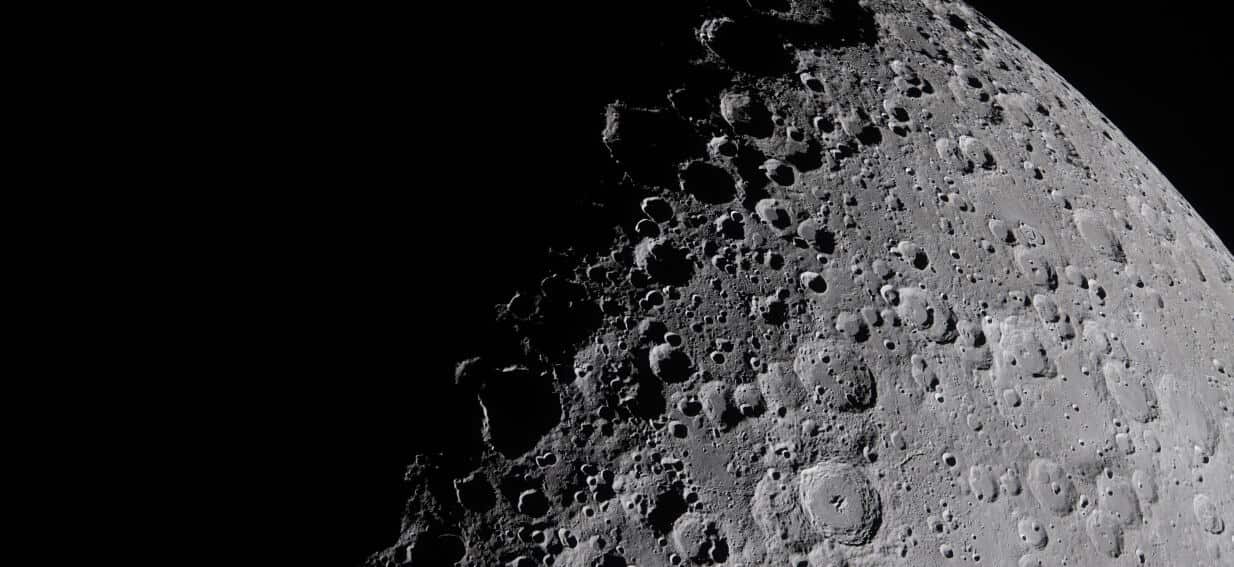
Two hundred degrees below zero. Pitch black. Silent for four billion years.
If you stood at the floor of a polar crater on the Moon, the universe would shrink to a crushing perimeter of jagged rock walls bathed in eternal night. Sunlight has never touched these absolute depths. The cold is a physical weight, brittle enough to shatter steel, preserving frozen secrets tucked away since the youth of the solar system. For decades, humanity looked at these dark basins through telescopes and orbiting cameras, treating them as exotic curiosities. Distant postcards from a barren neighbor.
That era is ending.
Consider what happens next: a coordinated fleet of robotic explorers, engineered by the China National Space Administration, is poised to drop into the abyss. Two decades of methodical, incremental engineering have led to this precise moment. When the Chang'e-7 mission sets its sights on the lunar south pole later this month, it will not merely look at the Moon. It will hunt for water.
Space is unforgiving to nations in a hurry. While the Cold War space race was an explosive sprint fueled by political panic and raw brute force, the modern return to the Moon is a marathon of infrastructure. Think of it as laying the plumbing and electrical grid for a permanent outpost.
China's lunar strategy has always read like a slow-burning historical epic. It began in 2007 with orbiters simply mapping the grey dust from afar. Then came the tentative footsteps: soft landings on the near side, followed by the historic, quiet triumph of touching down on the hidden far side of the Moon where no human eye had ever gazed. They learned how to drill into the regolith, how to launch an ascender from another celestial body, and how to bring pristine rocks back to Earth laboratories. Every mission was a stepping stone. Every failure, meticulously analyzed.
Now comes the hard part.
The lunar south pole is coveted real estate. Its ridges catch the glancing, golden rays of a low sun, offering potential solar power, but its craters hide the prize: ancient water ice trapped in the dirt. Water means oxygen. Water means rocket fuel. Water means that humans do not need to haul every drop of life-support fluid out of Earth's punishing gravity well. Water changes the Moon from a place we visit into a place we inhabit.
Reaching that water, however, breaks conventional rules of engineering. Traditional wheeled rovers are helpless here. They require sunlight to power their solar panels and line-of-sight communication to talk to handlers on Earth. Drive a standard rover over the lip of a permanently shadowed crater, and it dies instantly: frozen, blinded, and cut off from home.
Enter the hopper.
Imagine a specialized probe designed not to roll, but to leap. Supported by the orbital relay communications network already stationed overhead—anchored by the Queqiao-2 satellite—this machine will hurl itself across broken, treacherous terrain, descending vertically into the pitch-black cold to taste the soil and measure the ice. It is a mechanical acrobat built for a world without air.
Behind this single mission lies an entire cascade of future intent. The roadmap points directly to Chang'e-8 in 2028, a testbed for in-situ resource utilization where robotic systems will attempt to bake bricks out of lunar soil and test closed-loop ecosystems. Beyond that looms the target of a crewed landing around the turn of the decade, paving the way for the International Lunar Research Station.
This is no longer about flags or footprints. It is about logistics.
Down on Earth, we argue over borders, supply chains, and energy limits. Up there, in the vacuum of space, the physics are absolute. Whether an explorer arrives on a rocket launched from Florida or Hainan, the darkness of the south pole remains equally absolute. The challenges of living off-world do not care about geopolitics. They demand absolute precision, extreme patience, and a willingness to stare into the dark and figure out how to survive.
The machinery is built. The trajectory is calculated. In the silent craters of the Moon, history is waiting for the first splash of lander thrusters to disturb dust that has rested undisturbed since before life crawled out of Earth's oceans.