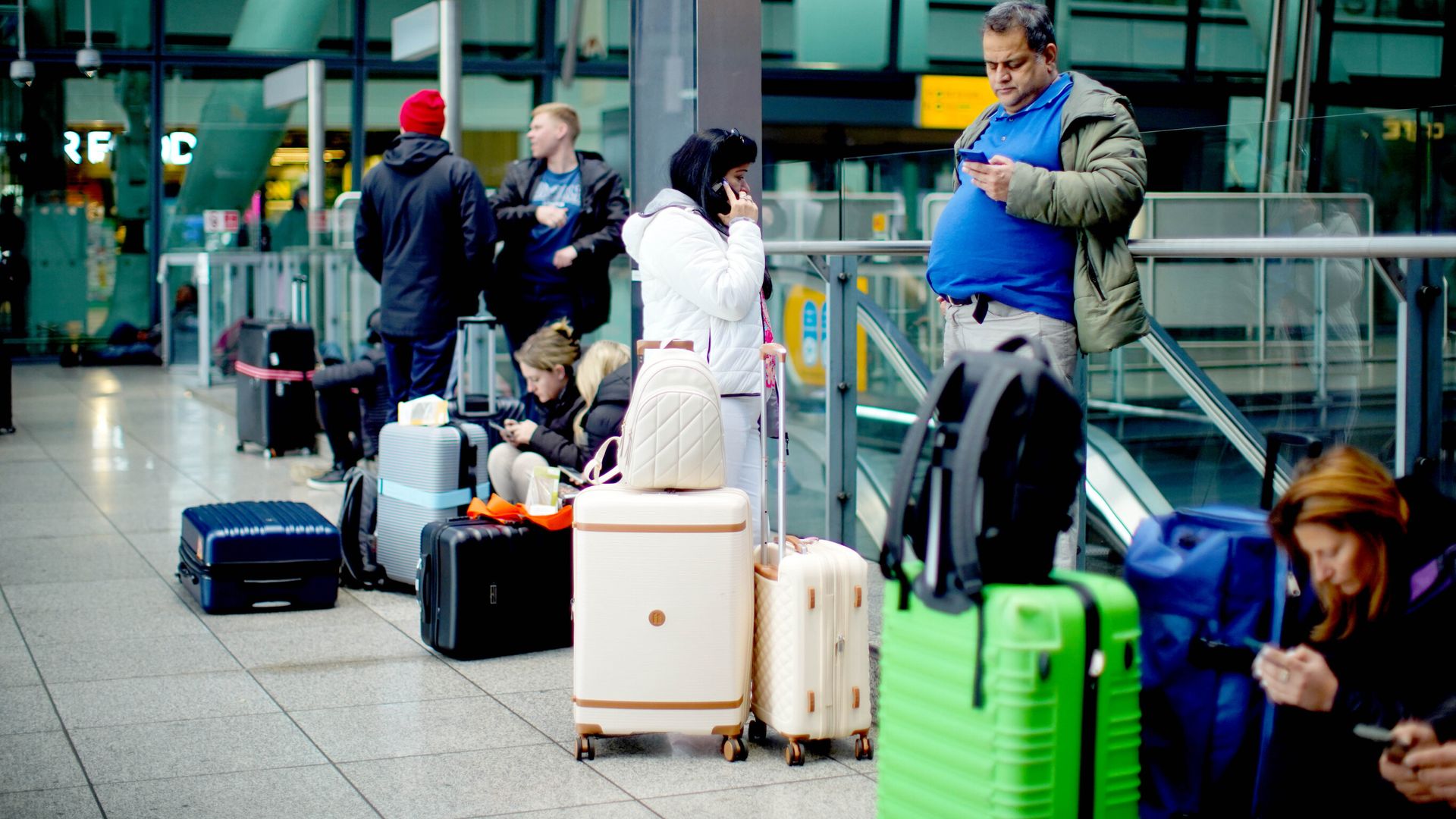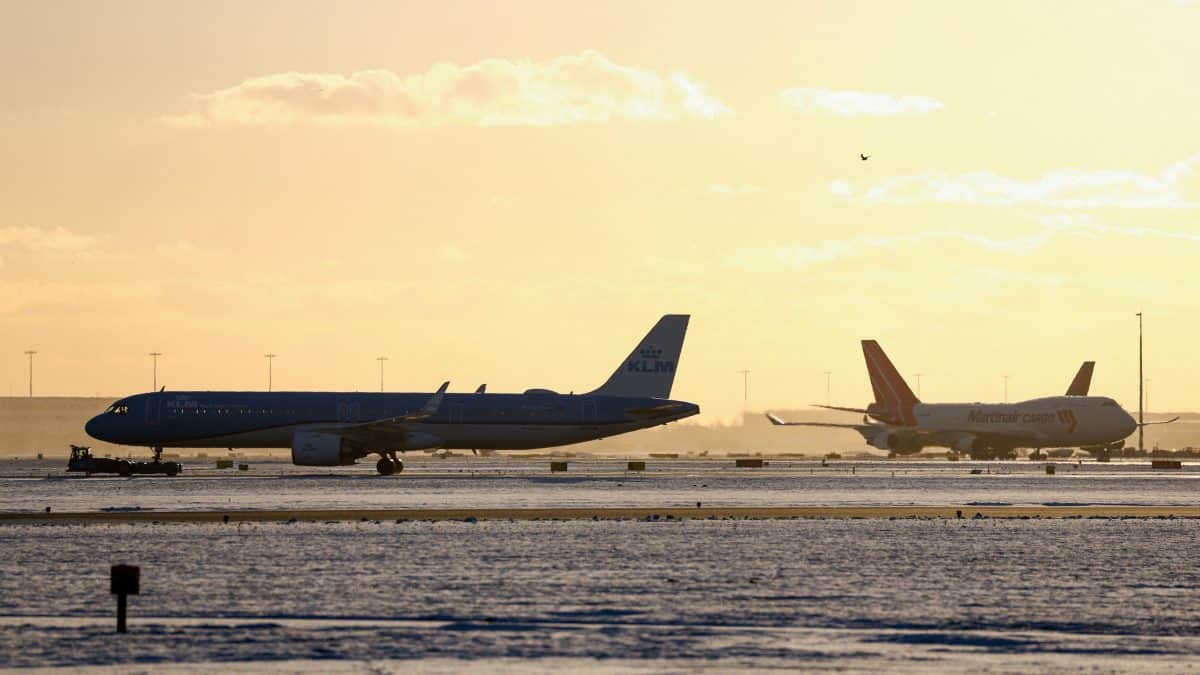
If you’re sitting at Indira Gandhi International Airport (IGI) staring at a "Cancelled" status on the departure board, you aren't alone. Thousands of travelers are currently stuck in a massive logistical knot. Joint military strikes by the U.S. and Israel on Iranian targets have effectively slammed the door on West Asia’s airspace. This isn't just a minor delay; it’s a total redrawing of the global flight map that has hit Delhi particularly hard.
The Reality of Airspace Closures at Delhi Airport
The situation is messy. As of March 2, 2026, at least 100 flights have been cancelled at Delhi’s IGI airport alone. We’re talking about 60 departures and 40 arrivals that simply aren't happening. Across India, the number is even more staggering, with over 444 international flights scrapped in a single day.
Why Delhi? It’s the primary gateway for westbound traffic. If you're flying to London, Frankfurt, or Dubai, your flight path naturally cuts right through the conflict zone. With 11 countries including Iran, Iraq, Jordan, and the UAE implementing strict no-fly zones or heavy restrictions, airlines have two choices: cancel or take the long way around. Most are choosing to cancel until they can figure out the fuel math for longer routes.
The Directorate General of Civil Aviation (DGCA) has been blunt. They've issued an urgent safety advisory valid until the end of today, March 2. They aren't taking chances with civilian lives while missiles are in the air.
Which Routes are Ghost Towns
If you're booked on Air India or IndiGo, you’ve likely already received a text. Air India has axed over 50 international services. Specifically, the Delhi-London, Delhi-Birmingham, and Delhi-Zurich routes are essentially frozen. It’s not just the European long-hauls, either. Flights to Amsterdam, Milan, Vienna, and Copenhagen have also been pulled from the schedule.
IndiGo has suspended a massive chunk of its Middle Eastern operations. If you were heading to Doha, Abu Dhabi, or Ras Al Khaimah, your plane is likely staying on the tarmac. Even the "technical stops" aren't a guaranteed fix. Air India is trying to run some North American flights via Rome to avoid the mess, but that adds hours to an already grueling trip.
The Financial Fallout for Passengers
Airlines are trying to be "flexible," but let's be honest—rebooking a flight when 350 other flights are cancelled is a nightmare. Both Air India and IndiGo are offering full refunds or free rescheduling for bookings made before February 28.
Pro Tip: If your flight is cancelled, don't just wait in the airport line. Call the international helpline or use the airline's chat app while you stand in line. Often, the digital agents have more power to move you to a different partner airline than the overwhelmed ground staff at the gate.
If you’re stranded abroad, there’s a bit of a silver lining if you’re in the UAE. The Abu Dhabi government has reportedly stepped in to cover accommodation costs for stranded guests. Dubai has issued similar directives to hotels to keep rates consistent for those stuck. It’s a rare move that shows just how unprecedented this shutdown is.
The Long Way Around
Airlines that haven't cancelled are taking "alternative corridors." This basically means flying over Central Asia or deep south over the Arabian Sea and then up through Egypt.
- Extra Flying Time: Expect at least 30 to 60 minutes of extra airtime for European flights.
- Technical Stops: Some flights to the U.S. now have to stop in places like Rome for fuel because the longer route burns through their reserves faster than anticipated.
- Crew Timeouts: This is the one nobody talks about. Pilots and cabin crew have "duty hour" limits. A flight that used to take 9 hours might now take 11, which could push the crew over their legal limit, causing another delay while the airline finds a fresh team.
Stop Waiting and Take Action
Don't just show up at Terminal 3 hoping for the best. Check your flight status on FlightRadar24 before you even leave your house. If the flight is listed as "Scheduled" but the incoming aircraft hasn't left its origin point, you're likely looking at a delay or a last-minute cancellation.
Check your email for "Waiver Codes." Airlines are issuing these so you can rebook online without paying the fare difference. If you're on a multi-city ticket with different carriers, call the travel agent who booked it immediately. Don't wait for the airline to fix a connection they didn't sell you directly.
Check your travel insurance policy right now. Most standard policies have a "Civil Unrest" or "Act of War" clause. You need to know if they'll cover your hotel and meals if the airline refuses. Document everything. Take photos of the departure boards and keep every receipt for water, food, and transport.