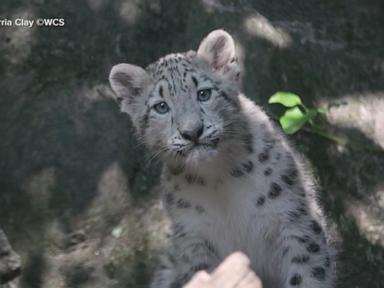
The introduction of a neonate snow leopard (Panthera uncia) to public or institutional observation represents a critical juncture in captive population management, zoological conservation metrics, and species demographic tracking. While casual media coverage frequently reduces such an event to a superficial public relations milestone, a rigorous operational and ecological framework reveals that neonate reveals function as proxy indicators for captive reproductive efficacy, genetic management viability, and early-stage developmental milestone tracking in highly sensitive apex carnivores.
The Reproductive Cost Function and Captive Breeding Dynamics
Maintaining a self-sustaining ex-situ population of Panthera uncia under the Species Survival Plan or equivalent regional frameworks requires strict monitoring of reproductive investment. Gestation periods for the species typically span between 90 and 100 days, culminating in litters averaging two to three cubs. The metabolic load on the maternal unit increases exponentially during lactation, necessitating precise dietary calibration within zoological infrastructure.
When an institution announces a neonate reveal, it marks the successful navigation of several high-mortality bottlenecks:
- Pre-implantation and embryonic development phases.
- Gestational stability under captive environmental stressors.
- Parturition without excessive maternal neglect or cannibalism, a known risk factor in first-time felid mothers.
- Neonatal survival through the critical first 30 days of life, during which juvenile mortality rates peak due to congenital defects or failure to nurse.
The public reveal acts as a lagging indicator of successful intervention strategies deployed weeks prior. By the time observers view the cub, the animal has typically transitioned from a blind, helpless neonate weighing approximately 320 to 560 grams to a mobile juvenile exhibiting exploratory motor functions.
Early Ontogeny and Developmental Milestones
Analyzing the physical and behavioral maturation of a snow leopard cub requires examining specific biological markers across discrete developmental windows.
The Altricial Phase: Days 1 to 14
Neonates are born blind and with closed ear canals, relying entirely on tactile and thermal cues from the maternal body. Thermoregulation is poorly developed, making the cub completely dependent on the den microclimate. The primary energetic input is high-fat maternal milk, driving rapid mass gain. Daily weighing protocols during this phase serve as the primary quantitative metric for evaluating health and nursing efficiency.
Sensory Integration and Motor Control: Days 15 to 35
Eyelids typically part between the seventh and ninth day, though full visual acuity and depth perception develop progressively over the subsequent two weeks. Concurrently, the auditory canals open. Motor development shifts from erratic crawling to coordinated quadrupedal locomotion around day 30. This transition imposes new spatial requirements on the enclosure design, necessitating architectural modifications to prevent falls or entrapment hazards within the maternal den.
Nutritional Transition and Weaning: Weeks 8 to 12
Solid food integration begins as deciduous teeth erupt. The introduction of appropriately sized meat fractions shifts the metabolic burden and initiates the weaning process. Concurrently, behavioral repertoire expands from simple nursing and resting to complex predatory play sequences, stalking, and vertical scaling exercises that mirror natural cliffside navigation behaviors.
Conservation Genetics and Ex-Situ Demographic Pressures
Beyond developmental biology, the birth and survival of snow leopard cubs feed directly into global studbook management. With the species categorized as Vulnerable by the International Union for Conservation of Nature, captive populations function as a demographic and genetic reservoir.
The primary variable managed through regional studbooks is mean kinship coefficient minimization. Every successful birth must be evaluated against the existing genetic diversity of the global population to prevent inbreeding depression. Consequently, a neonate reveal is not merely an isolated local event, but a coordinated data point in a transnational optimization algorithm designed to preserve allele diversity across generations.
Captive facilities balance the psychological and physiological impacts of public exposure against the institutional imperative for public engagement and conservation funding generation. Modern zoological protocols enforce strict sensory barriers, allowing maternal units to regulate contact and retreat into off-exhibit holding areas at will. This structural mitigation reduces stress-induced cortisol spikes that could otherwise impair maternal care or trigger cub abandonment.
Monitor long-term developmental metrics and studbook integration rates to assess whether current ex-situ reproductive yields align with target demographic stability vectors for the species over the next decade.