The light from a smartphone screen at 2:00 AM isn't just illumination. For the isolated, it is a campfire. It’s a flickering signal that says someone, somewhere, is awake and thinking of you. That blue-tinted glow has a way of dissolving the walls of a quiet apartment, making the vast, cold expanse of the internet feel like a crowded, warm room.
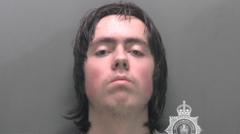
Osagie Aigbonohan knew exactly how that light felt. But he wasn’t looking for warmth. He was looking for a thermal signature—a way to track the heat of human vulnerability and bleed it dry.
When the news broke that Aigbonohan had been jailed for his role in a massive romance fraud operation, the headlines focused on the numbers. They spoke of the £440,000 stolen, the multiple identities, and the cold, hard gavel of British justice. But the math is the least interesting part of this tragedy. To understand why a man would spend years weaving a web of digital lies, you have to look at the mechanics of the "long con" and the terrifyingly simple realization that greed, when unchecked, acts like a physical weight, pulling the soul through the floor.
The Architecture of a Ghost
Aigbonohan didn't just walk into a bank and demand money. That’s clumsy. That’s honest. Instead, he operated in the shadows of "Kevin Pratt," a fictional persona designed to be the perfect vessel for a woman’s unspent affection.
Imagine a woman we’ll call Susan. Susan is 62. She has a garden she tends to alone and a phone that rarely rings with anything other than spam. Then comes a message. Kevin is handsome in a non-threatening way. He has a stable job—perhaps something involving international business or engineering—that explains why he’s always traveling and why he can’t meet for coffee just yet.
He is attentive. He remembers her dog’s name. He asks how her back feels after a day of weeding.
This is where the "blindness of greed" that the judge mentioned during sentencing begins its work. It wasn't just Aigbonohan’s greed that drove the engine; it was his calculated exploitation of a victim’s hunger for connection. He offered a "tapestry"—no, let's call it a shroud—of words that felt like a lifeline. He wasn't selling a product. He was selling a version of Susan where she wasn't alone anymore.
The Pivot From Love to Logistics
The transition from "I love you" to "I need ten thousand pounds" is a delicate dance. If a stranger asks for money, you hang up. If a partner asks for help because their equipment is stuck in international customs or their bank account has been frozen by a bureaucratic nightmare, you reach for your wallet.
Aigbonohan was a master of the logistics of misery.
Investigators eventually found a spreadsheet on his devices. It wasn't a list of friends or a diary. It was a ledger of human beings. He tracked them like inventory.
- Victim A: Progressing.
- Victim B: Resisting.
- Victim C: Depleted.
The coldness of a spreadsheet sitting next to the heat of a "romantic" text message reveals the true nature of the crime. It is a form of emotional identity theft. While the victims were dreaming of a future, Aigbonohan was calculating his "burn rate"—how fast he could extract the maximum amount of cash before the mark realized the person on the other end of the screen didn't exist.
The money didn't go toward a life with Susan. It went into a churn of luxury, hidden accounts, and the maintenance of the lie. This is the invisible stake of romance fraud. It isn't just the loss of life savings, though that is devastating. It is the permanent poisoning of the victim’s ability to trust their own judgment. When the mask falls, the victim is left with a haunting question: Who was I talking to for ten months?
The Grift as a Mirror
We often want to believe that we are too smart to be fooled. We think we would see the red flags. But Aigbonohan’s success proves that intelligence has very little to do with it. Fraud of this magnitude relies on the biology of hope.
When we feel a connection, our brains release oxytocin. It’s a chemical that softens our analytical edges. Aigbonohan didn't hack computers; he hacked the human endocrine system. He used the very things that make us "human"—our empathy, our desire to help those we love, and our optimism—and turned them into vulnerabilities.
The prosecution noted that he was "blinded by greed," a phrase that suggests a temporary loss of sight. But greed like this is more of a focused lens. It narrows the world until the only things visible are figures on a screen and the next hit of dopamine from a successful "hit."
Consider the moment the police entered his residence. They didn't find a mastermind in a high-tech lair. They found a man surrounded by the mundane tools of a digital predator. Burner phones. Laptops. Scraps of paper with names that weren't his. It was a factory of false intimacy.
The Silent Aftermath
While Aigbonohan sits in a cell, the ripples of his "work" continue to move through the lives of those he touched.
For the victims, the sentence of the court is only the beginning of a different kind of imprisonment. There is the shame of telling children that the inheritance is gone. There is the silence of the phone that no longer lights up at 2:00 AM. There is the terrifying realization that the "Kevin" they loved was actually a series of copy-pasted scripts and a man who viewed their heartbreak as a successful business quarter.
Justice, in these cases, is a blunt instrument. It can lock a man away, but it cannot return the thousands of hours spent in a dream. It cannot un-read the poems he sent or un-feel the "warmth" of his digital presence.
The tragedy of Osagie Aigbonohan isn't just that he was a criminal. It’s that he was a reminder of how easily our most sacred human impulses can be harvested like a crop. He looked at the world and didn't see people; he saw "liquid assets" wrapped in skin.
He found a way to weaponize the silence of a lonely room.
As the cell door closed, the light from his many screens finally went dark. But for his victims, the darkness is different now. It’s heavier. It’s the sound of a house that is finally, truly quiet, and the knowledge that sometimes, the person holding the campfire is only waiting for you to get close enough to see what they can take before the flames go out.
The bank accounts may eventually be closed, and the spreadsheets deleted, but the ghost of "Kevin" will haunt those living rooms for years, a digital shadow that no amount of light can ever quite erase.
The screen flickers off. The room stays dark.