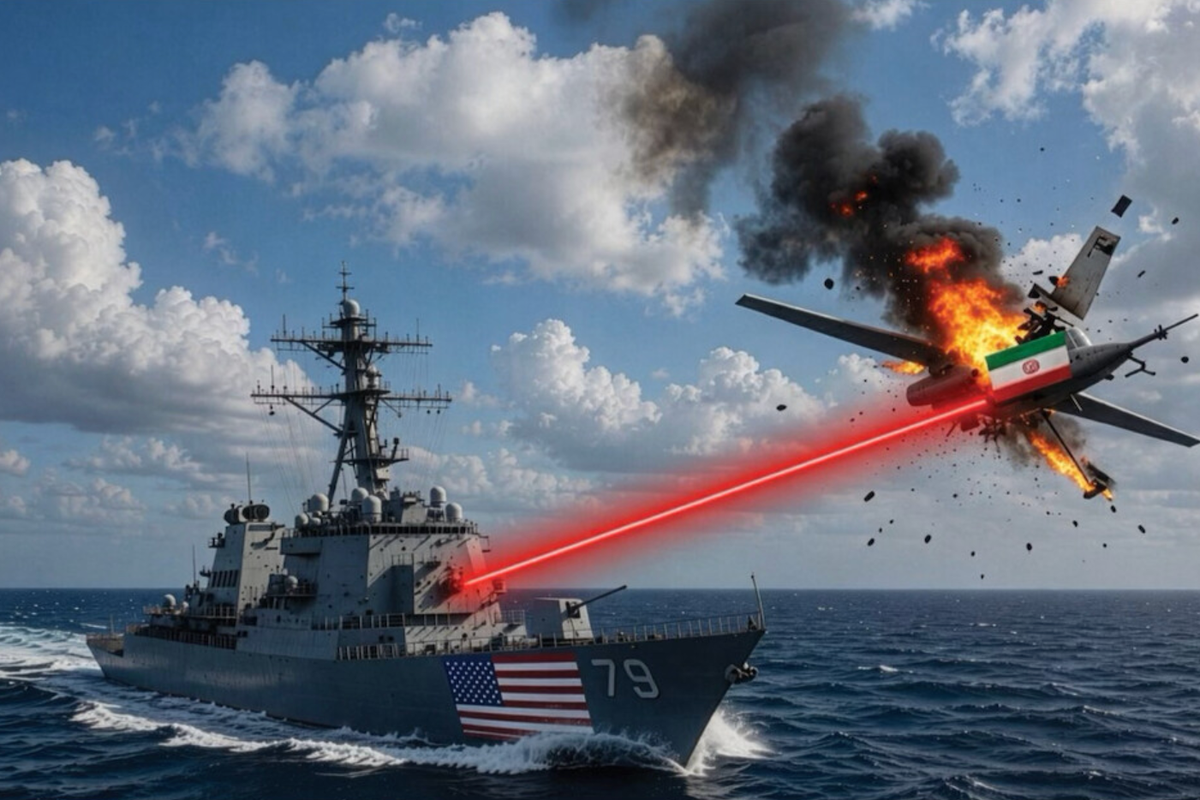
The pre-dawn communication cycle of Donald Trump represents a deliberate exploitation of news cycle mechanics rather than a series of impulsive outbursts. By flooding the information environment at 5:00 AM, a political actor secures the "first mover advantage," dictating the thematic baseline for morning news broadcasts and digital editorial meetings. This specific incident—centered on the colloquialization of missile defense systems and personal branding—functions as a high-frequency trading algorithm for political capital, seeking to overwhelm competitors' ability to respond before the public consciousness is saturated.
The Mechanics of Information Dominance
The efficacy of a "Truth Social blitz" rests on three structural pillars that force the media ecosystem into a reactive posture.
- Editorial Pre-emption: Most major newsrooms operate on a cycle that begins between 6:00 AM and 8:00 AM ET. By initiating a narrative at 5:00 AM, the subject matter is already "trending" by the time assignment editors begin their shifts. This creates a sunk-cost fallacy for journalists: the story is already high-volume, so they must cover it despite its lack of policy depth.
- Linguistic Simplification: The use of onomatopoeia, such as "bing, bing, gone" to describe sophisticated laser defense technology, serves a dual purpose. It reduces complex geopolitical defense procurement into digestible, viral units and simultaneously mocks the perceived "over-intellectualization" of his opponents. This is a deliberate aesthetic choice designed to signal efficiency over bureaucracy.
- The Contextual Wedge: Mixing high-stakes military claims with mundane personal updates, such as birthday plans, creates a cognitive dissonance that makes the content difficult to categorize. Is it a security briefing or a lifestyle update? This ambiguity ensures the content is shared across disparate social media verticals, from political hard-news circles to celebrity gossip networks.
Technical Feasibility vs. Rhetorical Posturing
The specific mention of "Lasers" as a finalized, omnipotent defense solution requires a breakdown of the current Directed Energy Weapon (DEW) landscape. While the rhetoric suggests a completed and flawless system, the actual deployment of high-energy lasers (HEL) faces significant physical and logistical bottlenecks.
The Power Density Constraint
For a laser to effectively neutralize a ballistic missile or a high-speed drone, it must deliver a specific amount of thermal energy to a focused point on the target for a sustained duration. This requires a massive, stable power source. Unlike the "bing, bing" narrative suggests, current mobile units struggle with:
- Atmospheric Thermal Blooming: The laser beam heats the air it passes through, causing the beam to spread and lose focus.
- Dwell Time: The weapon must track and stay on a target moving at thousands of miles per hour for several seconds to induce structural failure.
- Cooling Cycles: High-power lasers generate immense heat within the weapon itself, requiring significant downtime between "shots."
The rhetorical strategy bypasses these engineering realities to sell a "technological silver bullet." In political strategy, the perception of a technological breakthrough is often more valuable than the utility of the technology itself, as it projects a sense of inevitable dominance.
The Birthday Economy and Brand Maintenance
Linking military prowess with a personal milestone like a birthday is a classic tactic in personality-driven political movements. It frames the individual's longevity as synonymous with the nation's strength. This creates a "celebration loop" where supporters are encouraged to engage with political content under the guise of social well-wishing.
The data suggests that personal milestones generate higher organic engagement rates than policy papers. By tethering a defense narrative to a birthday announcement, the actor ensures that the military claims are carried further by the algorithm than they would be in isolation. This is an optimization of the attention economy, where the cost of reaching an additional million voters is effectively zero when piggybacking on a viral personal event.
Calculated Outrage as an Engagement Driver
The "blitz" relies on the certainty that critics will mock the language used. This mockery is a critical component of the distribution strategy. When an opponent shares the "bing, bing" quote to highlight a perceived lack of seriousness, they are nonetheless distributing the core message: that the actor is focused on national defense and is unconventional.
The feedback loop functions as follows:
- The Trigger: A non-standard or "absurd" statement is made.
- The Reaction: Media outlets and opponents provide free distribution through "fact-checks" or ridicule.
- The Consolidation: The core base views the ridicule as an attack from an out-of-touch elite, strengthening their loyalty.
- The Result: The actor dominates the total share of voice (SOV) for that 24-hour window.
The Structural Fragility of the Narrative
While this strategy is effective for short-term dominance, it possesses a high rate of "narrative decay." Because the claims are not anchored in specific, verifiable policy data—such as budget line items or specific military contractors—they are easily displaced by the next high-frequency event. This necessitates a continuous, escalating series of "blitzes" to maintain the same level of public attention.
The risk is "outrage fatigue," where the marginal utility of a pre-dawn post diminishes over time. To counter this, the actor must move the goalposts or increase the intensity of the claims. The transition from discussing conventional hardware to "lasers" represents this escalation.
Strategic Asset Allocation in Communication
A sophisticated analysis reveals that these posts are not mere vanity. They are an asset-allocation strategy. By occupying the media's bandwidth with "lasers" and "birthdays," the actor successfully crowds out unfavorable coverage of legal proceedings or competing policy proposals from rivals. It is a defensive perimeter established through noise.
The "Cost Per Impression" (CPI) for this strategy is effectively zero, whereas a rival would need to spend millions in advertising to achieve the same reach. This creates a massive "asymmetric information advantage" that traditional political campaigns, with their layers of consultants and vetting processes, are structurally incapable of matching.
The Future of the High-Frequency Political Cycle
The integration of personal branding with national security rhetoric is likely to become the standard for digital-first candidates. We are moving away from the "Press Release Era" into the "Direct-to-Consumer (D2C) Politics Era." In this model, the intermediary of the journalist is bypassed entirely, or worse for the journalist, utilized as an unwitting distribution agent for the very content they wish to critique.
To counter this, competitors must move away from reactive "fact-checking" of individual phrases and instead focus on the underlying mechanics of the distribution. Fighting the "bing, bing" narrative directly only feeds the algorithm. The only effective counter-strategy is "narrative displacement"—the introduction of a different, equally high-velocity story that operates on a separate emotional frequency.
The terminal state of this communication trend is a permanent 24-hour mobilization of the electorate. There is no longer an "off-cycle." The candidate is a constant presence in the digital pocket of the voter, alternating between the role of a commander-in-chief and a social media influencer. This blurring of lines is not a bug; it is the primary feature of modern power acquisition.
The strategic play here is to recognize that the content of the post is secondary to the timing and the volume. Analysis of the specific words used—while necessary for debunking technical falsehoods—often misses the broader tactical objective: the total occupation of the voter's cognitive space before they have even had their first cup of coffee. The "lasers" are not just a defense system; they are a metaphor for the focused, high-energy beam of attention the actor is able to direct at will.