Power used to look heavy. Mahogany desks, leather-bound briefing books, stiff portraits hanging in federal corridors. Now power looks like a ring light reflecting off cheap laminate.
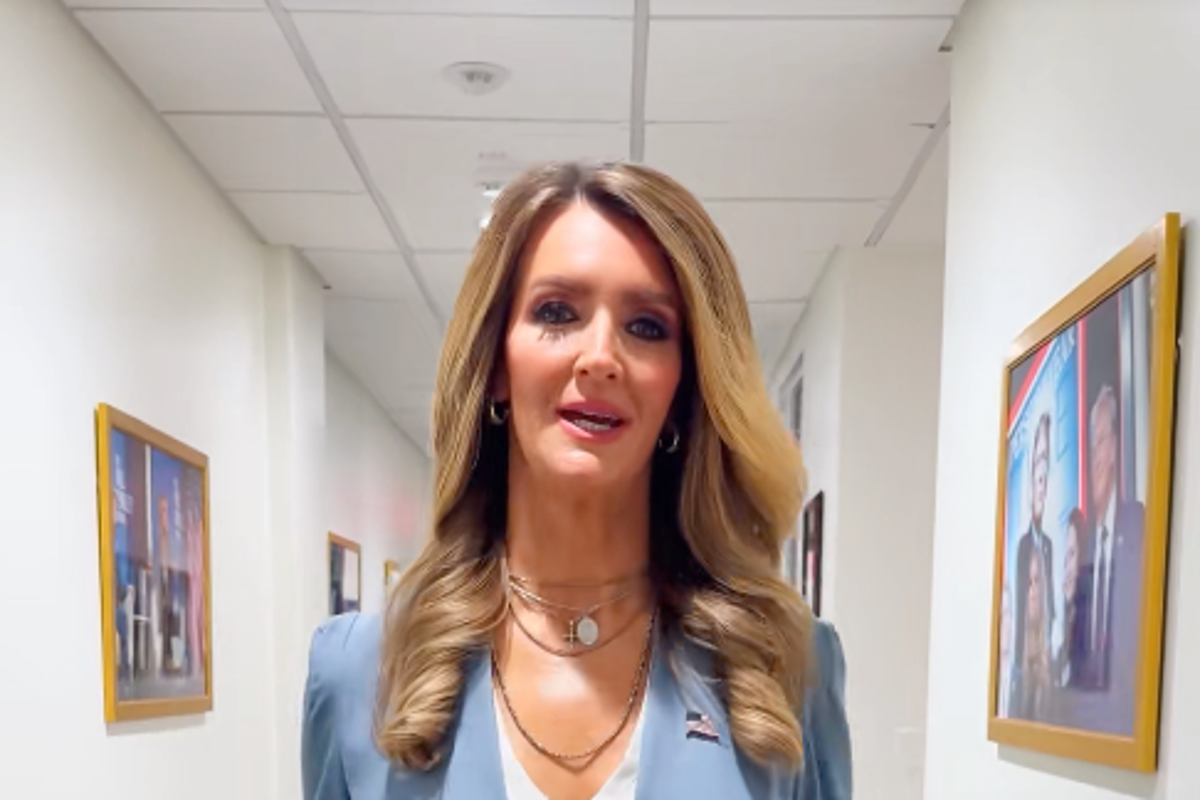
When a senior Trump administration official stepped into the crosshairs of short-form video culture, the resulting digital pile-on exposed a much larger anxiety about how modern authority performs. Social media users flooded comment sections with ridiculing observations. They compared the official's stiff physical cadence to extraterrestrial life forms learning how to use human joints for the first time. The internet laughed. The clip racked up millions of views.
Yet treating this viral moment as a mere internet joke misses the deeper shift happening beneath the surface of political communication. We are watching the total collapse of institutional insulation. For decades, cabinet members and high-ranking policy architects operated behind thick velvet ropes of traditional media. They spoke to vetted reporters. They appeared on Sunday morning talk shows where producers controlled the lighting, the audio, and the distance between the subject and the viewer.
Those days are gone.
The Mechanics of Accidental Authenticity
The modern political machine demands constant visibility. Officials are told they must humanize themselves. They are advised to bridge the gap between Washington bureaucracy and the everyday voter by participating in internet culture. This advice is poisoned by design.
When an official whose entire professional existence relies on rigid protocol attempts to adopt the casual, ironic vernacular of short-form video, the dissonance is jarring. The public smells the calculation instantly. Even when the attempt at informality is genuine, decades of institutional conditioning make natural movement nearly impossible.
The physical posture of a government official under scrutiny tells a story. Shoulders stay locked. The gaze drifts toward an invisible teleprompter or a nervous handler off-camera. The stride lacks the unscripted fluidity of someone who spends their weekends at a neighborhood grocery store rather than inside secure conference rooms. TikTok users possess an almost predatory radar for artificiality. They stripped away the official's title, uniform, and expensive tailoring, reducing the person to a mechanical anomaly moving awkwardly across a screen.
This is the penalty of forced accessibility. The public does not actually want institutional figures to be like them. The public wants institutions to function competently. When officials trade gravitas for clicks, they invite the audience to judge them not on their policy portfolios, but on their rhythm, their fashion, and their meme-readiness.
The Weaponization of Cringe
Humor has replaced policy critique as the primary vehicle for political dissent. A lengthy editorial dissecting a cabinet member's deregulation strategy will struggle to break a few thousand views. A three-second loop of that same official navigating a hallway like a malfunctioning android will dominate national feeds by noon.
This transformation of political discourse into an aesthetic competition changes who survives in public service. Competence becomes secondary to camera-readiness. Officials who excel at quiet, methodical administration find themselves ill-equipped for an ecosystem that rewards spectacle, whether positive or negative. Meanwhile, the administration's communications teams are caught in an impossible bind. Do they shield their principals from the digital arena and risk looking out of touch with younger demographics, or do they push them into the arena and risk viral humiliation?
The viral reaction to the cabinet member's video demonstrates that the administration chose poorly. By letting policy architects loose in an environment governed by algorithmic chaos, they exposed their leadership to a form of populist mockery that traditional press offices cannot spin away. You cannot issue a press release correcting a meme. You cannot fact-check a joke about an official walking like an alien visitor.
The Shrinking Distance Between Power and Ridicule
We have entered an era where the distance between the Oval Office and a joke comment section has been compressed to zero. Every public movement is captured, slowed down, analyzed, and repurposed for amusement.
This dynamic creates a profound paranoia within governing circles. When leaders know that a stray hand gesture or an unpolished gait can instantly become global mockery, their public appearances become hyper-managed, robotic performances. Ironically, this hyper-management is precisely what triggers the alien comparisons in the first place. The human element is squeezed out, replaced by media training that teaches officials how to smile without reaching their eyes and how to walk without showing vulnerability.
The internet sees through the training. It always does.
As long as political survival remains tied to digital engagement, officials will continue stepping onto platforms designed to expose their human flaws. The viral roasting of a Trump cabinet member is not an isolated PR misstep. It is a preview of governance in the attention economy, where no amount of executive power can protect an official from the unsparing lens of a smartphone camera.
Trump's SURPRISE CABINET ROAST has the WHOLE ROOM LAUGHING
This clip highlights the lighter moments and interactions involving Donald Trump and his cabinet members behind closed doors.