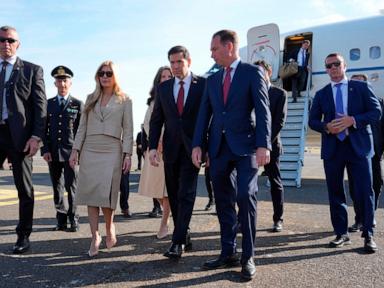
The May 7, 2026, meeting between Secretary of State Marco Rubio and Pope Leo XIV functions less as a traditional diplomatic summit and more as a high-stakes exercise in strategic hedging. While the State Department frames the visit around Middle East stability and Western Hemisphere interests, the underlying logic is driven by a widening divergence between Washington’s kinetic foreign policy and the Vatican’s moral multilateralism. This engagement occurs at a critical inflection point: a direct rhetorical conflict between President Donald Trump and the first American-born Pope, centered on the humanitarian and theological legitimacy of the ongoing conflict with Iran.
To understand the mechanics of this visit, one must analyze the three distinct vectors of tension that have transformed a routine audience into a mission of urgent damage control.
The Triad of Conflict: Geopolitical, Theological, and Electoral
The friction between the current administration and the Holy See is not merely a matter of personality; it is rooted in a fundamental mismatch of operational objectives.
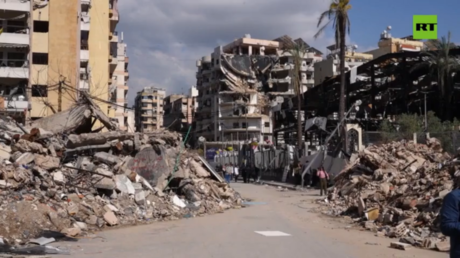
- The Iran Kinetic Variable: Since the initiation of U.S.-Israeli operations against Iran in March 2026, Pope Leo XIV has utilized the "Bully Pulpit" of the papacy to challenge the justification of the war. His Palm Sunday address, which condemned the "manipulation of religion for military gain," directly countered the administration’s narrative. The Pope’s subsequent call for citizens to lobby their political leaders to end the war represents a direct intervention in U.S. domestic policy, challenging the executive branch's monopoly on the war narrative.
- The Theological Breach: President Trump’s characterization of the Pope as "endangering Catholics" by allegedly favoring an Iranian nuclear capability is a high-risk rhetorical gambit. By framing the Pope’s peace advocacy as a security threat to the faithful, the administration is attempting to bifurcate the Catholic electorate. This creates a "cost function" for Catholic politicians like Rubio, who must now navigate the space between constitutional loyalty to the administration and spiritual adherence to the Vatican.
- The European Alliance Fracture: The tension has moved beyond the Tiber. Italian Prime Minister Giorgia Meloni’s public defense of the Pope has created a bottleneck in U.S.-Italy relations. Meloni, a critical right-wing ally, faces a specific electoral constraint: alienating the Catholic base in Italy by backing Trump’s vitriol against the Pontiff is a political non-starter. This has resulted in a cooling of bilateral cooperation on NATO troop deployments and trade tariffs.
The Secretary as a Mitigating Variable
Marco Rubio’s role in this hierarchy is uniquely defined by his dual identity as a high-ranking Catholic official and the nation's chief diplomat. His objective in Rome is to perform diplomatic arbitrage—attempting to buy time and goodwill to offset the "rhetorical tax" levied by the President’s social media broadsides.
Technical Objectives of the Audience:
- The Humanitarian Corridor: Rubio is tasked with negotiating specific Vatican-led aid distribution in conflict zones, particularly in Cuba and the Middle East, where the Church’s infrastructure remains operational despite the collapse of secular diplomatic channels.
- Nuclear De-escalation Narrative: To counter the President’s claim that the Pope supports a nuclear Iran, Rubio must secure a joint statement—or at least a Vatican reaffirmation—of the Church's long-standing opposition to all nuclear proliferation. This would provide the administration with the necessary cover to retreat from its more aggressive accusations.
- Relational Restoration: The presence of Rubio, alongside the prior involvement of Vice President JD Vance, signals to the Curia that the administration still recognizes the Vatican as a sovereign entity with significant soft power, even if the President’s rhetoric suggests otherwise.
Constraints and Systemic Risks
The efficacy of Rubio’s mission is limited by the Volatility of the Executive Command. Diplomacy typically relies on predictable signaling; however, the current administration operates on a model of "disruptive unpredictability." Even as Rubio enters the Apostolic Palace, a single social media post from Washington can invalidate any progress made in the meeting.
Furthermore, the Vatican’s Secretary of State, Cardinal Pietro Parolin, has indicated a shift from passive observation to active critique. The Vatican’s decision to characterize the administration's attacks as "odd" and "unacceptable" suggests that the Holy See is willing to leverage its global influence to isolate the U.S. position on Iran.
Strategic Forecast: The Pivot to Multilateralism
The most probable outcome of the Rubio-Leo meeting is not a resolution of the Iran conflict, but the establishment of a "back-channel" mechanism for humanitarian mitigation. The administration needs the Vatican to prevent a total collapse of support among European right-wing governments. Conversely, the Vatican needs the U.S. to ensure that the war does not expand into a broader regional conflagration that would devastate Christian communities in the Levant.
The long-term success of this diplomatic effort will be measured by whether the President ceases direct attacks on the Pontiff’s character. If the rhetoric persists, Rubio’s visit will be recorded as a tactical failure, signaling that the administration has prioritized domestic populist signaling over the maintenance of its most ancient and influential diplomatic ties. The strategic play for the State Department now is to pivot the conversation toward the "Persecution of Christians" and "Western Hemisphere Security"—shared interests that can serve as a bridge over the volatile waters of the Iran war.
Marco Rubio's high-stakes Vatican visit
This video provides critical context on the internal administration tensions and the conflicting narratives regarding the Iran war that Rubio must now manage in his meeting with Pope Leo XIV.