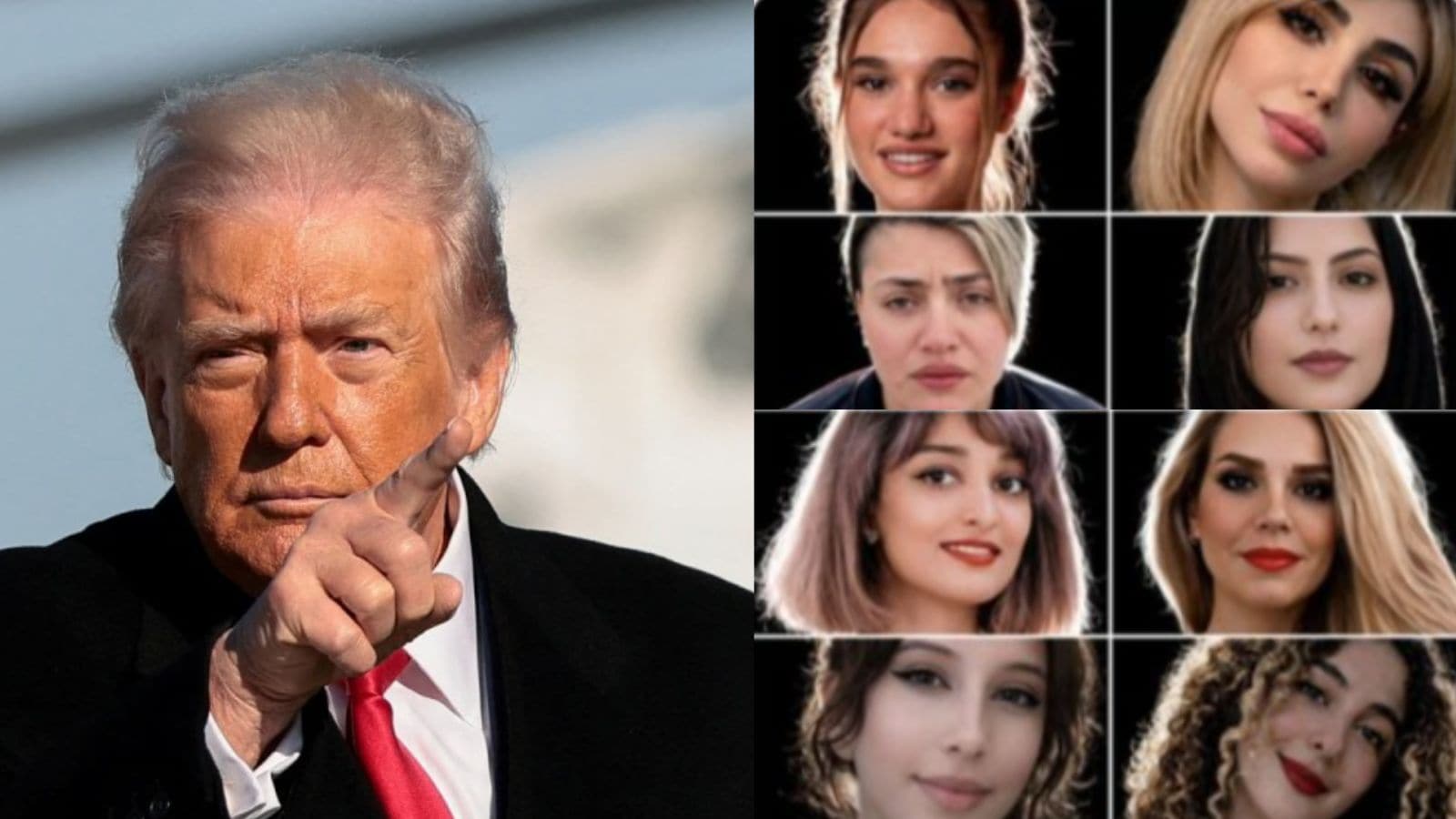
Donald Trump’s recent demand that Tehran release eight women facing execution isn't the humanitarian gesture the mainstream press wants to paint it as. It isn’t a "softening" of his stance or a sudden pivot toward global human rights advocacy. It is a cold, calculated exercise in leverage. If you think this is about the sanctity of life, you aren't paying attention to how geopolitical chess is actually played.
Washington thrives on the "lazy consensus" that human rights and hard-nosed diplomacy are separate silos. They aren't. In the high-stakes theater of Middle Eastern relations, morality is a currency. Trump isn't just asking for a release; he is pricing the entry fee for the negotiation table. He is forcing Iran to pay in domestic credibility before he even considers lifting a single sanction.
The Leverage of Moral High Ground
Western media loves the narrative of the "unpredictable" leader. But there is nothing unpredictable about cornering an adversary with their own brutality. By highlighting these eight specific cases, Trump creates a binary choice for the Iranian leadership that is designed to destabilize them before talks even begin.
If Iran releases the women, they signal weakness to their own hardliners and admit that their judicial system is a bargaining chip. If they execute them, they hand Trump the political ammunition he needs to walk away from the table or ramp up "maximum pressure" with full international backing. It’s a classic pincer movement.
I’ve watched diplomats waste years on "building trust" through back-channel cultural exchanges and low-level trade promises. That approach is dead. Trust is for friends; leverage is for rivals. By front-loading a human rights demand, the administration is testing the "will to deal" in a way that doesn't cost the U.S. a cent.
The Myth of the Humanitarian Pivot
Let’s dismantle the idea that this signifies a shift in policy. The "America First" doctrine hasn't gone soft. It has simply recognized that the most effective way to isolate a regime is to make their internal policies a global PR nightmare.
Critics argue that tying human rights to nuclear or regional security talks "muddies the waters." They claim it makes a complex deal impossible. This is the hallmark of the career bureaucrat who values the process over the result. In reality, merging these issues simplifies the board. It establishes a baseline: if you want to be treated like a global power, you cannot act like a medieval fiefdom.
The danger, of course, is that this strategy treats human lives as poker chips. We have to be honest about that. It’s a brutal, transactional view of the world. But it’s also the only one that has actually forced the Iranian regime to pause. When you play nice, they build centrifuges. When you threaten their global standing by naming their victims, they start calculating the cost of their stubbornness.
Why The Conventional Wisdom Is Wrong
The standard foreign policy playbook says you negotiate the "big stuff" first—nuclear enrichment levels, ballistic missile ranges—and leave the "social issues" for later. That is exactly backwards.
- Social issues are the regime's Achilles' heel. The Iranian government’s legitimacy is tied to its enforcement of strict moral codes. Forcing them to blink on these codes is a more significant blow than a 2% reduction in uranium stockpiles.
- Public pressure is a force multiplier. You cannot get the European Union to agree on oil sanctions based on complex physics. You can get them to agree based on the impending execution of women.
- It creates an exit ramp. If the talks go south—and they likely will—the U.S. leaves the room as the defender of the oppressed, not the aggressor.
The Geometry of the Bargaining Table
Imagine a scenario where the U.S. ignores these executions and goes straight to the nuclear file. We would be signaling that we don't care about the nature of the regime, only their hardware. That was the flaw of the 2015 JCPOA. It treated Iran like a predictable state actor while ignoring the fact that their domestic oppression is the fuel for their regional aggression.
By centering the eight women, the administration is effectively saying that the hardware and the software are the same problem. You cannot separate the missiles from the men who order the hangings. This isn't just "tough talk." It is a fundamental shift in the definition of what a "peace talk" actually looks like. It is no longer just about what happens in a lab; it’s about what happens in a prison cell.
The Cost of the Counter-Intuitive
This approach has a high failure rate. Let’s be transparent. If Iran calls the bluff and proceeds with the executions, the U.S. is boxed into a corner. We would be forced to escalate, perhaps beyond what is economically or militarily convenient.
But the alternative—the "silent diplomacy" of the last decade—has yielded nothing but a more aggressive Iran and a more divided West. The current strategy accepts the risk of escalation for the chance of a total victory. It’s high-variance diplomacy.
Addressing the Skeptics
People often ask: "Doesn't this just make Iran more defensive?"
That question assumes they aren't already defensive. The regime is already in a state of permanent paranoia. The goal isn't to make them feel safe; it’s to make their current path feel unsustainable.
"Is this just a distraction from domestic issues?"
Even if it were, it’s a distraction that puts eight lives on the line and forces a hostile power to justify its existence to the world. A distraction with consequences is just called "strategy."
Stop Looking for a Peace Prize
The media is looking for a "Nixon to China" moment. They want a photo op, a handshake, and a Nobel Peace Prize. They are looking for the wrong things.
This isn't about peace in the way we’ve been taught to think about it. It isn’t about harmony or mutual understanding. It’s about a managed retreat of a hostile power. Trump isn't looking for a friend in Tehran; he’s looking for a surrender on his terms.
Every word regarding these eight women is a brick in a wall he is building around the Iranian leadership. He is forcing them to choose between their ideology and their survival. The "peace" being discussed isn't a handshake—it’s a settlement.
If you’re still waiting for a traditional diplomatic breakthrough, you’re reading the wrong map. The goal isn't to fix the relationship; it’s to win the conflict without firing a shot. By the time the parties actually sit down at a table, the most important concessions will have already happened in the court of global opinion.
Stop falling for the "humanitarian" label. This is psychological warfare disguised as a press release. It’s brilliant, it’s ruthless, and it’s the only way to deal with a regime that views traditional diplomacy as a sign of terminal decline.
The deal isn't on the table yet. The table is still being built. And every life saved is just another pound of flesh extracted from a regime that thought it could bargain with the world while slaughtering its own.
This isn't a plea for mercy. It's a demand for payment.