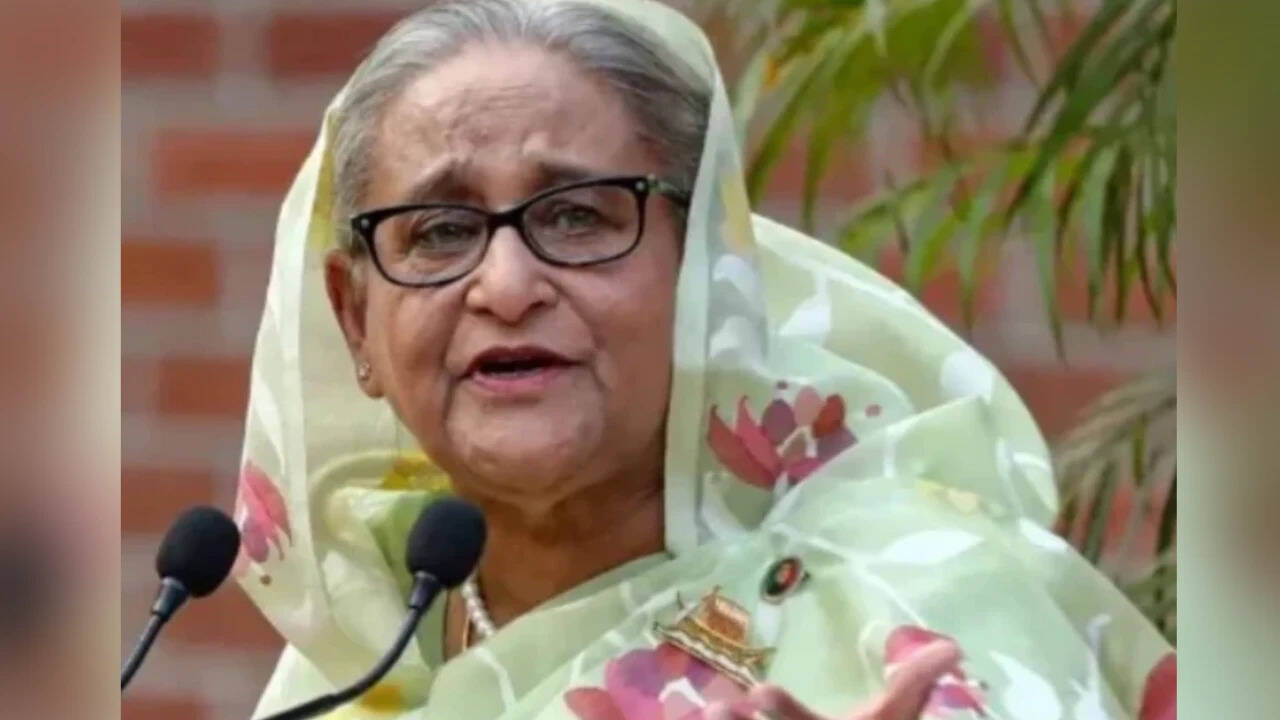
International extradition requests rarely succeed on moral appeals alone. When political transitions occur through sudden extra-constitutional shifts, the legal instruments governing cross-border criminal accountability face severe structural stress. The diplomatic standoff between Dhaka and New Delhi over the repatriation of former Bangladeshi Prime Minister Sheikh Hasina exposes the limits of bilateral legal cooperation when intersecting with domestic political survival and strategic regional interests.
Deconstructing this impasse requires analyzing the mechanics of the 2013 bilateral extradition treaty, the constraints of political will, and the systemic cost functions facing both governments.
The Legal Architecture and Its Flaws
Bilateral extradition treaties operate as legal contracts between sovereign states, but their execution relies entirely on executive discretion and domestic statutory definitions. The India-Bangladesh Extradition Treaty, signed in 2013 and amended in 2016, streamlined the process by reducing the requirement for a formal grand treaty execution down to standard warrant-based requests. However, the treaty contains crucial structural escape hatches.
Political offenses traditionally exempt individuals from extradition under international law. While ordinary criminal acts—such as corruption, abuse of power, or murder charges leveled against political figures—are ostensibly extraditable, recipient states retain sovereign authority to evaluate whether a prosecution is politically motivated.
When a government undergoes a revolutionary or unseated transition, the incoming administration faces a high evidentiary threshold to prove that judicial processes will remain independent, free from retributive bias, and compliant with international fair trial standards.
[Extradition Request Filed] --> [Executive Screening] --> [Judicial Review]
                                                                |
        +-------------------------------------------------------+
        v
[Political Exception / Non-Inquiry Doctrine] --> [Refusal or Grant]
In the current dynamic, the interim government in Dhaka has intensified pressure on New Delhi, framing the return of Hasina as an indispensable prerequisite for domestic closure and transitional justice. Yet, from a legal standpoint, New Delhi's executive branch possesses broad discretionary powers under its extradition laws to pause, evaluate, or reject requests if it determines that fulfilling them compromises national interest, regional stability, or fundamental human rights obligations.
The Strategic Cost Function for New Delhi
For India, managing the presence of a longtime strategic partner presents a complex risk matrix. Foreign policy decisions are rarely governed by simple bilateral tit-for-tat metrics; they involve long-term security calculations, regional balance of power, and institutional credibility.
The cost function for New Delhi comprises three distinct variables:
- Bilateral Goodwill Deprecation: Handing over a prominent leader who governed a neighboring state for over a decade signals vulnerability and a lack of reliability toward historic allies. This risks alienating political factions in Bangladesh that may return to power in future electoral cycles, creating long-term friction in Dhaka-New Delhi ties.
- Regional Influence and Border Security: Bangladesh represents a critical security partner for India's northeastern states, counterbalancing cross-border insurgencies and managing shared river water dynamics and trade corridors. An overly antagonistic posture from either side disrupts intelligence-sharing frameworks and logistical cooperation.
- Domestic Legal Precedent: Granting or denying extradition sets a standard for how India handles future high-profile arrivals seeking refuge from neighboring or global jurisdictions. Consistency in applying the political exception clause protects India's sovereign prerogative to grant asylum or shelter to leaders when strategic calculations demand it.
Consequently, New Delhi's tactical posture has been defined by strategic ambiguity. By keeping the legal proceedings opaque and slow-moving, the Indian executive avoids a binary choice that carries negative diplomatic fallout.
The Domestic Imperative in Dhaka
For the interim administration in Dhaka, securing Hasina's return is not merely a legal objective; it is a primary mechanism for consolidating political legitimacy. Following a turbulent transition of power, an administration must establish accountability to satisfy a population that mobilized against the previous regime's governance model.
The absence of the primary political figure complicates domestic tribunal proceedings. Trials conducted in absentia lack the immediate catharsis and public validation that direct cross-examination and legal confrontation provide.
Furthermore, the domestic economy and civil service require stabilization. Pushing the extradition issue to the forefront of bilateral diplomacy serves a dual purpose: it channels public grievance outward toward a diplomatic obstacle, while asserting the sovereignty of the new governing coalition.
However, over-indexing on a single extradition request creates a policy bottleneck. When diplomatic capital is entirely consumed by a demand that the counterpart sovereign has structural incentives to resist, secondary priorities—such as trade agreements, security dialogues, and economic stabilization—suffer from neglect.
The Diplomatic Endgame
Resolving this deadlock requires moving past public ultimatums and engaging in quiet, transactional diplomacy. Neither state benefits from an indefinite diplomatic freeze.
For Dhaka, the path forward involves insulating technical judicial cooperation from high-octane political rhetoric, ensuring that any paperwork submitted meets the rigorous evidentiary standards expected by foreign courts. For New Delhi, managing the fallout requires recognizing that a stable, democratic, and predictable Bangladesh serves its long-term security interests far better than an alienated neighbor harboring deep-seated grievances.
The extradition of Sheikh Hasina remains constrained not by a lack of ink on the 2013 treaty, but by the stark divergence between domestic political necessity in Bangladesh and regional strategic stability calculations in India. Until those two vectors align, the diplomatic standoff will persist as a defining friction point in South Asian geopolitics.