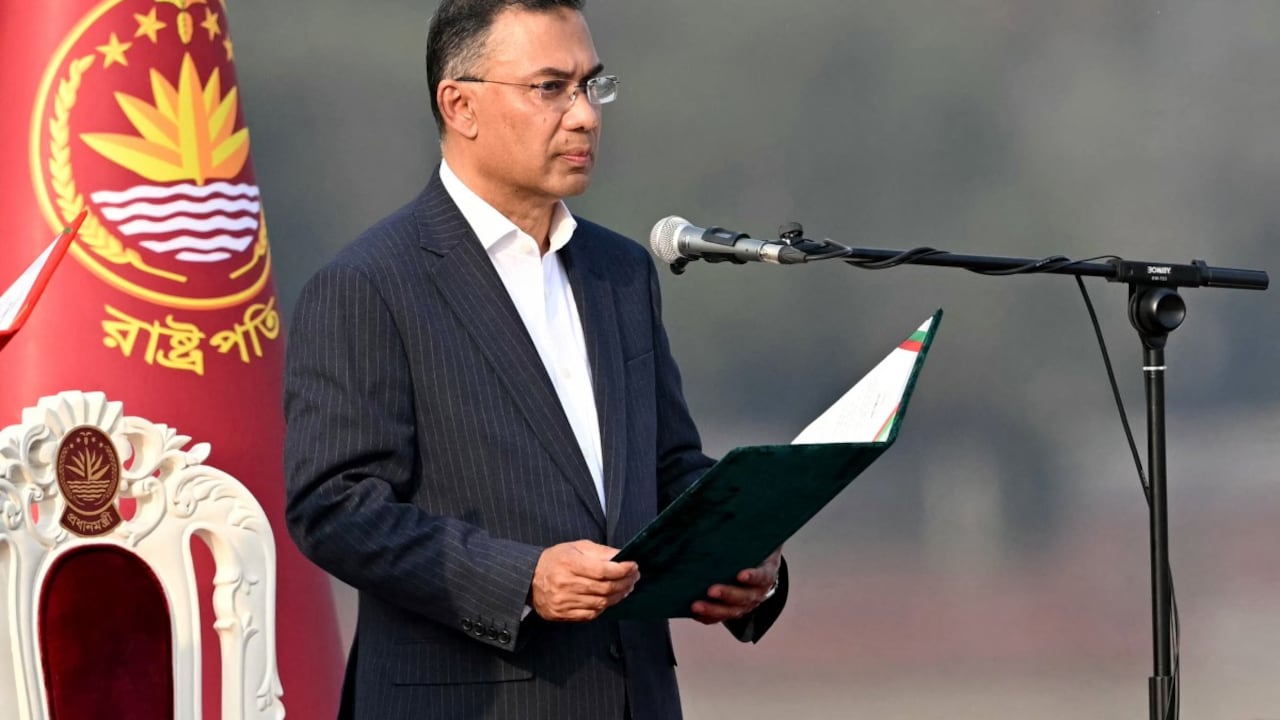
International relations operate on predictable cost-benefit matrices where domestic political survival overrides multilateral optimization. The decision matrix surrounding Prime Minister Tarique Rahman’s projected absence from the upcoming BRICS summit in New Delhi illustrates this principle. When Indian Prime Minister Narendra Modi extended an invitation to Rahman in his capacity as the current chair of the Bay of Bengal Initiative for Multi-Sectoral Technical and Economic Cooperation (BIMSTEC), the proposal carried both economic logic and diplomatic symbolism. Yet, structural friction points within bilateral channels have introduced an acute strategic divergence.
The Cost Function of Diplomatic Engagement
For any newly installed administration, international visibility is a scarce resource allocated against domestic risk. Rahman assumed office in February following a severe political transition in Bangladesh. His foreign policy trajectory immediately prioritized diversification, evidenced by early state visits to Malaysia and China rather than an initial pilgrimage to New Delhi. This sequencing was not random; it reflected a calibrated effort to establish national sovereignty and project non-alignment. For an alternative perspective, check out: this related article.
The invitation to the September BRICS outreach session in New Delhi presented a dual-track opportunity. Economically, participating alongside major emerging markets offers integration leverage, especially given Bangladesh's ongoing engagement with the BRICS-established New Development Bank. Symbolically, it provided a platform for an initial face-to-face bilateral encounter with Modi, stabilizing an uneasy neighborhood.
However, the domestic political cost function shifted violently following a public virtual media interaction by ousted former Prime Minister Sheikh Hasina from Indian soil. In Dhaka's calculus, hosting an exiled leader who faces domestic criminal sentencing creates an intolerable political externality. The resulting diplomatic fallout transformed a routine multilateral attendance decision into a litmus test for national sovereignty and domestic regime security. Further analysis on this matter has been shared by The Washington Post.
The Structural Impediments to Bilateral Reset
The breakdown of the planned New Delhi visit highlights three fundamental systemic barriers currently immobilizing diplomatic progress between the two neighboring states.
The first barrier is the asylum-extradition asymmetry. Dhaka demands accountability for the previous administration through legal channels, while New Delhi faces its own strategic and humanitarian calculi regarding political asylum. When high-profile political statements emanate from the host country, they trigger immediate nationalist backlash in Bangladesh, forcing the ruling Bangladesh Nationalist Party (BNP) to adopt a hardline defensive posture to avoid appearing subservient to Indian regional influence.
The second barrier involves multilateral forum dilution. The BRICS outreach format relies on inviting regional organization chairs to broaden global representation. By utilizing a functional regional mandate (BIMSTEC) to bridge bilateral gaps, New Delhi attempted to depoliticize Rahman's potential visit. Dhaka's strategic planners recognized that attending an event hosted in the capital of a state actively harboring a hostile political figure would signal weakness. The structural incentive to skip the summit outweighs the marginal utility of multilateral networking.
The third barrier centers on great power triangulation. Bangladesh is no longer operating in a binary diplomatic environment. With established economic corridors running toward Beijing and alternative diplomatic engagements in Southeast Asia, Dhaka possesses structural alternatives. If bilateral friction with New Delhi increases, the domestic political penalty of maintaining an independent foreign policy posture decreases.
Assessing the Spillover Effects
The prospective absence of Rahman from the New Delhi BRICS summit alters the regional architecture in quantifiable ways.
Multilaterally, it stalls the institutional convergence between BIMSTEC and BRICS platforms. BIMSTEC relies heavily on active chair participation to drive sub-regional supply chain integration and maritime security frameworks in the Bay of Bengal. A boycott or calculated snub by the current chair diminishes the diplomatic efficacy of the outreach session.
Bilaterally, high-level diplomatic scrambling—exemplified by Indian High Commissioner Dinesh Trivedi’s rapid series of closed-door meetings with Bangladeshi leadership in Dhaka—reveals an acute anxiety in New Delhi. Traditional diplomatic channels are currently insufficient to override domestic political imperatives in Bangladesh. When the domestic political cost of engagement exceeds the diplomatic reward, states revert to isolationist signaling.
Strategic Execution Path
To break this diplomatic deadlock without compromising domestic political standing, diplomatic channels must decouple multilateral economic cooperation from bilateral asylum disputes.
- Establish a formalized, transparent protocol addressing cross-border political communications to eliminate surprise high-profile media events that destabilize fragile political transitions.
- Separate technical economic dialogues under the BIMSTEC and New Development Bank frameworks from leadership-level political summits, allowing trade and infrastructure financing to proceed independently of political friction.
- Utilize third-party neutral venues for initial leader-level consultations, bypassing the domestic political toxicity associated with bilateral state visits in either capital during periods of heightened nationalist sentiment.


