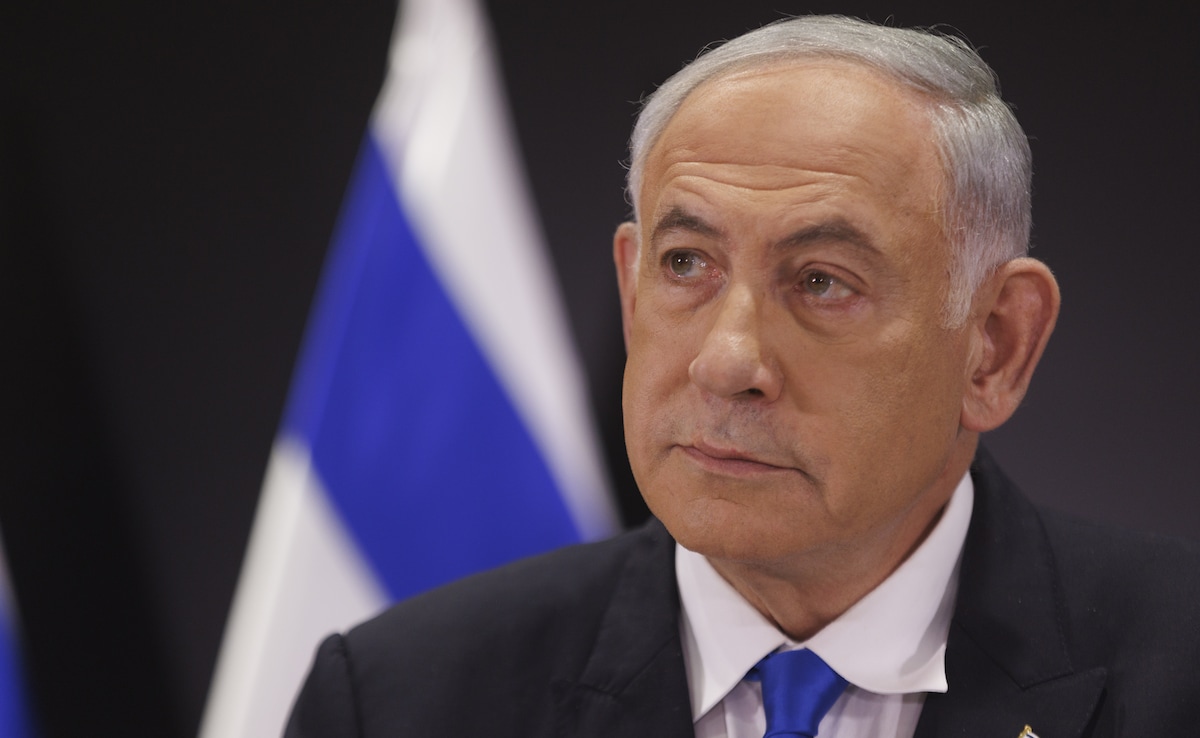
The room in Jerusalem was quiet, but the air felt heavy with the weight of a map that seemed to be shrinking. Benjamin Netanyahu sat before the Knesset Foreign Affairs and Defense Committee, not just as a prime minister, but as a man attempting to rewrite a story of encroaching silence. For months, the headlines had been relentless. Protests in European capitals. Chilly receptions in Washington. The word "isolation" had begun to stick to Israel like wet sand.
But Netanyahu had a counter-narrative. He reached back into the archives of his own memory, pulling out a moment from 2017 that he described as a "love fest." He wasn't talking about a meeting in London or Paris. He was talking about India.
To understand why a decade-old memory matters today, you have to look past the cold press releases of bilateral trade agreements. You have to look at the shoreline of Hadera, where two men—Netanyahu and Indian Prime Minister Narendra Modi—once stood barefoot in the surf.
The Architecture of a Handshake
Diplomacy is often portrayed as a series of dry documents signed in windowless rooms. In reality, it is a visceral struggle for belonging. When Netanyahu invoked the "love fest" with India, he was performing a specific kind of political alchemy. He was trying to prove that the world is much larger than the Western powers currently wagging their fingers at his administration.
Consider the optics of that 2017 visit. It wasn't just a state dinner; it was a choreographed explosion of mutual necessity. India, a country of 1.4 billion people, was once a staunch supporter of the Palestinian cause, a legacy of its Cold War non-aligned roots. Then, the tilt happened. It wasn't a sudden shift, but a slow, grinding realignment driven by technology, defense, and a shared sense of being surrounded by volatile neighbors.
By bringing up India now, Netanyahu is sending a message to his domestic critics and his international detractors alike: If the West turns away, the East is waiting.
It is a bold claim. It is also a fragile one.
The Math of Friendship
In the world of geopolitics, "love" is usually a synonym for "leverage." Israel provides India with the kind of high-end military hardware and agricultural technology that few other nations can offer without heavy political strings attached. India provides Israel with something even more precious: scale.
When a nation of nine million people aligns with a burgeoning superpower, the feeling of claustrophobia begins to lift. Netanyahu recounted the crowds in India, the warmth, the sense of a grand alliance that bypassed the traditional power brokers of the United Nations. He used these images as a shield. He suggested that the "isolation" cited by the media is a local storm, while the global climate remains sunny for Israel.
But a shadow remains.
The "love fest" Netanyahu remembers occurred in a different world. It was a pre-pandemic world, a pre-Ukraine world, and most importantly, a world before the current conflict in Gaza reached its fever pitch. Nations are not static entities; they are collections of interests that shift as the wind changes. India today is walking a tightrope. It values the Israeli partnership, but it also has millions of citizens working in the Gulf, and it harbors its own ambitions to lead the "Global South."
The Loneliness of the Long Distance Leader
Imagine the pressure of a leader who senses the walls closing in. You look at the voting records in the UN General Assembly and see a sea of red. You hear the rhetoric from the ICC. You see the strained relationship with the White House, usually an unshakable pillar of support.
In that moment of profound uncertainty, you do what humans have done for millennia: you remind yourself of when you were loved.
Netanyahu’s insistence that Israel is not isolated is more than just a political talking point. It is an act of psychological defiance. By focusing on the "love fest" with India, he is attempting to decouple Israel’s international standing from its relationship with the West. He is betting on a multipolar world where a country can be a pariah in Brussels but a hero in New Delhi.
This strategy assumes that the "India model" can be replicated or sustained indefinitely. It assumes that trade and defense deals are thick enough to insulate a country from the moral and political pressures of the international community.
The reality is often messier.
The Invisible Stakes
What happens when the memory of a "love fest" meets the friction of a modern conflict?
The stakes aren't just about export licenses or drone technology. The stakes are about the soul of a country’s foreign policy. If Netanyahu is right, Israel can navigate this crisis by simply pivoting its gaze toward Asia, ignoring the outcries from traditional allies. If he is wrong, the "love fest" is a ghost—a comforting image from a simpler time that cannot survive the harsh light of the present.
Diplomacy is a mirror. It reflects how a nation sees itself and how it wishes to be seen. In Netanyahu’s mirror, he sees a leader who is still embraced by giants. He sees a world where the old rules of Western hegemony no longer apply.
But mirrors can be deceptive. They can show us what we want to see while the room behind us continues to empty.
The Prime Minister’s recollection was not just a historical anecdote. It was a plea for time. It was an assertion that the narrative of isolation is a fiction created by those who don't understand the new map of the world. Yet, as the session in the Knesset ended, the fundamental question remained unanswered. Can a memory of a handshake on a beach in 2017 hold back the tide of 2026?
Politics is the art of the possible, but storytelling is the art of the believable. Netanyahu told a story of a world that still opens its arms to him. Whether that world still exists outside the walls of that committee room is a truth that will not be found in memories, but in the cold, unfolding silence of the months to come.
The map is still there. The ink is still wet. And the world is watching to see if the love fest was a beginning or a beautiful, distant finale.