The mahogany doors of a United Nations summit hall do not just keep out the draft. They hold back the weight of history. Inside, the air is thick with the scent of expensive coffee, tailored wool, and the quiet, high-stakes murmuring of global politics. Outside, thousands of miles away, the dust settles over a ruined landscape where families huddle in the wreckage of their lives, waiting for a justice that feels entirely theoretical.
This is the sharp, uncomfortable boundary where international law meets the messy reality of global diplomacy.
A profound paradox sits at the heart of modern international justice. Imagine a man sitting at a polished negotiation table, smoothly debating the terms of a ceasefire. Now imagine that same man wearing the invisible, yet crushing weight of an international arrest warrant for war crimes. Under standard legal logic, the moment his plane touches down on foreign soil, handcuffs should click around his wrists.
But international law is rarely standard. It is a fragile web woven by sovereign nations, and sometimes, the threads have to bend so the entire structure does not snap.
The Friction in the Hallways of Power
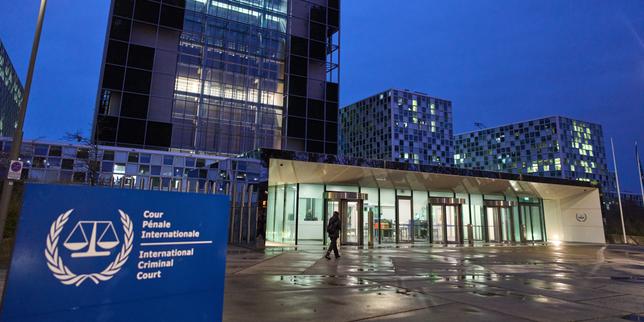
The International Criminal Court exists to ensure that the perpetrators of the world’s worst atrocities cannot hide behind a titles or borders. It is a noble, uncompromising mission. Yet, the court recently faced a agonizing question: what happens when a head of state, hunted by the ICC for alleged war crimes, is invited to a United Nations peace conference?
If you enforce the warrant, you shatter the peace talks. The conflict rages on. More civilians die. If you ignore the warrant to let the leader negotiate, you compromise the very idea of global justice, signaling that a political title is a shield against accountability.
It is a choice between two agonizingly imperfect outcomes.
To understand the tension, consider a hypothetical diplomat named Elena. She has spent twenty years facilitating back-channel communications between warring factions. Elena knows that to stop a war, you eventually have to talk to the person pulling the triggers, no matter how blood-stained their hands might be. In her world, peace is not built by saints; it is negotiated by adversaries.
If a nation hosting a UN peace summit is legally bound to arrest every indicted leader who crosses its border, those leaders simply will not show up. The conference rooms remain empty. The treaties remain unwritten. The bombs keep falling.
The Legal Safe Harbor
The ICC wrestled with this exact friction and arrived at a conclusion that stunned legal purists but relieved pragmatic diplomats. The court determined that a head of state facing war crimes charges can, under highly specific circumstances, travel to a UN peace conference without the host country being obligated to execute an arrest warrant.
This is not a loophole. It is a deliberate, agonizingly calculated pressure valve built into the architecture of international relations.
The rationale hinges on the unique status of the United Nations. A UN summit is not a standard state visit; it is a neutral platform, an extraterritorial space designed specifically to prevent global collapse. The court recognized that the UN’s foundational mandate—to maintain international peace and security—cannot be entirely subordinated to the pursuit of individual criminal prosecution.
Think of it as a temporary humanitarian corridor, not for fleeing refugees, but for the messy process of diplomacy itself.
This decision exposes the deep, underlying vulnerability of international institutions. The ICC has no police force of its own. It relies entirely on the muscle and political will of its member states to make arrests. When a court orders an arrest, it is essentially asking a sovereign nation to deploy its own police, risk its own diplomatic relationships, and bear the geopolitical fallout. By acknowledging that peace conferences require a different set of rules, the court is bowing to a harsh reality: justice cannot exist if the world burns down while we wait for it.
The Human Cost of Pragmatism
For the victims of conflict, this legal pragmatism feels like a betrayal.
Picture a survivor waiting in a displacement camp, holding the fading photograph of a missing child. To that survivor, the nuances of international jurisdiction and diplomatic immunity are irrelevant. They see a system that promises accountability but delivers a VIP pass to a climate-controlled conference hall. They see the person responsible for their suffering flying on a private jet, protected by the very international community that swore to protect the vulnerable.
This is the deepest wound of global governance. The gap between the idealism of the courtroom and the pragmatism of the negotiating table is measured in human grief.
Yet, the counter-argument is equally haunting. If the international community refuses to grant these temporary safe passages, the alternative is often a permanent state of war. A leader who knows they can never leave their bunker without being arrested has no incentive to stop fighting. They become a cornered animal, fighting to the bitter end because total victory is their only guarantee of personal survival.
The court’s decision is an admission that sometimes, to save lives tomorrow, you have to tolerate the presence of a monster today.
A System Hanging by a Thread
This delicate balancing act leaves everyone dissatisfied, which is perhaps the truest sign of a genuine diplomatic dilemma. The purists argue the ICC has weakened its own authority, transforming its warrants into suggestions. The pragmatists argue the court hasn't gone far enough to guarantee the absolute immunity required for fluid, unpredictable peace negotiations.
The reality is a shifting, unstable compromise. Every peace summit becomes a high-wire act, with lawyers and diplomats parsing the exact wording of treaties, trying to determine where the courtroom ends and the conference room begins.
The ink on these international rulings dries quickly, but the debates they spark will echo for generations. We are left watching a world try to figure out how to punish the crimes of the past without sabotaging the peace of the future.
The delegates leave the hall. The mahogany doors close. The global machinery hums along, surviving on compromises that break the heart to keep the peace.


