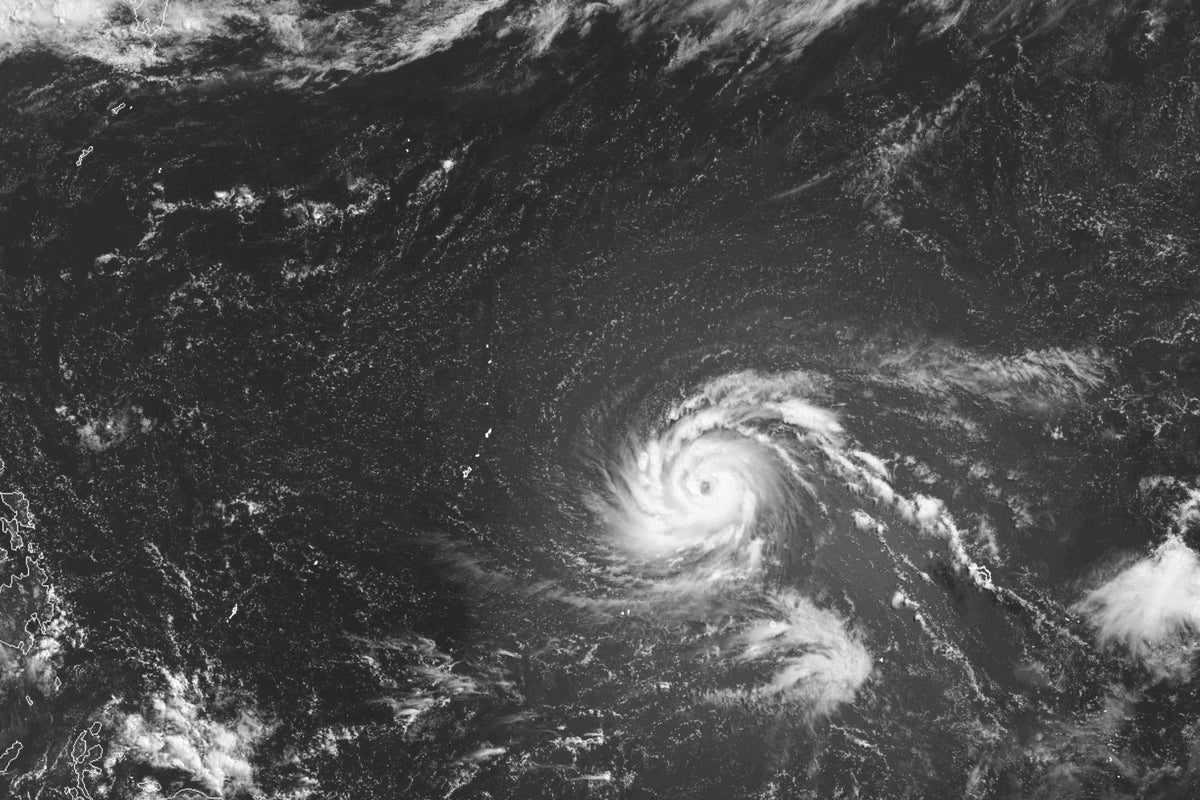
The media cycle for extreme weather follows a script so predictable you could automate it with a 1990s pager.
A storm brews. Headlines scream about a "monster super typhoon" or a "historic hurricane" bearing down on a coast. The cameras pan across a town that got hit eighteen months ago, showing blue tarps and half-built frames. The narrative is instantly set: these communities are helpless victims of back-to-back bad luck, and the solution is a massive injection of federal disaster relief to "build back exactly as it was." If you enjoyed this post, you might want to read: this related article.
It is a comforting story. It is also entirely wrong.
The hard truth that insurance underwriters and civil engineers whisper in closed conference rooms is that federal disaster subsidies are not saving coastal towns. They are trapping them in a cycle of state-sponsored vulnerability. By insulating property owners from the true financial risk of geographic placement, current recovery frameworks ensure that the next storm will cause the exact same level of devastation. For another angle on this event, check out the latest coverage from NBC News.
Stop looking at the sky. The problem isn't the weather. The problem is the architecture of our recovery incentives.
The Myth of the "Unprecedented" Storm
Every time a major storm makes landfall, the immediate reaction is shock. We treat events that occur with statistical regularity as statistical anomalies.
According to data from the National Oceanic and Atmospheric Administration (NOAA), major coastal storms are a structural feature of Atlantic and Pacific weather patterns, not a bug. When a community gets hit twice in two years, that is not an unthinkable tragedy; it is a manifestation of baseline probability in a high-risk zone.
The media focuses heavily on the raw meteorological metrics—wind speed, central pressure, storm surge height. But damage is not a function of meteorology. Damage is a function of exposure.
$$\text{Risk} = \text{Hazard} \times \text{Exposure} \times \text{Vulnerability}$$
If you keep the hazard constant but continuously increase the value of the assets sitting on the shoreline, the economic toll will rise exponentially. We do not have a crisis of intensifying weather alone; we have a crisis of subsidized real estate density in areas that nature never intended for permanent human settlement.
How Federal Aid Distorts the Real Estate Market
I have spent years analyzing municipal infrastructure budgets and risk portfolios. I have watched towns run out of money trying to maintain seawalls that should never have been built. The fundamental flaw in our approach to disaster recovery is that it severs the connection between risk and cost.
In a functional market, high risk equals high insurance premiums, which naturally suppresses development in dangerous areas. If it costs $20,000 a year just to insure a beachside bungalow, only the ultra-wealthy or specialized commercial entities will build there. The average density stays low.
Instead, the National Flood Insurance Program (NFIP) and emergency congressional aid packages step in to flatten the risk curve.
- Subsidized Premiums: The NFIP historically priced policies far below their true actuarial risk, effectively asking taxpayers in inland states to subsidize the insurance bills of coastal property owners.
- The Repetitive Loss Loophole: A tiny fraction of properties, known as Severe Repetitive Loss (SRL) properties, account for a massive percentage of all NFIP payouts. These are structures that flood, get rebuilt using federal funds, and then flood again a few years later.
- Moral Hazard: When the government guarantees that it will foot the bill to restore a structure to its pre-disaster state, it removes any economic incentive for the owner to retreat or adapt.
Imagine a business owner who leaves their store unlocked every night. If a thief robs them, the insurance company pays out. If they leave it unlocked the next night, and get robbed again, the insurer cancels the policy. But in coastal real estate, the government keeps renewing the policy, changing nothing, and expecting a different result.
The Failure of "Resilience" Rhetoric
Walk into any municipal planning meeting today and you will hear the word "resilience" used until it loses all meaning. It has become a political shield. Local officials use it to justify spending millions on minor engineering tweaks—slightly higher sea walls, beefed-up drainage ditches, or reinforced dunes—while ignoring the macro reality.
These measures provide a false sense of security. They are linear solutions to non-linear problems.
A seawall designed to withstand a 100-year storm surge does nothing when a 150-year storm arrives, except fail catastrophically and trap water on the wrong side of the barrier. Furthermore, hard engineering structures alter coastal dynamics, often exacerbating erosion further down the beach.
The True Cost of Infrastructure Maintenance
Municipalities love accepting federal grants for new infrastructure because it looks great in a press release. What they hide from taxpayers is the long-term operations and maintenance (O&M) cost.
| Infrastructure Type | Initial Capital Cost | Annual O&M Cost (% of Capital) | Lifetime Expectancy |
|---|---|---|---|
| Reinforced Seawall | Extremely High | 2% - 5% | 30 - 50 Years |
| Pumping Stations | High | 5% - 10% | 15 - 20 Years |
| Beach Nourishment | Medium | 10% - 20% (requires constant re-application) | 3 - 5 Years |
When a town with a shrinking tax base inherits these systems after a disaster, they cannot afford to maintain them. The infrastructure degrades, leaving the community even more vulnerable when the next super typhoon makes landfall.
Dismantling the Common Questions
People looking at coastal disasters often ask the wrong questions because they are operating on outdated assumptions. Let’s change the premise.
Why don't we just mandate stronger building codes?
Stronger building codes work for wind, but they are practically useless against water. You can build a house out of solid concrete that will survive 150 mph winds, but if the storm surge scours the soil from beneath the foundation, or if six feet of saltwater sits in the living room for four days, the structure is still a total loss. Stringent codes also drastically increase construction costs, pricing out local workforces and accelerating gentrification, without solving the fundamental issue of location.
Shouldn't the federal government protect its citizens?
Protection and subsidization are two different things. True protection involves telling citizens the brutal truth about where it is safe to live and where it is not. When the state covers the cost of rebuilding private wealth in high-risk zones, it isn't protecting people; it is funding their exposure to future harm. It is a transfer of wealth from low-risk taxpayers to high-risk asset holders.
What happens to local economies if we stop rebuilding?
They contract, and they should. It is painful, but a managed retreat is vastly superior to a chaotic, bankrupt collapse. When a coastal economy relies entirely on a continuous influx of disaster aid to prop up its construction and real estate sectors, it isn't a sustainable economy. It is an economic bubble inflated by extreme weather.
The Downside No One Wants to Face
Admitting that our current disaster recovery model is broken means accepting an incredibly uncomfortable reality: some places cannot be saved.
If we stop subsidizing risk, property values in vulnerable coastal areas will plummet. Local tax bases will erode. Homeowners who poured their life savings into coastal real estate will lose equity. It will create an immediate, localized economic crisis.
But the alternative is worse. The alternative is continuing to spend billions of dollars on temporary patches, waiting for a storm large enough to wipe out the entire region permanently, all while pretending we didn't see it coming. We are trading long-term systemic stability for short-term political convenience.
Change the Goal: From Rebuilding to Retreat
The fix isn't to build higher walls or issue faster payouts. The fix is to change the objective of disaster policy entirely.
Federal funds should no longer be tied to the reconstruction of permanent private property in designated high-hazard zones. If a building is damaged beyond 50% of its value in a coastal floodplain, the payout should be contingent on relocation, not restoration. The land should be converted into public parks, wetlands, or natural buffers that can absorb the energy of a super typhoon without creating a multi-billion-dollar insurance bill.
We must phase out the NFIP entirely for new construction, forcing private insurers to price risk accurately. If Lloyd's of London won't underwrite a beach condo, a federal agency shouldn't do it either.
Stop romanticizing the act of rebuilding in the path of a buzzsaw. It isn't grit. It isn't determination. It is bad math.


