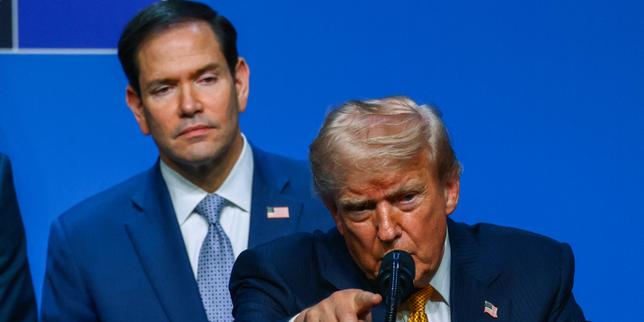
On July 13, 2026, the United States Department of State announced a coordinated campaign to systematically disable the operations of the International Criminal Court (ICC). Spearheaded by Secretary of State Marco Rubio, this strategy represents a transition from defensive non-cooperation to an offensive, institutional dismantling campaign. The stated objective is to neutralize what Washington defines as an "intolerable threat to U.S. sovereignty" by targeting the court’s financial pipelines, personnel mobility, and state-party coalition.
To understand the viability of this campaign, we must move past the rhetorical framing of "law versus sovereignty" and analyze the mechanical levers of international power. The confrontation between the United States and the ICC is a structural conflict over jurisdictional boundaries, enforced by asymmetrical economic and diplomatic tools.
The Core Conflict: Overlapping Jurisdictional Claims
The structural friction between Washington and The Hague stems from a fundamental disagreement over delegation of authority. The treaty-based model of the Rome Statute clashes directly with the territorial-sovereignty model of the United States.
                  [ Rome Statute Treaty Model ]
                  - State delegates territorial jurisdiction to ICC
                  - Non-Party nationals prosecuted for crimes on State territory
                                     │
                             (Jurisdictional Clash)
                                     │
                  [ U.S. National Sovereignty Model ]
                  - No treaty signature = No consent to jurisdiction
                  - Direct clash on "delegated territoriality"
The Delegated Territoriality Dilemma
Under Article 12(2)(a) of the Rome Statute, the ICC asserts jurisdiction over crimes committed on the territory of a State Party, regardless of the nationality of the accused. The United States asserts that because it is not a party to the treaty, its citizens cannot be subjected to the court's jurisdiction without explicit U.S. consent.
This creates a structural bottleneck. When a non-party state (such as the U.S. or Israel) operates militarily on the territory of an ICC member state (such as Afghanistan or Palestine), the two legal frameworks collide. The ICC operates on a theory of delegated territoriality: the host state has delegated its domestic criminal jurisdiction to the international tribunal. The United States rejects this delegation model, arguing that treaty law cannot bind non-signatories.
The Complementarity Safety Valve
The Rome Statute includes a built-in mechanism designed to avoid this collision: the principle of complementarity (Article 17). The ICC is legally a court of last resort; a case is inadmissible if a state is actively investigating or prosecuting the same individual for the same conduct.
The structural flaw in this mechanism is the subjective determination of "genuine willingness" or "ability" to prosecute. The ICC Prosecutor holds the power to evaluate whether a sovereign nation's domestic investigations are sufficient. From Washington's perspective, this subordinates domestic judicial systems to an unaccountable foreign panel of judges.
The U.S. Offensive: A Multi-Vector Attrition Model
The State Department's "brick by brick" dismantling campaign relies on three distinct operational vectors designed to impose unsustainable costs on the court's functionaries and members.
                     ┌──────────────────────────────┐
                     │  U.S. Dismantling Campaign   │
                     └──────────────┬───────────────┘
                                    │
         ┌──────────────────────────┼──────────────────────────┐
         ▼                          ▼                          ▼
┌─────────────────┐        ┌─────────────────┐        ┌─────────────────┐
│ Financial &     │        │ Sovereign State │        │ Personnel       │
│ Banking Blockade│        │ Attrition       │        │ Mobility Bans   │
└─────────────────┘        └─────────────────┘        └─────────────────┘
1. Financial and Banking Blockade
The primary weapon in the American toolkit is the targeted deployment of secondary sanctions. By freezing the domestic assets of ICC officials and restricting financial transactions under the authority of Office of Foreign Assets Control (OFAC) regulations, the U.S. effectively cuts targets off from the global financial system.
Because the vast majority of international clearing transactions run through the Society for Worldwide Interbank Financial Telecommunication (SWIFT) or utilize correspondent banking accounts with U.S. institutions, an OFAC designation has a cascading effect. Sanctioned individuals find themselves unable to hold standard bank accounts, process international credit card payments, or access digital banking services globally, even outside American borders.
2. Sovereign State Attrition
The second vector focuses on shrinking the ICC's coalition. The State Department is actively deploying diplomatic networks to pressure existing signatories to withdraw from the Rome Statute and cease financial contributions. The strategic playbook targets vulnerable states by tying bilateral military aid, trade agreements, and development assistance to their relationship with the court.
- Article 98 Agreements: Reintroduced as bilateral non-surrender agreements, forcing partner countries to guarantee they will not transfer U.S. personnel to the ICC.
- Funding Cuts: Pressuring allied states to defund their portion of the ICC’s annual budget, which is funded entirely by assessed contributions from member states.
3. Personnel Mobility and Judicial Deterrence
By implementing travel bans and revoking visas for prosecutors, investigators, and judges, the U.S. restricts the physical operational capacity of the court. This mechanism targets the logistics of investigations. Without physical access to evidence, witnesses, or local judiciaries, the court's ability to build admissible dossiers collapses.
Operational Consequences and Institutional Constraints
An analytical assessment of this campaign reveals structural limits to both American pressure and the ICC's resilience.
| Vector of Friction | U.S. Strategic Leverage | ICC Operational Vulnerability |
|---|---|---|
| Financial System | Domination of clearing networks and USD transactions. | High reliance on Western banking infrastructure for payroll and logistics. |
| Coalition Unity | Bilateral economic carrots and sticks (aid, trade). | Fragmented member-state priorities; vulnerability to regional block dynamics. |
| Investigative Access | Control over satellite data, intelligence sharing, and border entry. | Complete dependence on state-party cooperation to execute arrest warrants. |
The Paradox of Western Alignment
A major structural limitation of the U.S. strategy is the friction it creates with key European allies. States like the United Kingdom, France, and Germany are top-tier financial contributors to the ICC and have deeply integrated the Rome Statute into their foreign policy doctrines.
An aggressive U.S. campaign that targets European banks or pressures NATO allies to withdraw from the court creates a diplomatic bottleneck. If Washington enforces secondary sanctions against European entities cooperating with the ICC, it risks undermining broader security alliances and intelligence-sharing frameworks.
The Asymmetric Cost of State Withdrawal
The diplomatic effort to persuade countries to withdraw from the Rome Statute faces a structural delay. Under Article 127 of the Rome Statute, a withdrawal does not take effect until one year after the date of notification.
Furthermore, withdrawal does not discharge a state from its financial obligations or its duty to cooperate with investigations that were initiated prior to the effective date of withdrawal. This structural lag prevents rapid realignment and allows the court a window to accelerate active investigations.
The Final Strategic Play
The campaign to dismantle the ICC will not result in a neat legal victory; rather, it will split the international legal system into parallel, non-cooperating blocks.
The United States has the leverage to severely degrade the ICC's operational capabilities in Western-aligned non-party states. By blocking financial channels, restricting investigator travel, and using bilateral leverage to enforce non-surrender agreements, the U.S. can effectively make prosecutions of Western nationals impossible.
However, this aggressive posture will likely cause the ICC's remaining 120+ member states to double down on their defense of the court, transforming the tribunal from a universal judicial body into a regional European and Global South court. For global strategists, the key takeaway is clear: do not expect the ICC to disappear. Instead, prepare for a bifurcated international landscape where legal risk is determined entirely by geographic jurisdiction and the bilateral power dynamic between a suspect's home state and the country holding the warrant.

