A Splash in the Dark
Somewhere in the vast, ink-blue expanse of the South Pacific, the water does not just ripple; it remembers.
For generations, the people scattered across thousands of low-lying islands have viewed the surrounding ocean as a bridge rather than a barrier. It is a shared highway, a food source, and a cultural spine that ties small communities together under a quiet, unwritten consensus: this vast water belongs to everyone, and peace is its only viable currency.
Then came the flash.
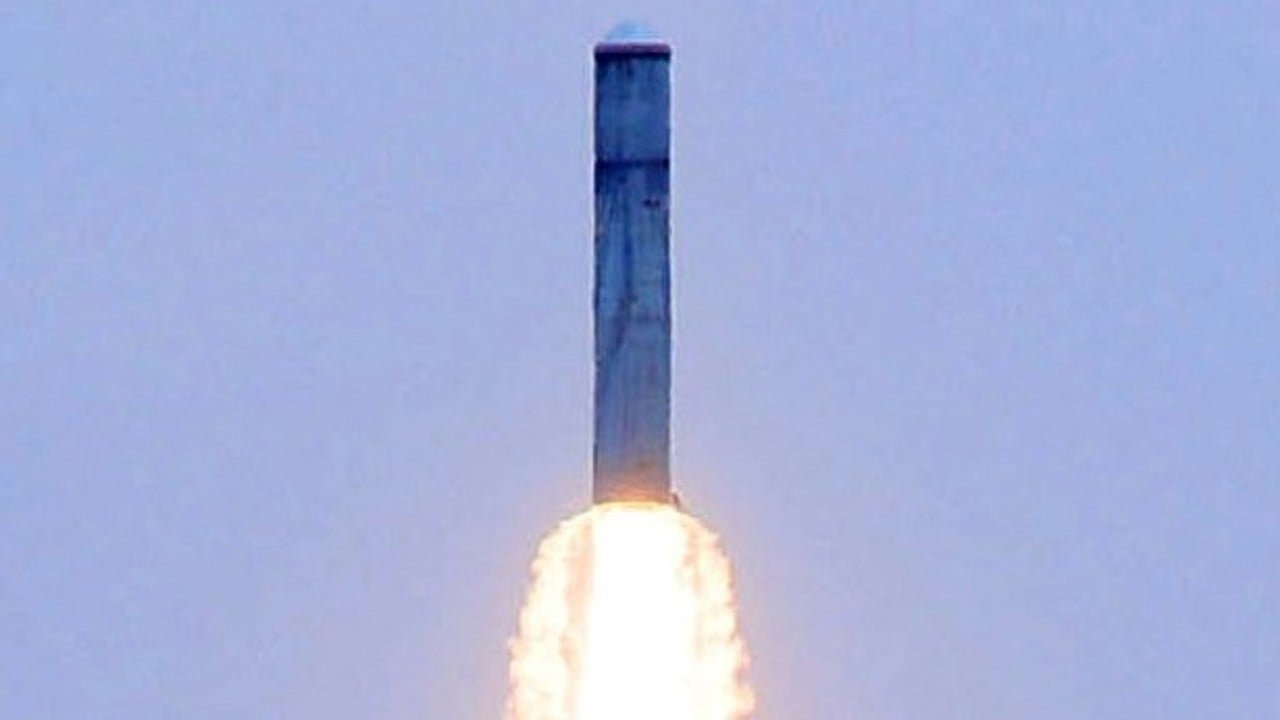
When a long-range ballistic missile tore through the sky and slammed into international waters far from its mainland origin, the physical impact was over in seconds. The geopolitical shockwaves, however, are still rolling across the water, crashing directly into the fragile political shorelines of a region suddenly forced to choose sides.
The test wasn't just a display of long-range military power. It was a calculated diagnostic tool designed to answer a single question: How united is the Pacific when forced to react to fear?
The answer came quickly. It was fragmented.
The Illusion of a Single Voice
To an outsider scanning a map, the nations of the Pacific look like a single entity, bound by geography and regional coalitions like the Pacific Islands Forum. We like simple stories. We like to imagine small nations standing shoulder-to-shoulder, speaking with one harmonious voice against global giants.
Reality is far more complicated.
Consider two hypothetical leaders sitting in offices separated by thousands of miles of water.
In one island capital, a prime minister sits at a wooden desk stacked high with climate reports and economic aid proposals. For this leader, the strategic investments flowing from a global superpower mean roads, hospitals, and sea walls built before the next storm season washes a village away. When the missile hits the water, the official response is cautious. Measured. Silence, in this case, is a calculated tool for survival.
In another capital, just a few hours away by plane, a different leader sees the exact same missile test as an unacceptable violation of regional peace. Here, the historical trauma of 20th-century nuclear testing runs deep in the soil and the collective memory. The response is swift, vocal, and furious.
Two nations. One ocean. Completely opposite reactions.
This split is not a failure of character; it is a calculation of necessity. When a small nation negotiates with a global superpower, it does so with very few cards in its hand. Security guarantees, trade access, and infrastructure development are weighed against national sovereignty and regional solidarity. When the pressure increases, the cracks between those priorities become impossible to hide.
The Strategy of Disunity
Superpowers do not act by accident. Every strategic move on the global stage is played several steps ahead, and a missile test in open water is as much a test of diplomacy as it is of hardware.
By launching a high-profile military test into the Pacific, the objective extends beyond showing off military hardware. It forces every government in the region to make a public choice.
- Do you condemn the action and risk alienating a critical trade partner?
- Do you stay silent and risk alienating long-standing regional security allies?
- Do you attempt a neutral stance that satisfies no one and signals internal hesitation?
When regional bodies fail to issue a unified, immediate statement, the test has already succeeded. The lack of a single, resounding answer communicates something crucial to foreign strategists: the Pacific is not a solid block. It is a mosaic of competing interests, vulnerable to division.
This dynamic creates a profound human cost that rarely makes the evening news. Behind every diplomatic statement is a population wondering if their home is quietly being transformed into a chessboard for powers that sit comfortably thousands of miles away.
When History Repeats Itself
The deep anxiety echoing through the region today isn't born out of thin air. It is rooted in a long, painful history of external powers using the Pacific as a proving ground.
Decades ago, foreign military programs transformed paradise into test sites. The fallout from those decisions wasn't abstract—it affected real families, poisoned real fishing grounds, and altered the health of entire generations. The promise back then was always the same: This is necessary for global security. Trust us.
So when a new missile breaches the horizon, it doesn't just represent modern geopolitics. It triggers historical memory.
"The ocean was never empty to us," an elder from a small low-lying atoll once explained, watching the horizon where commercial shipping lanes meet traditional fishing routes. "When the big nations fight or play with their weapons, they think they are doing it in the middle of nowhere. But we live in the middle of that nowhere."
The tragedy of the modern strategic push is that history is being replayed with new actors, but the fundamental dynamic remains unchanged. Small island states are once again finding themselves caught in the middle of a strategic tug-of-war, forced to balance immediate economic needs against long-term security and independence.
The Price of Division
What happens when a region loses its collective voice?
When island nations speak individually, their leverage is minimal. A nation of fifty thousand people negotiating one-on-one with an economy of trillions will almost always yield to economic pressure. Decisions are made out of immediate survival—funding a power grid, securing a loan, or building a port—rather than long-term strategic alignment.
However, when these nations stand together, the dynamic shifts. The Pacific Islands Forum and similar regional bodies were built precisely on this principle: individual threads are easy to snap, but woven together, they form a strong rope.
The recent missile test exposed just how fragile that rope currently is.
Some governments issued sharp rebukes, calling out the test as a direct threat to regional stability. Others remained quiet, protected by diplomatic carefully crafted non-answers. A few actively downplayed the event, prioritizing bilateral relationships over regional alignment.
This divide is not just a diplomatic inconvenience. It is a critical vulnerability. Every time a regional coalition fails to reach consensus on a major security event, the message sent to the rest of the world is clear: the Pacific can be divided, piece by piece, initiative by initiative.
Beyond the Horizon
The missile has long since sunk to the bottom of the ocean floor, its kinetic energy dissipated into the deep waters. But the question it left behind remains hovering over the Pacific like a heavy fog.
Can a collection of small island nations, bound by a shared ocean but separated by distinct economic realities, rebuild a unified front before the next test comes?
The answer will not be found in high-level summits or formal press releases written in cold, technical language. It will be found in whether regional leaders can sit down, acknowledge their differing economic realities, and agree on a baseline of security that no amount of foreign investment can buy.
Until then, every flash on the horizon will do more than just light up the sky. It will illuminate the quiet, growing distance between neighbors sharing the same endless sea.