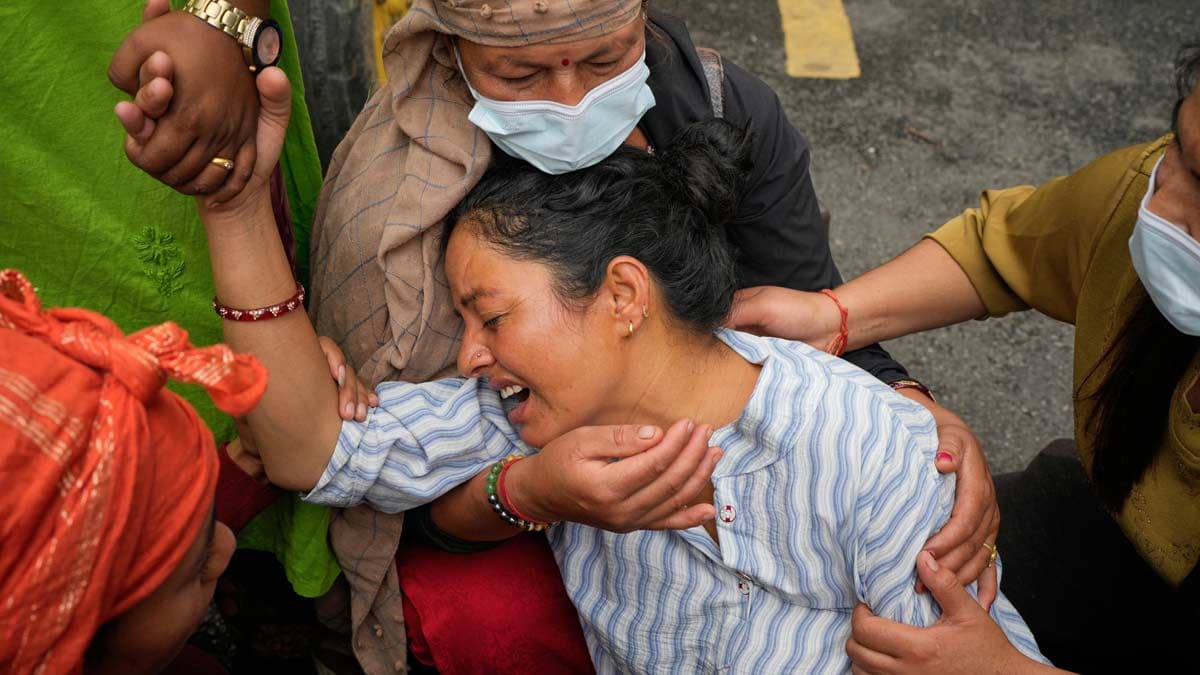
The media treats mass disaster identification like a high-tech crime drama. A 19-member foreign forensic team arrives, laboratories hum with activity, and genetic markers neatly resolve tragedies. Headlines celebrate the deployment of DNA sequencing to match flood victims with grieving families. It is a comforting narrative. It is also entirely detached from the grim reality on the ground.
Relying on genetic analysis as the primary tool to untangle a catastrophic death toll of over a thousand people in a developing nation with limited infrastructure is a recipe for institutional failure.
I have watched public agencies blow fortunes and precious weeks chasing the absolute certainty of short tandem repeat profiles while basic logistical tracking systems collapse. DNA is not a magic wand. It is a slow, expensive bottleneck.
The Fallacy of Genetic Omnipotence
Let us look at the mechanics. When flash floods sweep entire communities away, bodies are churned through violent river systems for days, resulting in severe fragmentation and advanced decomposition. By the time remains are recovered downstream—sometimes across international borders—soft tissue degrades rapidly.
Laboratories in Kathmandu, such as the Nepal Police Central Forensic Science Laboratory and the National Forensic Science Laboratory, are facing an unprecedented backlog. Processing hundreds of degraded biological samples takes weeks, if not months. Meanwhile, morgues overflow, refrigerated space runs out, and families endure psychological torture waiting for a match.
Imagine a scenario where a family travels hundreds of kilometers to identify a body, only to find the remains buried under a temporary mass grave protocol because storage failed. Waiting for a genetic confirmation when bodies are already decomposing faster than labs can sequence them turns forensics into an exercise in archiving anonymity rather than restoring identities.
Prioritizing Low-Tech Provenance Over High-Tech Purity
The lazy consensus in disaster response assumes that science must be high-tech to be valid. True expertise dictates the exact opposite. In mass casualty events involving water transport, primary identifiers—fingerprints, distinctive tattoos, surgical implants, dental records, and clothing—solve the vast majority of cases in hours, not months.
In the aftermath of the recent Himalayan flash floods, families have successfully identified loved ones not through laboratory queues, but through a school tie, an earring, or a specific shoulder tattoo. These physical markers are infinitely faster and cheaper than genetic profiling.
When the state diverts all its focus toward regional DNA processing teams while ignoring the rapid cataloging of secondary physical traits, it bottlenecks the entire identification pipeline. Genetic matching should be treated as the method of last resort for fragmented or severely mutilated remains, not the default administrative hurdle for every single victim.
Re-engineering Disaster Protocols
Fixing this requires an immediate operational pivot. Authorities must stop treating morgue management as a secondary concern to laboratory science.
- Decentralize Visual and Physical Metadata: High-resolution digital catalogs of personal effects, scars, and clothing must be deployed instantly at local relief desks rather than forcing families to travel blindly across districts.
- Standardize Temporary Interment Rigor: Protocols that use geo-tagged temporary burials with precise identification numbers are necessary when decomposition outpaces storage. However, the data linking the physical body to its initial discovery site must be bulletproof before earth is moved.
- Reserve DNA for Exclusion, Not Initial ID: Use genetic sequencing to resolve contested claims where multiple families identify the same body, rather than using it as a blanket intake requirement.
Science cannot shortcut logistics. Until disaster response agencies stop hiding behind the illusion that DNA fixes structural disorganization, families will continue to pay the price for bureaucratic delay.
Stop waiting for the lab results. Fix the intake.
19-member Indian forensic team begins DNA analysis to identify Nepal flood victims
This video details the deployment and collaborative efforts of the forensic team working alongside local laboratories to process samples from the disaster zone.
http://googleusercontent.com/youtube_content/1