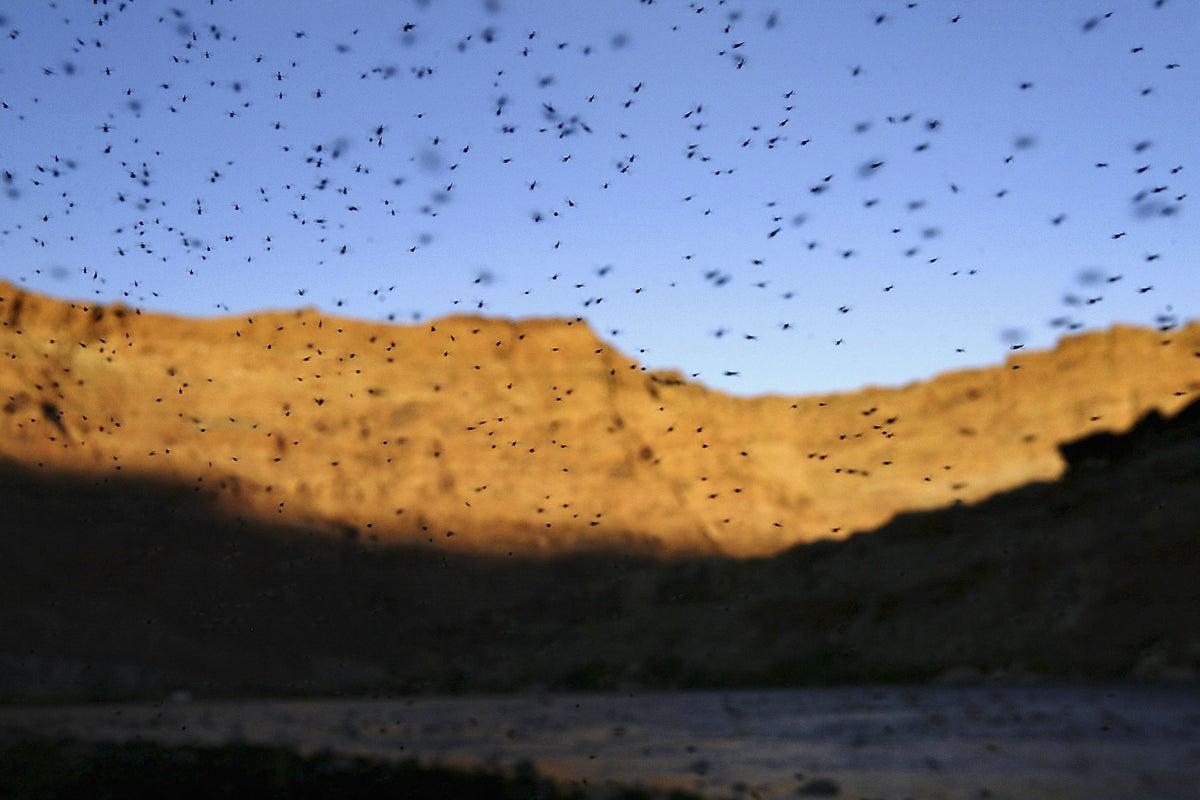
The dust in the Brazilian interior doesn’t just settle; it claims everything. It coats the leaves of the cassava plants, the rusted corrugated roofs of the medical clinics, and the lungs of the elderly who have spent seventy years breathing the parched air of the sertão. In these forgotten corners of the world, a white coat is more than a uniform. It is a miracle.
For the people of these remote villages, "the doctor" has long been a man or woman with a Cuban accent. They arrive where local physicians refuse to go. They live in the same crumbling houses as their patients. They eat the same beans and rice. They aren't just visiting; they are embedded. But lately, these villages are going quiet. The white coats are disappearing, not because the medicine ran out, but because of a high-stakes geopolitical tug-of-war being played out in air-conditioned rooms in Washington and Havana. Discover more on a similar topic: this related article.
The United States calls it a fight against human trafficking. Cuba calls it international solidarity. The people waiting in line outside a shuttered clinic in the middle of a malaria outbreak call it a death sentence.
The Mechanics of a Medical Lifeline
Since the 1960s, Cuba has exported its physicians as its primary diplomatic currency. It is a sophisticated machine. The island produces an incredible surplus of doctors—nearly nine for every thousand citizens—and sends them to over sixty countries. In many ways, it is the ultimate "soft power" play. Additional journalism by WebMD highlights comparable perspectives on the subject.
Consider a hypothetical physician we will call Elena. She is forty-two, a specialist in infectious diseases, and has spent the last decade working in the mountains of Honduras and the slums of Caracas. To Elena, the mission is dual-natured. On one hand, she is a true believer in the revolutionary ideal that healthcare is a human right. On the other, she is a pragmatic laborer. Back in Havana, her monthly salary might barely cover the cost of a few liters of cooking oil and a bag of coffee. By going abroad, she earns a stipend that, while modest by global standards, allows her family to survive.
However, there is a catch that the U.S. State Department has highlighted with increasing volume. The Cuban government keeps a massive percentage of the fees paid by host countries—sometimes as much as 75 to 90 percent. Washington argues that this is state-sponsored forced labor. They point to the fact that Cuban doctors often have their passports confiscated upon arrival in a host country. They are told where to live, who they can talk to, and are threatened with an eight-year ban from returning to their homeland if they "defect."
The Pressure Cooker
The tension isn't just rhetorical. It has become a tangible pressure campaign. Under various administrations, the U.S. has lobbied Latin American governments—Brazil, Bolivia, and Ecuador among them—to terminate their contracts with the Cuban medical missions. The argument presented to these nations is a moral one: Do not be complicit in the exploitation of these workers. Do not fund a regime that uses its citizens as line items on a balance sheet.
But the morality of the situation becomes blurred when you look at the ground level. When Brazil’s former government moved to expel Cuban doctors under U.S. encouragement, it created a vacuum that the domestic healthcare system was utterly unprepared to fill. Thousands of municipalities were left with zero medical coverage.
The logic of the policy makers is often binary. Either you support the doctors and therefore support the Cuban government, or you oppose the government and therefore must remove the doctors. This binary ignores the third party in the room: the child with a high fever in a village that is a three-day boat ride from the nearest city. For that child, the political leanings of the person holding the stethoscope are irrelevant. The only thing that matters is that someone is holding it.
The Invisible Stakes
Why does the U.S. care so much about a few thousand doctors in the jungle? It isn’t just about labor rights. It’s about the architecture of influence. For decades, the medical missions have been Cuba’s most effective shield against isolation. When a Cuban doctor saves a village from a cholera outbreak, that village—and by extension, their government—feels a debt of gratitude to Havana.
By pressuring Latin American nations to cut these ties, the U.S. is attempting to dismantle the financial and diplomatic scaffolding of the Cuban state. It is a surgical strike on the island’s largest source of foreign exchange, outstripping even tourism.
The strategy is effective, but it is also brutal. It assumes that the collateral damage—the degradation of public health in the Western Hemisphere—is a price worth paying to squeeze a political adversary.
A Conflict of Conscience
If you talk to the doctors themselves, the narrative becomes even more tangled. Many do feel exploited. They know they are being underpaid. They feel the weight of the "minders" sent by Havana to ensure no one speaks out of turn. They are pawns.
Yet, many also feel a profound sense of pride. They are doing work that Western doctors, burdened by student loans and expectations of a middle-class lifestyle, simply will not do. There is a specific kind of heroism in treating leprosy in the Amazon or performing cataract surgeries in the Andean highlands with nothing but the most basic tools.
The U.S. has occasionally offered an "escape hatch" through programs like the Cuban Medical Professional Parole Program, which encouraged doctors to abandon their missions and seek asylum in America. To Washington, this was a rescue mission. To Havana, it was "brain drain" and professional kidnapping. To the doctor, it was an agonizing choice between personal freedom and the ability to ever see their mother or children again.
The Cost of the Void
The real tragedy lies in the math of the aftermath. In regions where the missions have been expelled, the statistics are grim. Infant mortality rates, which had been steadily declining for years, began to plateau or tick upward. Preventable diseases like measles made a comeback.
Local governments tried to fill the gaps by offering high salaries to domestic doctors to move to the rural interior. It didn't work. Money can buy a doctor's time, but it struggles to buy their presence in a place with no internet, no paved roads, and no career advancement. The Cuban model worked because it was built on a system of state command that, for all its flaws, could mandate presence in the periphery.
We are witnessing a clash between two different definitions of freedom. The U.S. advocates for the individual freedom of the doctor—the right to work without being taxed by the state and the right to move freely. Cuba advocates for a collective "freedom from illness" for the poor, even if the delivery mechanism is coercive.
The Sertão Goes Dark
Imagine a woman named Maria. She lives in a small town in the Brazilian northeast. For five years, she saw Dr. Ricardo every month for her diabetes. He knew her grandchildren's names. He knew she liked to sneak an extra piece of cake at church socials. He was her lifeline.
One Tuesday, Ricardo was gone. No goodbye, no hand-off. Just a locked door and a notice from the ministry.
Maria doesn't understand the nuances of the Helms-Burton Act. She doesn't follow the debates in the OAS or the latest sanctions from the Treasury Department. She only knows that her feet are swelling, her vision is blurring, and the person who kept the darkness at bay has been pulled away by forces she cannot see.
The geopolitical chess game continues. Statements are issued. Sanctions are tightened. Envoys travel between capitals. And in the quiet villages, the dust continues to settle, covering the empty chairs in clinics where the white coats used to hang.
The medicine is sitting in a warehouse somewhere. The doctors are sitting in Havana or Miami. And the patients are just sitting, waiting for a miracle that has been recalled by a higher authority.