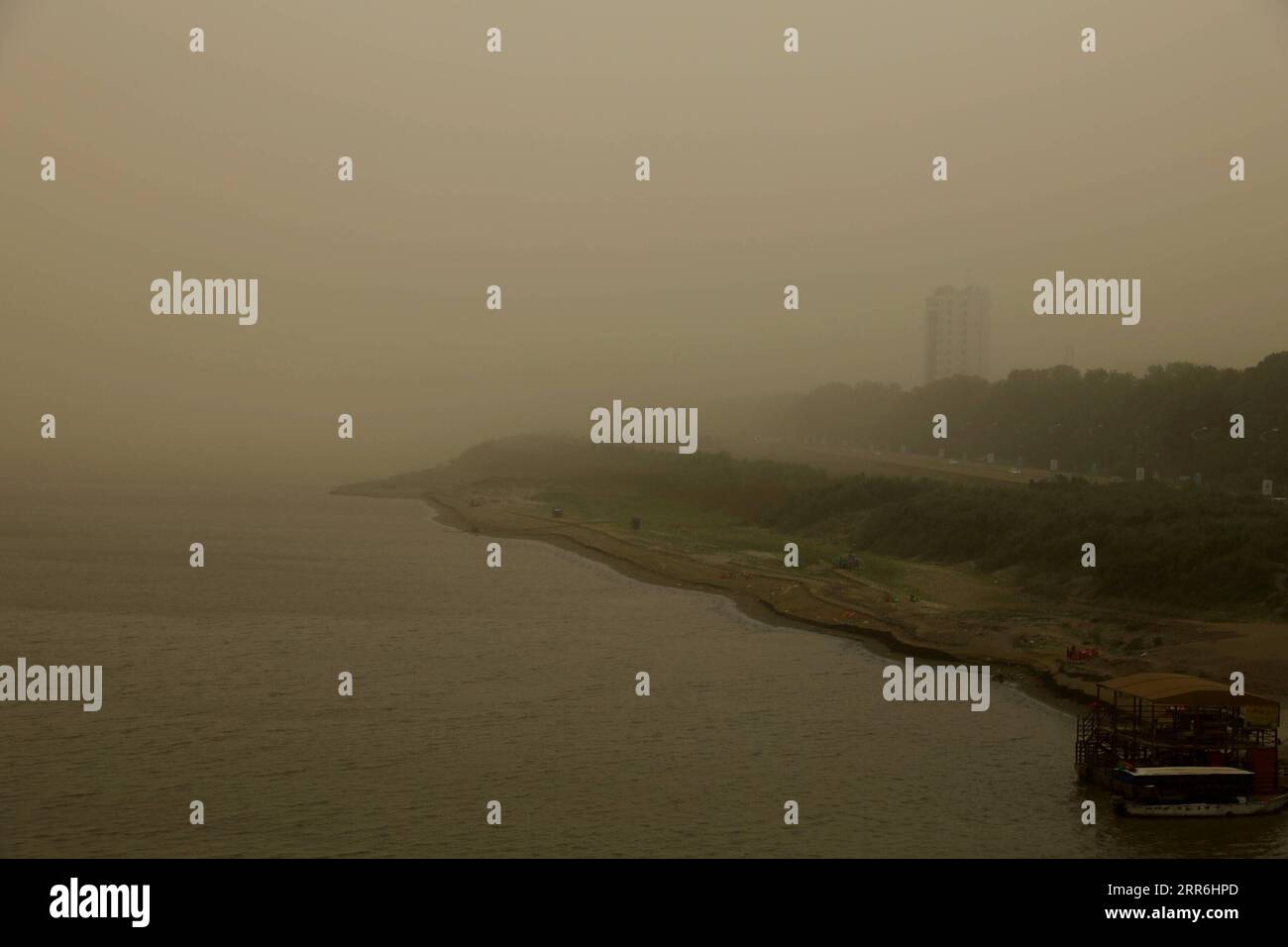
The morning tea in Khartoum used to be a ritual of quiet defiance. You would sit on a low plastic stool near the banks of the Blue Nile, the air smelling of hibiscus and diesel, listening to the clink of glass spoons against porcelain. It was a sound that survived decades of dictatorship. It survived the 2019 revolution when young men and women stood before bullets to demand a civilian future. But today, that sound is gone. It has been replaced by the rhythmic, chest-thumping thud of artillery and the terrifying whistle of falling steel.
Sudan is not just a spot on a map experiencing "geopolitical instability." It is a house being torn apart by two tenants who would rather burn the roof down than let the other own the kitchen.
To understand why Sudan is bleeding, you have to look past the dense political jargon of international briefings. You have to look at two men: General Abdel Fattah al-Burhan and Mohamed Hamdan Dagalo, better known as Hemedti. Once, they were partners in a grim dance of power. Now, their personal vendetta has turned the third-largest country in Africa into a graveyard of broken dreams.
The Architect and the Enforcer
Imagine a professional army, stiff with tradition and hierarchy, led by Burhan. He represents the old guard, the Sudanese Armed Forces (SAF). He is the face of the state, or what remains of it. Then, imagine a shadowy, highly mobile, and incredibly wealthy paramilitary group called the Rapid Support Forces (RSF), led by Hemedti.
Hemedti did not rise through military academies. He rose through the rugged terrain of Darfur, leading the Janjaweed militias—the "devils on horseback"—that became infamous during the atrocities of the early 2000s. For years, the former dictator Omar al-Bashir used these two forces to balance each other. He played them against one another so neither could overthrow him.
In 2019, when the people of Sudan rose up in a breathtaking display of courage, Burhan and Hemedti saw the writing on the wall. They turned on their boss, Bashir, and shook hands with the civilian protesters. It was a marriage of convenience that everyone knew was doomed. They promised a transition to democracy. They spoke of "sovereignty" and "the people’s will."
They were lying.
In October 2021, they pushed the civilians aside in a joint coup. But as soon as the common enemy was gone, the room became too small for two giants. The breaking point was a simple question: How do we merge the RSF into the regular army? Burhan wanted it done in two years. Hemedti wanted ten. That eight-year gap is the space where thousands of people have gone to die.
When the Capital Became a Frontline
On April 15, 2023, the tension finally snapped. Most wars start at the borders, in the distant fringes of a country. This one started in the living rooms of Khartoum.
Think about your own neighborhood. Imagine waking up to find a tank parked at the end of your driveway and a sniper perched on your neighbor’s roof. This is the reality for the millions who couldn't flee. The RSF took over residential areas, using hospitals and schools as bases. The SAF responded with airstrikes, dropping bombs on their own capital city to root out the paramilitary fighters.
The infrastructure didn't just fail; it was systematically dismantled. Power grids flickered out. Water pipes ran dry. In a heat that often exceeds 40°C, the lack of water is a slow execution. People began digging wells in their backyards, desperate for a muddy sip of groundwater, while shells whistled overhead.
The Invisible Stakes of a Global Chessboard
If this were only a fight between two generals, it might have burned itself out. But Sudan sits on a gold mine. Literally.
Hemedti controls much of the country’s gold mining operations. This gold doesn't stay in Sudan. It flows out through private networks, often ending up in the hands of foreign actors who need a way to bypass international sanctions. This wealth allows the RSF to buy sophisticated drones, high-grade ammunition, and the loyalty of thousands of fighters.
Beyond the gold, there is the Red Sea. Sudan’s coastline is one of the most strategic strips of land in the world. Russia wants a naval base there. The Gulf states want influence and food security, looking at Sudan’s vast, fertile plains as a potential breadbasket for the Middle East. Every time a foreign power sends "logistical support" or "humanitarian aid" that happens to include crates of rifles, the war gains a second wind.
It is a tragedy fueled by geography. Sudan is too rich to be left alone and too fractured to protect itself.
The Human Cost is Not a Statistic
We hear the numbers: over 15,000 dead, 8 million displaced, half the population facing acute hunger. But numbers are cold. They don't capture the smell of a city that can no longer bury its dead. They don't explain the choice a mother makes when she has one bottle of water and three thirsty children.
Consider the "missing." In the chaos of the RSF’s occupation of Khartoum and the SAF’s heavy-handed retaliation, thousands of people have simply vanished. They aren't just names on a list; they are the fathers who went out to find bread and never came back, the daughters taken from their homes in the middle of the night.
Sexual violence has become a weapon of war, used to humiliate communities and break the spirit of the resistance. In Darfur, the ghosts of the past have returned. The RSF and aligned militias have been accused of ethnic cleansing, targeting the Masalit people in a horrifying echo of the genocide that occurred twenty years ago.
History isn't repeating; it’s screaming.
The Breadbasket that Starves
The ultimate irony of the Sudanese conflict is that the country is home to some of the most fertile soil on the planet. Between the Blue and White Niles lies the Gezira Scheme, one of the largest irrigation projects in the world. It should be feeding the continent.
Instead, the farmers have fled. The seeds haven't been planted. The markets have been looted. We are witnessing the intentional creation of a famine. When an army burns a grain silo, they aren't just destroying property; they are deleting the future.
The international community watches with a mixture of fatigue and distraction. Other wars, perhaps more photogenic or politically convenient, dominate the headlines. Sudan is often relegated to the "back pages," a complex African problem that feels too messy to solve. But there is nothing messy about a child starving because two men want to sit in a gilded chair.
The Silence of the Streets
There is a specific kind of silence that falls over a city at war. It isn’t the absence of noise, but the absence of life. It’s the sound of a shuttered shop, a playground with no children, and a university library where the books are being used for fuel.
The people who led the 2019 revolution—the doctors, the lawyers, the students—are now scattered across the globe. They are in refugee camps in Chad, in crowded apartments in Cairo, or hiding in basements in Omdurman. Their dream of a "Madaniya" (civilian) government hasn't died, but it is gasping for air.
The generals tell the world they are fighting for the soul of the nation. They claim they are the only ones who can prevent total collapse. But you cannot save a house by blowing up the foundation.
You cannot lead a people you have turned into ghosts.
The Nile continues to flow, indifferent to the blood spilled in its waters. It has seen empires rise and fall, and it will likely outlast these two men and their hollow ambitions. But for the person sitting on a plastic stool in a refugee camp, clutching a charred house key, the river is no longer a source of life. It is a border they had to cross to stay alive.
The world may look away, but the dust of Khartoum does not settle. It rises, carried by the wind, a gritty reminder that when the powerful fight for everything, the innocent are left with nothing but the clothes on their backs and the memory of a tea glass clinking in the morning light.