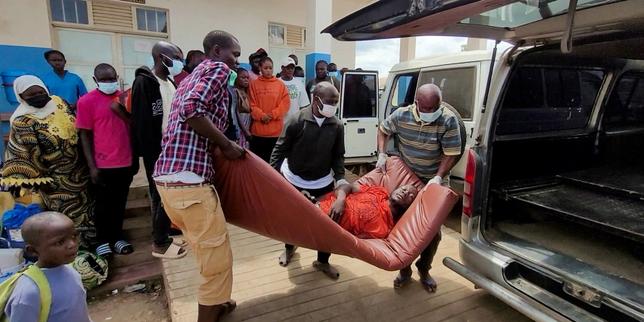
The global health apparatus is running its favorite playbook again. The World Health Organization has declared a Public Health Emergency of International Concern over the Bundibugyo Ebola virus outbreak in the Democratic Republic of the Congo and Uganda. Immediately, media headlines began churning out standard, copy-pasted anxiety: a "rare, terrifying strain," "no approved vaccines," and "gaps in contact tracing."
This conventional framing completely misses the point. The mainstream narrative treats the Bundibugyo strain as a unique, looming apocalypse because it lacks the shiny pharmaceutical interventions we built for the Zaire strain.
This panic is entirely misdirected. The problem in Ituri province is not a lack of specialized vaccines or the inherent biology of the Bundibugyo virus. The problem is a broken international response model that treats every hemorrhagic fever outbreak as a high-tech drug deployment mission rather than a basic infrastructure and security crisis. We are hyper-focusing on the virus's genetics while ignoring the predictable realities of where and how it spreads.
The Lethality Lie: Stop Anchoring to Zaire
Every explainer published this week highlights that Bundibugyo has a historical case fatality rate of 30% to 50%. The implication is clear: it is a ticking time bomb waiting to replicate the horrific 2014 West Africa disaster.
This is a lazy false equivalence. The Zaire ebolavirus is a uniquely aggressive beast, historically carrying mortality rates up to 90% when untreated. Bundibugyo, scientifically isolated in 2007, is fundamentally different. In its major historical outings—Uganda in 2007 and the DRC in 2012—it consistently demonstrated a lower baseline lethality.
When people look at a 30% mortality rate, they assume the virus is inherently unstoppable. But epidemiologists know that case fatality rates are not fixed biological properties; they are reflections of the environment. A 30% mortality rate in a remote, conflict-ridden mining zone like Mongbwalu tells us more about the lack of clean water, basic IV fluids, and primary triage than it does about the virulence of the pathogen.
If you submerge a population in an active war zone, displace thousands of people, and isolate them from basic medical infrastructure, even a severe influenza outbreak will post terrifying numbers. Bundibugyo is dangerous, but treating it like an airborne super-plague distorts the clinical reality. It spreads exactly like every other filovirus: through direct, intense contact with infected bodily fluids. It does not fly through the air. It does not spread during the incubation period.
The Vaccine Obsession Is Blinding Us
The loudest lamentation from the international community right now is the lack of a licensed vaccine for Bundibugyo. Commentators look at Merck’s Ervebo vaccine—which revolutionized the response to Zaire Ebola—and treat its lack of proven efficacy against Bundibugyo as an insurmountable wall. There is talk of rushing candidate vaccines into preclinical testing, deploying trial doses, and leveraging cross-protection data from non-human primates.
I have watched public health agencies sink millions into speculative, late-stage pharmaceutical procurement while local isolation centers lacked basic plastic sheeting, personal protective equipment, and reliable generators.
Deploying experimental vaccines in an active conflict zone is an operational nightmare that frequently fails. The Africa CDC has already pointed out that the current outbreak is moving through high-traffic mining zones and urban hubs like Bunia, complicated by active militant groups.
Imagine a scenario where a field team attempts a complex ring-vaccination strategy in a village that is actively being cleared by armed rebels. It is a logistical absurdity.
The obsession with finding a magic-bullet vaccine distracts from the unglamorous, low-tech interventions that actually stop Ebola:
- Rigorous, community-led isolation.
- Rapid distribution of standard protective gear to local clinics.
- Dignified, safe burial practices that respect local customs without spreading fluid.
- Basic supportive care, such as aggressive oral and intravenous rehydration.
We know from decades of managing filovirus outbreaks that early supportive care alone can cut Ebola mortality rates in half. You do not need a cutting-edge mRNA platform to hang an IV bag of saline. You just need a secure road to deliver it.
The Wrong People Are Getting Infected
If you want to understand why this outbreak is expanding, look at the demographics, not the viral genome. The WHO’s situation reports reveal a critical detail: over 60% of the suspected cases are women, primarily aged between 20 and 39.
This statistic should immediately reframe the entire response strategy, yet it is buried beneath panic about cross-border transmission. In rural DRC and Uganda, women are the primary caregivers, both within households and as traditional healers. They are the ones washing the sick, managing the fevers, and preparing bodies for funerals.
The traditional international response model is top-heavy. It pours money into militarized quarantine zones, border checkpoints, and high-level bureaucratic coordination in capital cities like Kinshasa or Kampala.
This approach fails because it treats the population as a threat to be contained rather than the primary line of defense. If women are the ones getting infected, then women’s community networks, local market leaders, and traditional midwifery circles are the entities that need immediate funding, resources, and communication control. Sending truckloads of armed security forces to enforce lockdowns only drives the sick underground, completely blowing up any chance of accurate contact tracing.
The Cost of the Counter-Intuitive Approach
Taking a contrarian stance means acknowledging the structural risks. If we shift our primary focus away from international vaccine development and toward localized, low-tech containment, we accept a distinct trade-off.
The downside to prioritizing ground-level infrastructure over global pharma development is that it requires long-term, sustained funding in regions that the Western world ignores the moment the news cycle moves on. It is easy for international donors to cut a check for a vaccine trial; it is incredibly difficult to fund the multi-year stabilization of health clinics in a conflict zone.
Furthermore, relying heavily on community-led isolation means trusting local leadership implicitly. If a local political or militia leader decides to weaponize distrust against health workers, a decentralized response can fracture quickly. But the alternative—forcing a top-down, Western-centric medical intervention onto a deeply suspicious, traumatized population—has failed repeatedly, most notably during the early stages of the West African epidemic.
The premise of the global alarm over the Bundibugyo strain is wrong. Stop waiting for a pharmaceutical savior to emerge from a European lab. The tools to kill this outbreak already exist in every standard medical supply warehouse on Earth. The failure to contain it is an operational and political choice, not a biological inevitability.