The legacy media has a predictable, comforting script whenever Ebola rears its head in the Democratic Republic of Congo. The headlines practically write themselves: count the bodies, tally the suspected cases, and then pivot sharply to a savior narrative—usually involving a Western nation flying a single patient out on a multi-million-dollar bio-containment jet.
We saw it when Germany stepped up to "welcome and treat" an American physician exposed in Sierra Leone, and we see it every time the case counts tick upward in North Kivu or Equateur province. 131 dead. 513 suspected cases. Cue the international alarm bells.
This framing is worse than lazy. It is actively dangerous.
By focusing on raw case counts and high-profile Western evacuations, the global health apparatus completely misdiagnoses how modern outbreaks are contained, managed, and funded. We are fighting a 21st-century viral pathogen with a 1990s colonial mindset. The obsession with medical evangelism—flying patients across continents for PR victories—siphons critical resources away from the ground zero infrastructure that actually stops a virus in its tracks.
The Fallacy of the Case Count Panic
Mainstream reporting treats every new suspected case as proof of an impending global apocalypse. It sells papers, but it fundamentally misunderstands epidemiological surveillance.
During an active outbreak, a spike in suspected cases is often a sign that the surveillance system is working, not that the virus is winning. When community health workers, local leaders, and epidemiological teams are properly funded, the dragnet widens. Anyone with a sudden fever or unexplained bleeding is flagged.
A high number of suspected cases means the isolation pipelines are functioning. The real metric to watch is the ratio of confirmed-to-suspected cases and the time delay between symptom onset and isolation.
When the World Health Organization (WHO) or MSF (Doctors Without Borders) floods a zone with rapid diagnostic tests, the numbers look terrifying on a chart. But that data spike is the exact moment control is being established. If you panic because the chart went up, you don't understand how field epidemiology operates.
The Bio-Containment Theater
Let us look closely at the recurring spectacle of the Western evacuation. An international worker gets exposed, and a specialized Gulfstream jet equipped with an Aeromedical Biological Containment System touches down to whisk them away to Hamburg, Atlanta, or Geneva.
This is medical theater of the highest order.
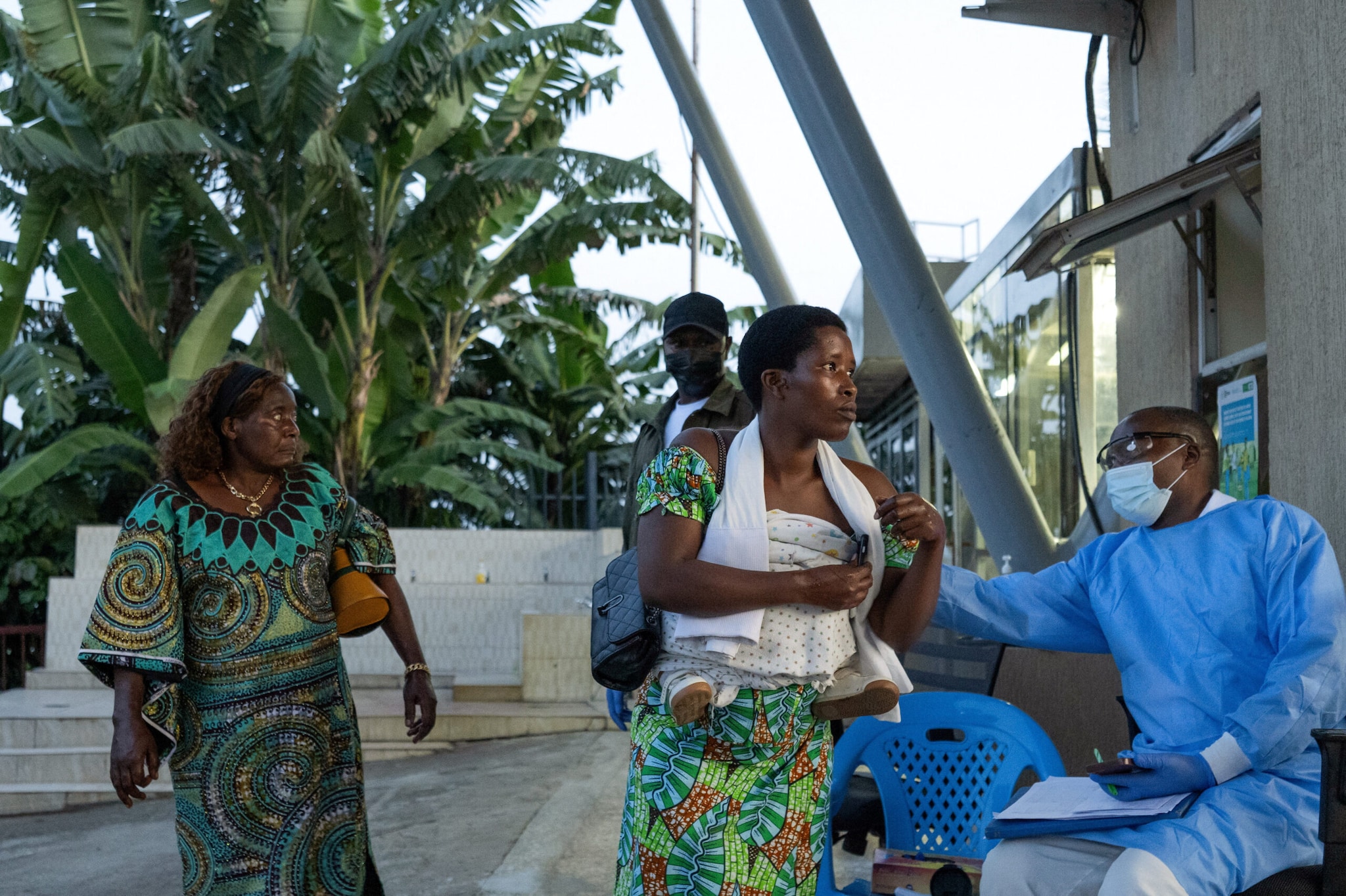
The logistical footprint required to move a single patient safely across oceans costs hundreds of thousands, sometimes millions, of dollars. Meanwhile, isolation centers in Beni or Butembo frequently run short on basic personal protective equipment (PPE), clean water, and reliable generator power.
I have watched international agencies burn through budgets on high-altitude logistics while local surveillance officers on the ground are striking because they haven’t received their $15-a-day hazard pay in three months.
If the goal is saving lives, that capital allocation is mathematically indefensible.
Investing that same money into localized, decentralized Treatment Centers (CTEs) yields an exponentially higher return on health outcomes. Ebola is not an unstoppable death sentence anymore. The deployment of monoclonal antibody therapeutics like Ebanga (Ansuvimab) and Inmazeb—a cocktail of three monoclonal antibodies—has fundamentally shifted the clinical reality.
When administered early, these treatments drop the mortality rate of Ebola Zaire from a horrifying 70% down to under 10%. But these therapeutics require cold-chain storage and trained local clinicians. They do not require a flight to Germany.
The High Cost of the Savior Narrative
The downside to our contrarian stance is obvious: stopping the bio-containment flights means Western donors lose their easy, feel-good media victories. It is incredibly easy to raise capital from governments when you can show a shiny jet saving a doctor. It is much harder to solicit millions for municipal water piping and community-led burial teams in rural Congo.
But we must accept that discomfort. The savior narrative creates a toxic dependency loop.
When international intervention focuses on external extraction rather than local capacity, it breeds deep institutional distrust. The local population sees white SUVs and high-tech gear arrive, only for those resources to vanish the moment the immediate crisis wanes or an expat is evacuated.
This dynamic is precisely why response teams face community resistance, armed attacks, and widespread skepticism. The community correctly perceives that the global response cares far more about preventing the virus from crossing borders than it does about building a resilient, permanent healthcare system for the people living there.
Dismantling the Premise of Public Fear
Go to any major search engine or public forum, and you will find people asking variations of the same terrified questions:
- Is Ebola going to become airborne and start a global pandemic?
- Can the DRC contain the virus without Western intervention?
These questions are built on completely flawed premises.
First, Ebola is a filovirus. It spreads through direct contact with infectious bodily fluids (blood, vomit, feces). It does not replicate in the respiratory tract in a way that allows efficient airborne transmission among humans. The biological architecture required for a virus to switch its primary mode of transmission from bodily fluids to aerosolized droplets is immense. Worrying about airborne Ebola is like worrying about a shark evolving wings while it is swimming after you. It is a cinematic fantasy that distracts from the actual, boring work of contact tracing.
Second, the idea that the DRC cannot manage outbreaks without Western supremacy is a myth built on historical amnesia. The Congolese National Institute of Biomedical Research (INRB), led for decades by figures like Professor Jean-Jacques Muyembe—who was part of the team that discovered the virus in 1976—possesses some of the most experienced virus hunters on the planet.
The INRB and local health zones do not lack expertise; they lack predictable, un-earmarked capital. They know exactly how to map a chain of transmission, how to negotiate with local militias for humanitarian access, and how to deploy the Ervebo vaccine using ring-vaccination strategies.
The bottleneck is almost always the bureaucratic friction of international aid agencies who insist on managing the funds from offices in Washington, London, or Geneva, taking massive administrative cuts before a single dollar reaches the field.
Stop Funding the Circus
If you want to stop Ebola outbreaks from turning into regional humanitarian disasters, you have to stop funding the emergency circus.
The current funding model is entirely reactive. A crisis hits, the media sounds the alarm, donors release a torrent of short-term cash, the outbreak is suppressed, and then the funding evaporates. This boom-and-bust cycle guarantees that the local health system remains fragile, waiting for the next inevitable spillover event from the animal reservoir.
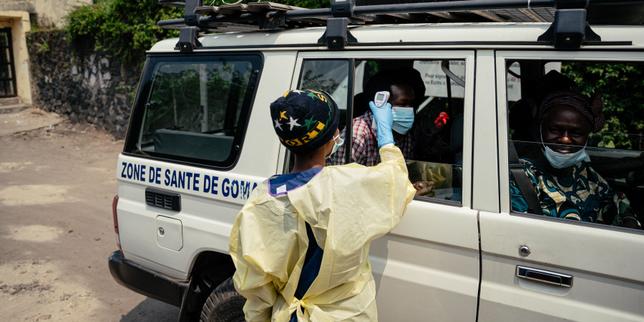
- Shift funding from emergency response to permanent surveillance. The moments between outbreaks are when the real work happens. Maintaining active testing sites during peacetime prevents a handful of cases from exploding into hundreds.
- Decentralize manufacturing of therapeutics. Subsidize the production and cold-chain distribution of monoclonal antibodies within the African continent. Eliminating the logistical reliance on Western supply lines cuts response times from weeks to hours.
- Abolish the expat wage disparity. Pay local surveillance officers, nurses, and laboratory technicians competitive, stable salaries that reflect the immense risk of their work, rather than spending top-dollar on flying in short-term Western consultants who require translator teams and heavy security details.
The next time you see a headline shouting about a rising case count in the Congo or a European hospital preparing a special ward for a single high-profile patient, look past the spectacle. Recognize it for what it is: a systemic failure of resource allocation disguised as a triumph of modern medicine.
Stop watching the jets. Start looking at the ground.