The sound does not leave you. It settles somewhere beneath the ribs, a low, permanent hum that vibrates whenever the wind blows a door shut too quickly or a car backfires on a rainy afternoon.
In Kyiv, the mornings used to begin with the hiss of espresso machines and the steady, comforting rumble of the subway. Now, they begin with a mechanical wail. The air raid sirens possess a peculiar, piercing frequency designed to cut through concrete, through glass, and through sleep. When they sound, a collective breath is held across a city of three million people.
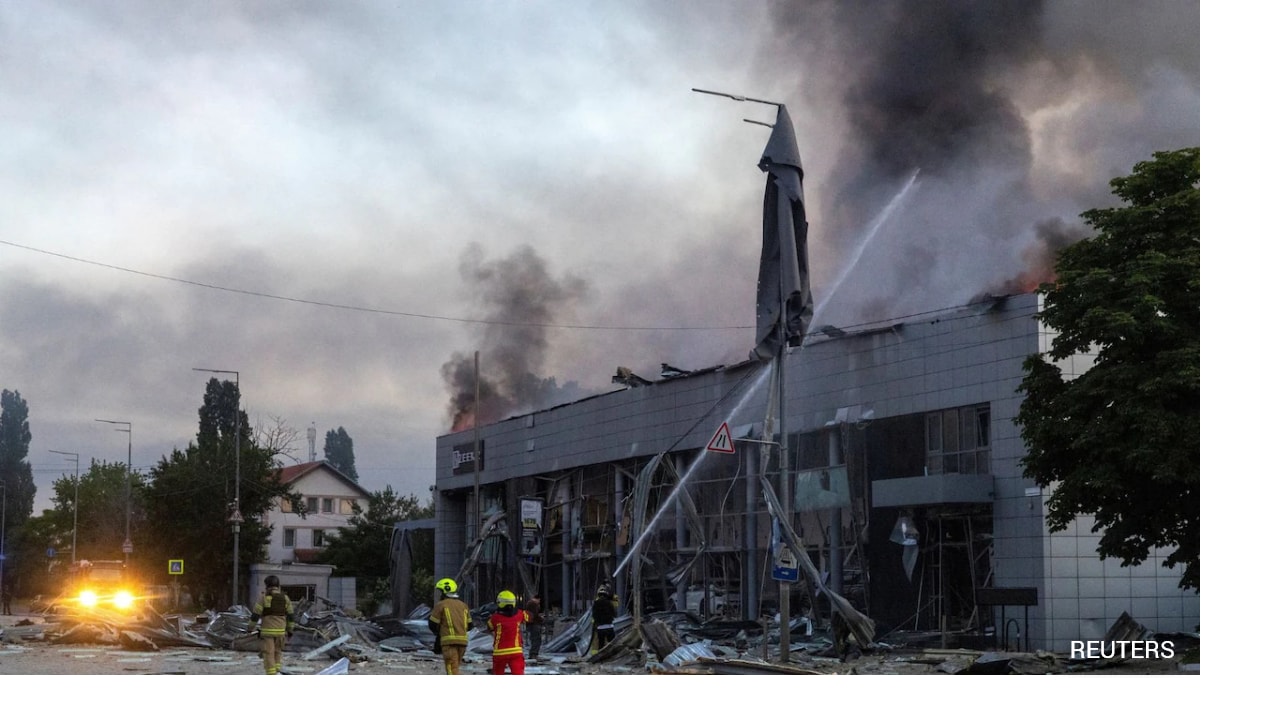
Then comes the thump. It is a sound felt in the soles of the feet before it reaches the ears—a deep, resonant thud that signifies metal meeting brick, fire meeting flesh, and another piece of normalcy turning to ash.
Public statements from state officials can be read on a screen. Press releases can be parsed for political posture. But to understand the war in Ukraine as it enters this grueling, repetitive phase, one must look at the window frames. Across the country, windows are taped in giant, jagged X-shapes. It is a fragile defiance. The tape cannot stop a missile. It merely stops the glass from exploding inward in a thousand lethal shards when the shockwave hits.
Lately, the rhetoric has shifted into a surreal distortion of reality. Following a series of devastating strikes on Ukrainian urban centers, the Kremlin issued a statement accusing Ukraine of "acts of terror." It is a psychological inversion that leaves onlookers dizzy. The nation whose cities are being systematically dismantled by long-range missiles is labeled the terrorist, while the state launching those missiles claims the mantle of the victim.
To comprehend how we arrived at this bizarre rhetorical junction, we have to look past the political theater and examine the anatomy of a modern air campaign.
The Geography of Fear
When a missile strikes an apartment building in the middle of the night, the immediate aftermath is surprisingly quiet. The roar of the explosion is instantly replaced by a thick, choking dust that smells of pulverized plaster, burnt electrical wiring, and old insulation.
Consider a hypothetical citizen named Olena. She is not a soldier. She manages a small logistics firm. When a drone strikes the courtyard of her complex at three in the morning, her world shrinks to the radius of her cell phone flashlight. The power grid fails instantly. The water pipes burst, weeping into the debris. In the darkness, she can hear her neighbors calling out to each other, their voices muffled by the dust, sounding small and remarkably young.
This is the reality behind the dry headlines reporting "strikes on critical infrastructure."
The strategic logic of these attacks has little to do with traditional military targets. The objective is psychological fracture. By targeting the power grid, the water pumping stations, and the residential quarters, the campaign aims to make daily life untenable. It is an attempt to weaponize winter, darkness, and exhaustion.
Yet, when Ukraine responds by launching its own drones toward military airfields, oil refineries, and logistical hubs within Russian borders, the narrative from Moscow transforms. The response is not characterized as military counter-action, but as a violation of a unspoken rule.
This inversion relies on a specific type of political amnesia. It requires the observer to forget who crossed the border first. It requires the world to ignore the daily rain of Kh-101 cruise missiles and Shahed drones onto Ukrainian playgrounds, supermarkets, and power stations.
The Machinery of Projection
Psychologists talk about projection as a defense mechanism—a process where an aggressor attributes their own unacceptable behaviors and impulses onto their target. On an international scale, state-level projection serves a cold, calculating purpose.
By labeling Ukrainian counter-strikes as terrorism, the Russian state attempts to achieve two distinct goals.
First, it seeks to solidify domestic support. A population told they are fighting an existential threat against "terrorists" is far more likely to accept the economic hardships, the mobilization orders, and the mounting casualties of a protracted war. It transforms an aggressive war of choice into a defensive war of necessity in the minds of the Russian public.
Second, it is a message designed for the international community. It is an attempt to muddy the moral waters. The calculus is simple: if both sides can be accused of terror, then the distinction between the aggressor and the victim blurs. For nations sitting on the fence, or for political factions in the West looking for an excuse to reduce military aid to Ukraine, this rhetorical blurring provides a convenient exit ramp.
But the mathematics of the sky do not lie.
The sheer volume of ordnance tells the true story. For every drone that crosses into Russian territory targeting a fuel depot or a military command post, dozens of missiles are rained down upon Ukrainian municipalities. The scale is asymmetrical, both in intent and in execution. Ukraine’s strikes within Russia are precision operations aimed almost exclusively at the machinery of war—the refineries that fuel the tanks, the airfields that launch the bombers. Conversely, the strikes on Ukraine are sweeping, indiscriminate, and designed to terrorize the civilian populace.
The confusion arises because war in the twenty-first century is fought simultaneously in two realms: on the physical mud of the Donbas and in the informational ecosystem of the global media.
The Logistics of the Everyday
Living under a sky that can turn lethal at any moment changes how a society functions. It alters the human architecture of a city.
In Kharkiv, a city less than thirty miles from the Russian border, the warning time for an incoming missile is often measured in seconds rather than minutes. S-300 air defense missiles, repurposed for land attacks, arrive before the sirens can even finish their first crescendo.
Because of this, the city has moved underground.
Schools have been built in the subway stations. Children learn mathematics and grammar in brightly lit, subterranean rooms while the trains rumble on the tracks nearby. It is an extraordinary feat of civic resilience, but it is also a profound tragedy. A childhood spent beneath the earth is a childhood stolen by the threat of violence from above.
The economic toll is equally insidious. It is not just the cost of rebuilding shattered brickwork; it is the slow, grinding strangulation of a nation’s economy. When the power goes out, factories stop. When the internet drops, tech workers—who form a vital pillar of Ukraine's modern economy—cannot deliver their code to clients in New York or London. Businesses operate on the erratic rhythm of generators, their roar becoming the baseline soundtrack of urban survival.
The true stakes of this conflict are found here, in the stubborn determination to keep going. The defense of Ukraine is not merely a matter of air defense batteries and artillery shells. It is found in the tram driver who clears the tracks of shrapnel at dawn so the morning shift can get to work. It is found in the surgeons who operate by the light of headlamps when the hospital’s primary power fails.
The Friction of Truth
When we look through the fog of state-sponsored propaganda, the core truth remains stubborn. The accusations of terrorism leveled at Kyiv by Moscow are a classic exercise in geopolitical gaslighting. They are designed to provoke doubt, to exhaust the empathy of the international audience, and to normalize the extraordinary violence being inflicted upon Ukraine.
The danger is that the world grows accustomed to the images of burning buildings. The human mind is not built to sustain a high level of outrage for years on end. Compassion fatigue is a real, measurable phenomenon. The headlines begin to blend together. One strike looks very much like another on a five-inch smartphone screen.
But for the people living beneath that sky, there is no option to scroll past.
As evening falls over Kyiv, the city grows dark. To conserve energy, the streetlights remain unlit. The buildings stand like giant, silent monoliths against a twilight sky. Pedestrians walk with small flashlights or the glow of their phones, navigating the uneven sidewalks by instinct and memory.
There is a profound quiet in a city without streetlights. In that darkness, you realize that the most powerful weapon Ukraine possesses is not a missile system or an armored vehicle. It is the quiet, stubborn refusal of its people to be frightened into submission.
A lone cellist plays in a courtyard, the music drifting up between the dark, taped windows, filling the space where the sirens usually sing. The notes are clear, fragile, and entirely unbroken.