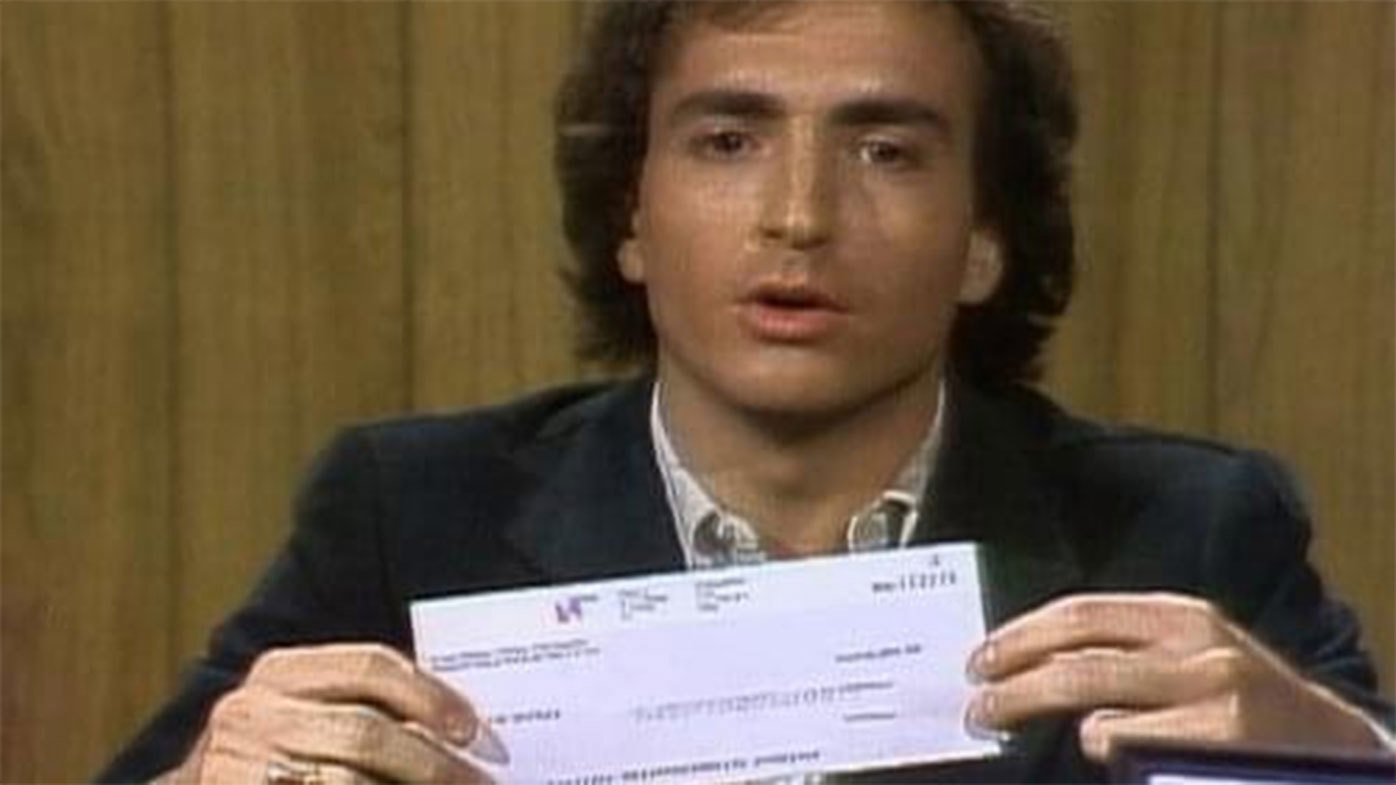
The decision-making architecture behind a global musical reunion rests on a fundamental tension: the delta between immediate liquidity and long-term brand equity preservation. While recent reports emphasize a specific, seemingly "tiny" sum offered to ABBA for a 250-show reunion tour at the turn of the millennium, focusing on the raw $1 billion figure obscures the structural risks and opportunity costs involved. The failure of those negotiations was not an emotional impasse but a rational calculation of the diminishing returns inherent in physical performance versus the scalable leverage of intellectual property.
The billion dollar offer structural breakdown
To understand why $1 billion was rejected, one must deconstruct the offer into its operational components. In the year 2000, a tour of this magnitude would have required an unprecedented logistical footprint.
- The Performance Burden: A 250-show commitment represents nearly three years of constant transit, rehearsal, and physical output. For artists in their 50s at the time, the biological tax on performance quality creates a high probability of brand dilution.
- The Revenue Split: While the headline figure suggests a massive windfall, a tour of this scale involves a heavy cost function. Production, insurance, venue fees, and a massive crew would likely consume 40% to 50% of the gross.
- Taxation and Jurisdictional Leakage: Distributing a billion dollars across multiple international jurisdictions would subject the capital to aggressive taxation, significantly reducing the net liquid gain for the four principals.
The rejection was a signal that the band prioritized the "immortality" of their existing catalog over a high-friction, high-risk liquidity event.
The preservation of brand scarcity
ABBA’s strategic positioning relies on a fixed-point-in-time aesthetic. By refusing to reunite for decades, they avoided the "legacy drift" that affects bands like the Rolling Stones or The Who, where the audience is forced to reconcile the youthful energy of the original recordings with the visual reality of aging performers.
The Scarcity Multiplier
In economic terms, ABBA utilized a scarcity strategy to maintain the premium value of their IP. This created three distinct advantages:
- Market Desperation: The lack of a physical reunion increased the licensing value of their music for film (Mamma Mia!) and stage productions.
- Master Recording Longevity: Without a subpar reunion tour to cloud the legacy, the original tracks remained the definitive version of the product.
- Control Over Narrative: The band maintained total control over their public image, preventing the tabloid-driven friction that often accompanies high-pressure touring cycles.
The shift from physical to digital presence
The 2021 launch of "ABBA Voyage" in London serves as the ultimate validation of their long-term strategy. This project represents a pivot from labor-intensive physical performance to capital-intensive digital scalability.
The ABBA Voyage Model: A Financial Comparison
| Variable | Traditional Reunion (2000) | Digital Residency (2021) |
|---|---|---|
| Human Capital | High (Artists must be present) | Low (Artists recorded once) |
| Scalability | Linear (One show at a time) | Exponential (Potential for multiple sites) |
| Quality Control | Variable (Nightly performance fluctuations) | Fixed (Perfect digital execution) |
| Health Risk | High (Touring fatigue/illness) | Zero (Avatars do not age or get sick) |
The current "Voyage" residency demonstrates a superior risk-to-reward ratio. By investing in motion-capture technology and a purpose-built arena, the band created an asset that generates revenue 24/7 without requiring their physical presence. This is the transition from being "service providers" to "platform owners."
The cause and effect of the Mamma Mia! ecosystem
The success of the stage musical and subsequent films created a self-sustaining feedback loop that made a physical reunion financially unnecessary.
- Demographic Expansion: The musical introduced the catalog to a generation that did not exist during the band's active years (1972–1982).
- Catalog Revaluation: Every ticket sold for a theatrical production acts as an advertisement for the streaming catalog. The streaming royalties generated by a revitalized brand often exceed the net profit of a one-off tour without the associated overhead.
- De-risking the Brand: The "Mamma Mia!" brand allowed the music to tour without the musicians, proving that the IP was the product, not the people.
Internal dynamics and the veto power
In a four-member partnership with equal equity, the cost of consensus is exceptionally high. The group functioned under a "unanimous or nothing" protocol. If even one member perceived the psychological or social cost of a reunion—reopening old wounds from two divorces—as higher than the marginal utility of another $250 million, the deal was dead.
The social friction within the group acted as a natural barrier to entry for promoters. Unlike many bands where a lead singer or songwriter can force a reunion, ABBA’s structure required 100% alignment, which is statistically difficult to achieve when the participants are already financially independent.
The endgame of legacy management
The ABBA case study proves that for top-tier heritage brands, the most lucrative move is often the one you do not make. By waiting twenty years and bypassing the $1 billion offer, they positioned themselves to lead the "virtual concert" revolution.
The "Voyage" avatars are not just a gimmick; they are an immortalized version of the brand's peak-value era. This move effectively solves the problem of human depreciation. While other legacy acts struggle with declining vocal ranges and mobility, ABBA has frozen their product in its most profitable state.
The strategic play for any high-value legacy asset is to move away from performance-based revenue toward IP-based ecosystems. The objective is to decouple the "talent" from the "product." ABBA achieved this by treating their legacy as a software suite that required a version 2.0 (the avatars) rather than a hardware system that required constant, manual maintenance (the physical tour).
Investment should be funneled into technologies that preserve the "peak-state" of the brand. For legacy holders, the priority is the creation of "evergreen assets"—venues, digital captures, and narrative expansions—that operate independently of the creators' physical limitations. The goal is to transform a finite human career into an infinite digital franchise.