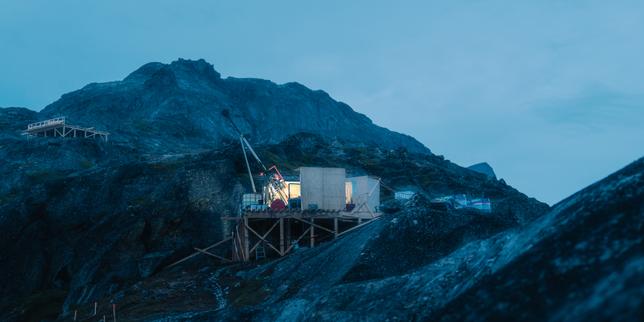
The global race to secure critical raw materials has elevated high-latitude mineral deposits from peripheral geological curiosities to central assets in the energy transition. Among these, natural flake graphite—a core component in lithium-ion battery anodes—commands significant industrial focus. Projects such as the Amitsoq deposit in southern Greenland illustrate the structural bottlenecks, capital expenditure realities, and logistical parameters governing Arctic resource extraction. Deconstructing the operational mechanics of these deposits requires analyzing the interplay between ore grade, processing chemistry, capital allocation, and geopolitical risk.
The Geological and Mineralogical Baseline
Resource evaluation in high-latitude environments begins with grade distribution and metallurgical complexity. High-grade metamorphic terranes often host superior flake graphite concentrations, but the economic viability depends entirely on the liberation characteristics of the carbon crystals during comminution. Recently making waves recently: Japan Does Not Have A Harassment Problem It Has A Power Structure Problem.
- Graphitic Carbon Concentration: High-grade deposits, such as those identified in southern Greenland, feature average graphitic carbon grades exceeding twenty percent. This contrasts sharply with lower-grade global deposits that operate at three to ten percent, altering the mass balance of material that must be mined and processed to yield a fixed unit of marketable concentrate.
- Flake Size Distribution: Battery applications require specific flake size fractions (typically large to jumbo flakes) to optimize spherical graphite yield for anode production. Fine-grained microcrystalline varieties demand energy-intensive restructuring, whereas coarse flake deposits allow for cleaner mechanical separation via froth flotation.
- Gangue Mineralogy: The composition of the host rock—predominantly gneisses and quartzites—determines the liberation energy. Abrasive quartz gangue accelerates mill wear, shifting the operational expenditure profile upward during the primary crushing and grinding phases.
The Logistics and Infrastructure Cost Function
Extracting minerals within the Arctic circle imposes severe operational constraints that alter standard project economics. Capital expenditure (CapEx) models must account for the absence of pre-existing heavy industrial infrastructure.
$$\text{Total Operating Cost} = \text{Extraction} + \text{Comminution} + \text{Logistics} + \text{Environmental Compliance}$$ Additional information on this are covered by The Economist.
In remote maritime environments like southern Greenland, the logistical component is dictated by seasonal shipping windows and marine access. Unlike landlocked operations dependent on rail networks, coastal Arctic deposits leverage short shipping routes to European ports. However, this advantage is bounded by maritime ice conditions and the requirement for dedicated port facilities capable of handling bulk mineral concentrates.
Power supply represents another structural variable. Operating remote processing plants necessitates independent microgrids. Standardizing on low-carbon or renewable energy sources near coastal shipping nodes mitigates long-term carbon tax exposure, aligning the project with regulatory frameworks such as the European Critical Raw Materials Act.
Processing and Anode Supply Chain Integration
Raw graphite concentrate cannot be integrated directly into battery manufacturing cells. The conversion pipeline dictates the economic capture rate of the mining enterprise.
- Beneficiation: Crushing, grinding, and multi-stage froth flotation upgrade the raw ore from its natural grade to a concentrate typically exceeding ninety-five percent graphitic carbon.
- Purification: Advanced battery applications require purity levels of ninety-nine point nine percent. This phase typically employs chemical purification methods that must satisfy stringent environmental regulations regarding acid waste management.
- Spheroidization and Coating: The purified flake graphite is mechanically shaped into spheres and coated with amorphous carbon to reduce irreversible capacity loss during the initial battery charge cycle.
Vertically integrated models—where mining entities plan downstream processing plants closer to industrial end-users rather than executing all transformations on-site—optimize energy arbitrage and minimize shipping weights for low-value waste products.
Project Financing and Regulatory Risk Mitigation
Developing a greenfield Arctic mining asset involves extended lead times across exploration, resource upgrading, environmental impact assessments (EIA), and social impact assessments (SIA). Capital markets evaluate these ventures through the lens of regulatory certainty and permitting velocity.
The issuance of long-term exploitation licences provides the legal framework required for institutional capital allocation. Simultaneously, de-risking early-stage technical development relies on non-dilutive funding mechanisms, such as state-backed export credit agency loans. These financial instruments lower the weighted average cost of capital during the pre-feasibility and definitive feasibility study phases.
Independent environmental, social, and governance (ESG) certification frameworks serve as operational risk-management tools. By establishing baseline data early, project developers insulate themselves against community opposition and regulatory shifts, ensuring predictable timelines from resource definition to commercial production.
Prioritize capital allocation toward comprehensive metallurgical testing and pilot-scale processing trials to validate the liberation curve before locking in commercial-scale engineering designs.