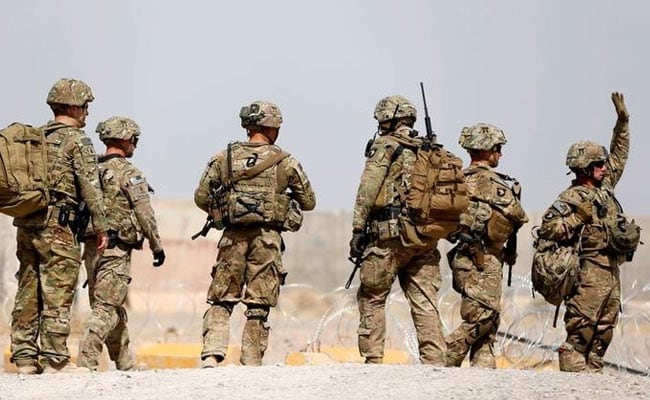
State-backed bounties on military personnel function as psychological pricing mechanisms rather than traditional tactical instruments. When the Iranian military leadership announced a financial reward equivalent to thirty thousand dollars—or five billion tomans—for the capture or elimination of United States service members, the directive revealed a specific shift in wartime asset allocation. Doubling this compensation for female operatives introduces an explicit demographic incentive designed to maximize propaganda value and widen the operational participation surface. Deconstructing this policy requires examining the structural mechanics of state-sponsored irregular warfare, the function of symbolic economic signaling, and the strategic constraints governing the current theatre of conflict.
The Cost Function of Irregular Engagement
In conventional military analysis, human capital carries a replacement cost calculated through recruitment, training, deployment, and institutional knowledge preservation. By pricing the elimination of an adversary at a flat financial rate, state actors attempt to outsource the marginal cost of violence to non-state or proxy actors.
The economic architecture of this announcement relies on three primary variables:
- The Capital Incentive: Five billion tomans represents a substantial liquidity injection in a sanctions-constrained domestic economy, transforming localized hostility into an economically rationalized objective for financially stressed populations.
- The Demographic Multiplier: Doubling the baseline for female combatants exploits the propaganda asymmetry of women operating in direct combat or capture roles, maximizing media resonance while broadening the active recruitment pool beyond traditional military demographics.
- Asset Repurchase Clauses: Supplementary provisions promising double value for the weapons used—along with state preservation of the hardware in a planned museum—convert tactical tools into historical artifacts, subsidizing the capital cost of the attacker's inventory.
This structure shifts the financial burden of engagement from state military budgets to decentralized actors while retaining centralized political control over the narrative of resistance.
Operational Realities and Geographic Disconnect
A rigorous assessment of any military policy demands cross-referencing stated objectives against physical constraints. The structural flaw in the execution of this bounty system lies in the absence of a contiguous ground footprint.
With hostilities primarily concentrated around maritime choke points such as the Strait of Hormuz and localized exchanges in southern Iran, large-scale deployments of United States ground forces inside Iranian territory are absent, save for isolated extraction operations. Consequently, the geographic mismatch between where the bounty applies and where target assets reside creates an operational bottleneck.
When a state offers compensation for targets that are largely inaccessible within its domestic borders, the policy transitions from a tactical directive to a strategic communication tool. The primary arena for this decree is not the battlefield, but the information space. Stalled peace talks following the breakdown of diplomatic frameworks in June create a vacuum where domestic signaling replaces tangible military progress.
Information Warfare as State Survival
State actors operating under severe economic and military pressure utilize pricing announcements to project resilience. By quantifying the value of an enemy combatant, the leadership achieves three distinct communication objectives:
- Domestic Mobilization: Framing the initiative as a response to public demands for financial jihad channels domestic frustration into sanctioned channels of hostility.
- Deterrence Signaling: Establishing a market price for casualties attempts to raise the perceived political cost of prolonged foreign engagement for the adversary.
- Narrative Control: Countering reports of strategic disadvantage by projecting an offensive posture, directly challenging foreign claims of dominance in regional waterways.
The mechanics of this announcement reflect an adaptation to protracted, low-intensity friction where total victory is unattainable, and survival depends on managing domestic endurance and external friction.
Direct all future diplomatic and intelligence resource allocation toward monitoring domestic proxy mobilization patterns rather than treating the financial decree as a conventional tactical threat.