Modern political communication requires a structural shift from broadcast-era media appearances to algorithmically optimized digital creator ecosystems. When a sitting member of the United States Congress launches a dedicated YouTube podcast while simultaneously altering their visual presentation through visible body modifications, observers frequently mischaracterize the move as a superficial pursuit of attention. A rigorous institutional analysis reveals a different reality. This action represents a deliberate reallocation of communication capital to bypass traditional gatekeepers, minimize intermediation costs, and capture direct, unmediated market share within the attention economy.
Traditional political public relations relied on high-friction intermediaries. A politician pitched a message to a national network, a wire service, or a major newspaper, submitting to editorial control that dictated format, tone, and distribution channels. This model carried significant structural liabilities. The message was subject to loss-in-translation filtering, audience dilution across demographics that held zero conversion value for the politician, and high opportunity costs in time spent managing press corps relationships.
The migration toward independent video-first platforms reverses these dynamics. By operating a primary distribution channel, political figures internalize the publishing infrastructure. The cost function shifts from securing earned media through crisis management and press releases to owning a direct-to-consumer digital asset.
The Mechanics of Visual Signaling in Political Markets
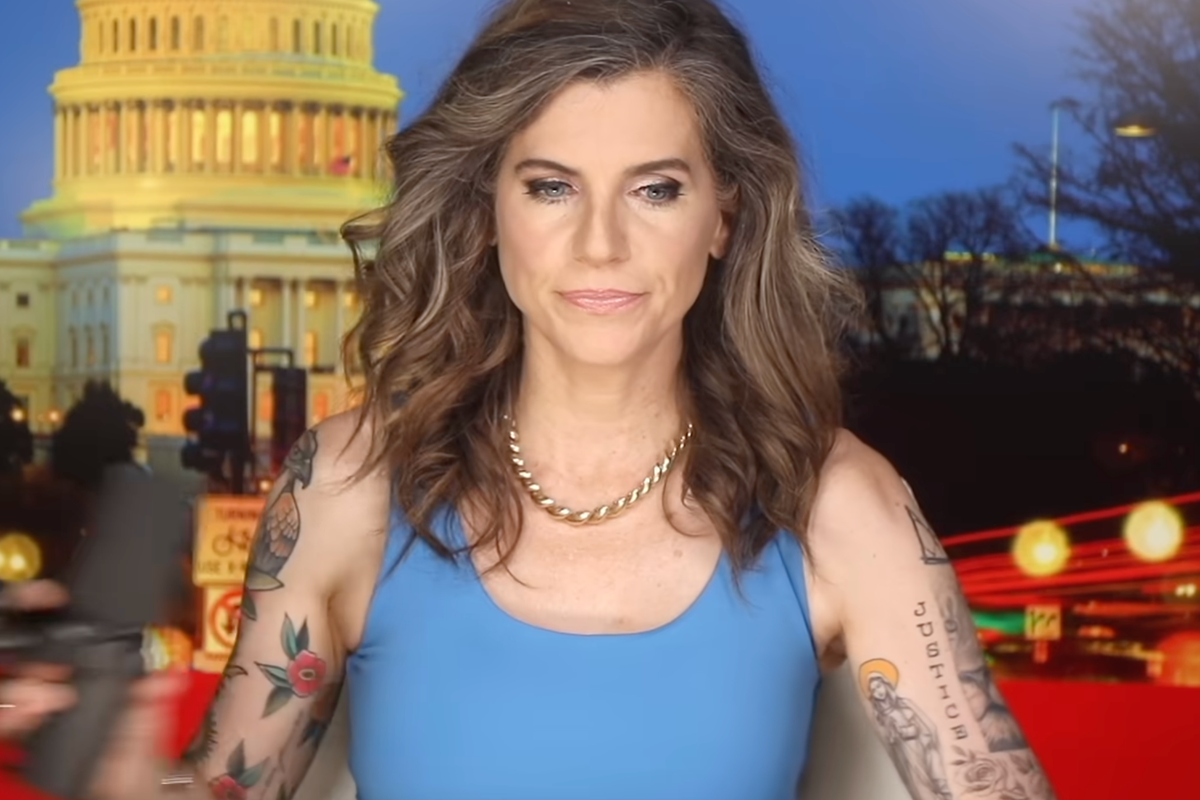
A core component of this shift involves intentional visual disruption. Visible tattoos on a high-profile political figure function as an aggressive signal within the attention market. In economic terms, costly signaling theory posits that signals carry weight only when they are difficult to fake or when they incur a social, professional, or reputational cost. Conforming to legacy political dress codes requires minimal variance and signals institutional obedience. Deviating from those norms through permanent bodily modification imposes a permanent visual divergence from the establishment aesthetic.
This visual update alters audience segmentation immediately. It accomplishes three distinct structural functions within the political consumer base:
- Ingroup Solidification: It signals cultural alignment with anti-establishment, populist, or modern subcultural demographics who reject rigid institutional norms.
- Outgroup Alienation: It acts as a deliberate filter, intentionally repelling legacy political moderates or traditionalists who view such aesthetics as antithetical to governance. In modern polarized markets, repelling the outgroup is often as valuable as attracting the base, because intensity of support drives donation rates and algorithmic amplification.
- Attention Capture: Human visual processing prioritizes anomaly detection. In a constant stream of homogeneous political attire, visual variance breaks pattern recognition, forcing a pause in user scrolling behavior.
The combination of a visual pivot and a shift to a long-form video platform is not accidental. It is a synchronized dual-channel strategy designed to maximize digital real estate.
Deconstructing the Platform Economics of Political Podcasts
YouTube operates under an algorithmic distribution model governed by watch time, click-through rates, and viewer retention. Unlike short-form platforms like TikTok or Instagram Reels, which prioritize rapid virality and top-of-funnel reach, long-form podcasting serves a different function in the conversion funnel.
[Top of Funnel: Visual/Short-form Anomaly]
       ↓ (Filter & Capture)
[Middle of Funnel: Long-form Podcast]
       ↓ (Trust & Retention)
[Bottom of Funnel: Direct Action / Conversion]
Long-form video acts as a trust-building mechanism. Politics is a high-trust purchase. Voters do not commit resources, time, or votes based on a thirty-second clip; they require perceived proximity to the candidate's authentic persona. Uncut conversations, conversational pacing, and unscripted environments create an illusion of intimacy.
The economic model of this infrastructure relies on several distinct levers:
First, disintermediation removes the profit margins of legacy media companies. When a viewer watches a cable news hit, the network monetizes the attention via advertising slots while the politician receives only the fleeting brand equity of the appearance. When that same viewer consumes content on a proprietary channel, the creator captures downstream monetization opportunities, subscriber data, and direct audience ownership.
Second, algorithm independence mitigates platform risk. While YouTube retains ultimate control over distribution rules, a dedicated subscriber base represents an owned audience asset that can be redirected to alternative platforms, email lists, or donation gateways if algorithmic favor shifts.
Third, structural longevity changes the asset value. Cable news segments vanish into archival obscurity behind paywalls. Digital video assets compound in value. A video published today continues to accrue algorithmic impressions, search traffic, and secondary commentary months or years later, lowering the marginal cost of voter acquisition over time.
The Attention Arbitrage of Niche Media Production
Political figures entering the creator economy are engaging in a form of attention arbitrage. Mainstream media entities are encumbered by legacy cost structures, union overhead, and broad demographic mandates that force them to cater to the median voter. This leaves lucrative ideological niches underserved.
By adopting the aesthetic and structural playbook of independent internet creators—featuring high-contrast thumbnails, direct-to-camera address, casual styling, and conversational long-form interviews—political actors exploit this institutional gap. They trade institutional prestige for direct algorithmic velocity.
The strategic risk inherent in this model is brand degradation. When a political figure behaves like an internet creator, they risk devaluing the perceived solemnity of legislative office. However, in an era where institutional trust in government, media, and traditional authority is structurally depressed, institutional solemnity may no longer be a viable currency. If the voter base perceives formal political presentation as synonymous with deception, then informality, visible body art, and conversational broadcasting become proxies for honesty.
Strategic Operational Forecast
The convergence of political strategy and creator economy mechanics will accelerate. Future political campaigns will allocate larger percentages of operational budgets toward in-house digital studio infrastructure rather than external media buys. The competitive advantage will no longer belong to politicians who secure the best slots on Sunday morning broadcast programs, but to those who construct the most efficient, high-retention digital distribution networks. Visual disruption, such as unconventional personal styling, will continue to serve as the initial acquisition hook, while long-form conversational content will provide the retention engine necessary to convert casual observers into active political participants.