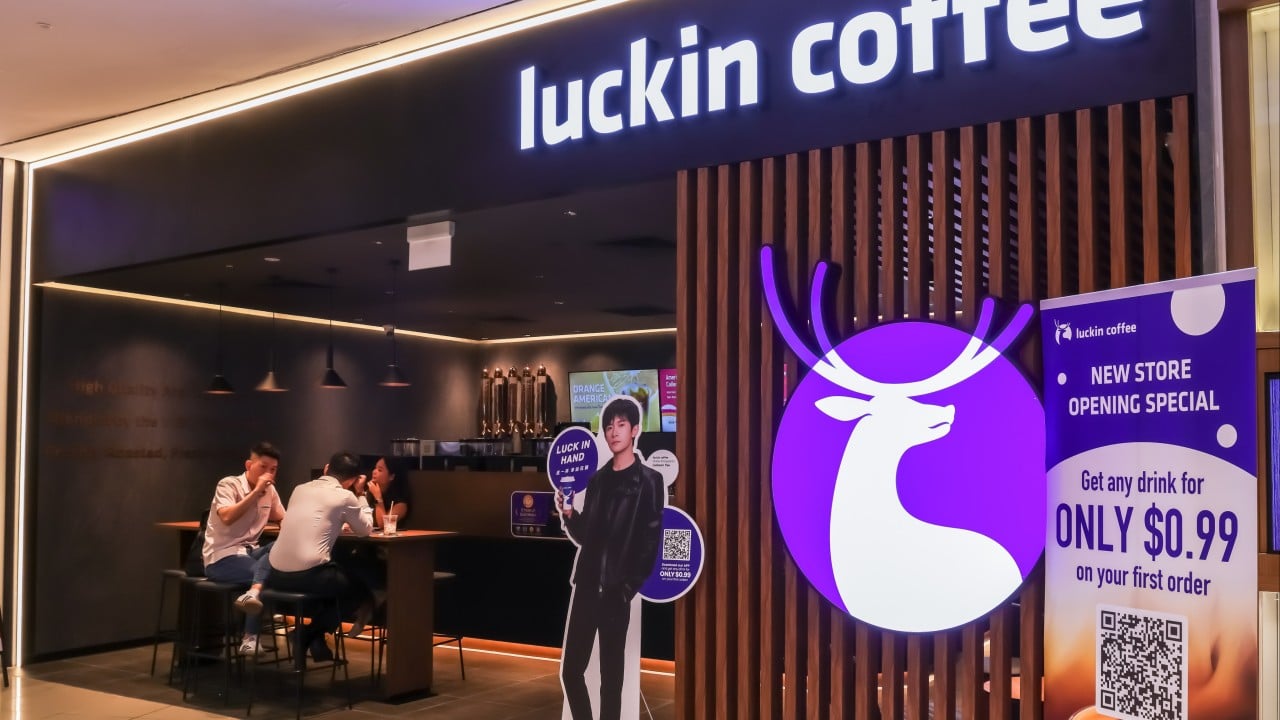
The entry of a high-density, software-orchestrated coffee chain into a mature urban market initiates a predictable sequence of operational shocks. When Luckin Coffee scaled past one hundred operational storefronts in Singapore, independent neighborhood cafes experienced immediate top-line compression. Initial analytical commentary typically frames this friction as a cultural battle between artisanal craft and corporate efficiency. That framing misdiagnoses the mechanism.
The structural pressure exerted by automated, app-first retail models is not cultural; it is mathematical. Independent operators cannot compete within the variable cost structures of traditional hospitality when faced with a competitor optimizing throughput via digital pre-ordering, centralized supply chains, and low-footprint kiosks. Surviving this displacement requires an understanding of how distinct operating models absorb margin erosion, utilize asset density, and capture consumer surplus. Don't forget to check out our recent coverage on this related article.
The Unit Economics of Density Versus Craft
Traditional specialty coffee houses operate on a high-touch, low-velocity economic model. Fixed overhead costs—specifically prime commercial rent in Singapore and skilled labor required for manual extraction—demand high gross margins per transaction. Every minute a barista spends dialing in a grind size, hand-tamping shots, or engaging in customer dialogue represents a fixed labor cost bound directly to transactional velocity.
Conversely, the scaled-chain model treats the physical storefront purely as a fulfillment node. By decoupling the transaction layer from the physical counter via proprietary mobile applications, labor utilization shifts from customer service to assembly line logistics. If you want more about the history of this, Reuters Business provides an informative breakdown.
| Operational Metric | Independent Specialty Model | Automated Kiosk / Scaled Chain |
|---|---|---|
| Primary Labor Allocation | Experiential hospitality and manual extraction | Order fulfillment and inventory staging |
| Order-to-Delivery Latency | Variable based on queue depth and artisanal steps | Minimized through batch sequencing and digital routing |
| Real Estate Efficiency | Low revenue per square meter due to seating footprints | High revenue per square meter via grab-and-go configurations |
| Promotional Margin Cushion | Low; constrained by raw bean and dairy input costs | High; subsidized by corporate venture liquidity and data monetization |
The financial impact of this divergence is immediate. When a scaled competitor opens adjacent to an independent shop, the initial drop in transaction volume forces a choice between two damaging responses: absorbing the margin compression or inflating prices to preserve gross profit per cup. Both strategies accelerate balance sheet depletion.
The Asymmetry of Acquisition and Retention Cost
Customer acquisition in the urban beverage market is governed by promotional subsidies. Scaled entrants deploy aggressive discounting architectures funded by corporate capital to lower the consumer's trial barrier. These promotions operate as a temporary distortion of market price discovery.
Independent operators lack the treasury depth to subsidize daily transactions. Matching a discounted price point of three to four Singapore dollars per cup results in negative gross margins for an independent shop, given that their cost of goods sold—inclusive of specialty-grade beans, fresh dairy, and import tariffs—scale linearly without volume rebates.
Rather than engaging in a destructive price war, resilient independents restructure their product matrix around inelastic consumer segments. This involves shifting capital away from commoditized caffeine delivery and toward high-complexity items that defy automated replication.
Operational Counter-Strategies for Independent Survival
Survival in a saturated market demands a systematic reallocation of assets away from direct competition on speed and price. Independent operators execute this through three structural pivots.
Inventory Differentiation
Commodity chains rely on uniform, high-yield beans optimized for automated espresso machines and heavy-roast consistency. Independent operators capture margin by utilizing single-origin micro-lots, complex processing methods, and seasonal rotational offerings. This shifts the consumer decision matrix from convenience-driven utility to sensory exploration.
Experiential Anchoring
When a physical space functions solely as a pickup window, it forfeits the social infrastructure value of retail real estate. Independent shops monetize this by optimizing dwell time. By integrating complementary retail goods, hosting community workshops, or offering table service with curated food programs, they transform the physical footprint from a transaction point into a destination.
Labor Specialization
Labor in an independent setting must transition from transactional cashiers to consultative hosts. Staff members are retrained to function as educators, guiding consumers through flavor profiles and origin characteristics. This intangible value justifies a premium price point that insulated corporate chains cannot replicate without breaking their labor-efficiency algorithms.
The Margin Floor and Long-Term Market Equilibrium
The coexistence of scaled digital chains and independent specialty operators eventually reaches an economic equilibrium defined by structural segmentation. The mass market bifurcates into functional caffeine consumption—where speed, digital integration, and aggressive discounting dictate volume—and experiential consumption, where provenance, customization, and physical environment command premium pricing.
Independent operators who attempt to middle-market their operations—offering neither extreme efficiency nor distinctive craftsmanship—face inevitable attrition as rental rates rise and foot traffic concentrates around high-density digital nodes. The ultimate defense against structural displacement is the complete abandonment of the volume game in favor of extreme operational differentiation.