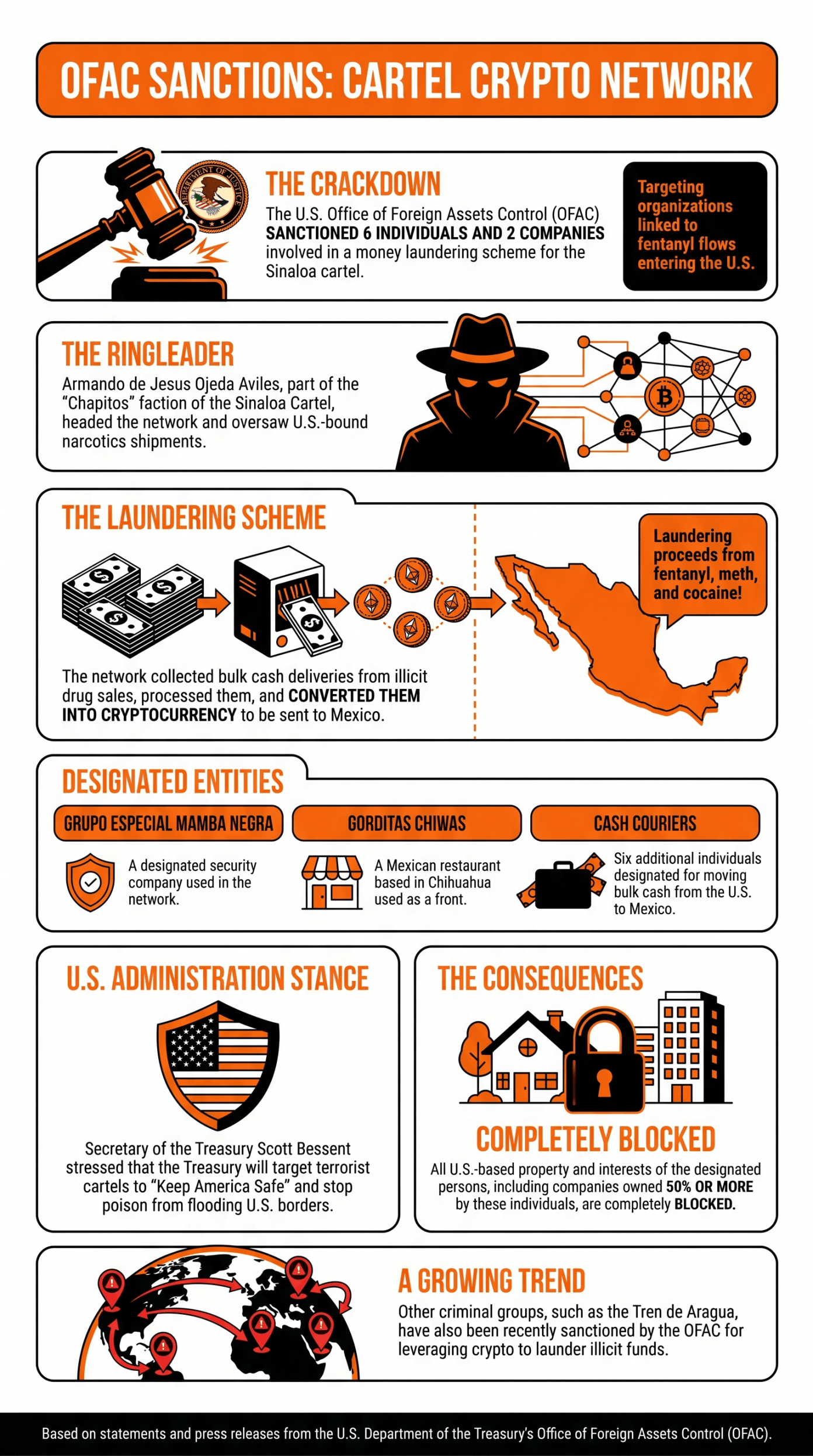
Traditional money laundering models suffer from an immutable bottleneck: institutional friction. Moving physical cash across borders requires couriers, shell companies, and the complicity of formal banking institutions, each introducing points of failure, seizure risks, and exorbitant transaction fees. When criminal organizations pivot toward digital assets, they trade physical logistical headaches for cryptographic complexity. Yet, buying tokens on regulated exchanges triggers strict Anti-Money Laundering and Know-Your-Customer protocols, creating an enduring paper trail that investigative agencies can map.
To bypass this financial surveillance architecture, modern syndicates have begun deploying capital into industrial-scale cryptographic minting operations hidden within remote geographic corridors. The discovery of a clandestine facility in the mountainous terrain of Puebla, Mexico—equipped with specialized computing units, custom electrical transformers, and satellite data links—exposes a fundamental shift in how illicit capital is generated, obfuscated, and integrated into the global financial system. Deconstructing this model reveals a sophisticated cost-reduction strategy that treats public infrastructure as a subsidized utility for criminal enterprise.
The Cost Function of Illicit Compute
Every cryptographic mining operation functions as an industrial arbitrage machine turning electrical power into digital currency. The economic viability of any mining facility hinges on a strict cost equation where profitability is determined by hardware efficiency, cooling expenditures, and, above all, the wholesale price of electricity. In a standard commercial setting, energy accounts for up to eighty percent of total operational overhead, dictating strict geographic concentration near cheap energy sources such as geothermal vents, natural gas flares, or surplus hydroelectric generation.
For criminal enterprises, this cost function undergoes a radical structural modification. By physically bypassing distribution meters and tapping directly into high-voltage transmission lines near critical infrastructure—such as the Nuevo Necaxa hydroelectric system—operators drive their marginal electricity cost down to zero. This theft alters the fundamental economics of hardware amortization.
A standard setup comprising three hundred high-performance graphics processing units or specialized application-specific integrated circuits demands a continuous, heavy electrical load, accompanied by massive thermal dissipation requirements. In a legitimate commercial operation, the capital expenditure required to purchase and maintain this hardware, combined with continuous power bills, creates a long payback period vulnerable to market volatility. By eliminating the power bill entirely, the break-even threshold compresses dramatically. The hardware becomes a pure margin generator, turning stolen kilowatt-hours directly into liquid, borderless assets regardless of broader market downturns or declining coin valuations.
Supply Chain Interception and Hardware Procurement
Acquiring hundreds of enterprise-grade computing units without attracting state scrutiny requires navigating complex hardware procurement networks. Large-scale mining rigs cannot be purchased anonymously in retail quantities without triggering export controls or corporate audits. Cartels solve this acquisition barrier by embedding procurement within existing front companies or utilizing illicit trade networks originally established for precursor chemical importation.
The physical assembly of these mountain facilities demands specialized engineering competence. Operating three hundred GPUs requires robust power stabilization, custom-built distribution panels, and high-capacity step-down transformers to convert high-voltage grid lines into usable alternating current without blowing the hardware or causing visible neighborhood brownouts that would alert utility providers. The inclusion of satellite internet terminals, such as Starlink arrays, ensures that the facility operates entirely off the local terrestrial telecommunication grid, preventing state-owned telecom companies from logging unusual data throughput or IP traffic patterns.
This operational profile demonstrates a high degree of technical division of labor. The foot soldiers who secure mountain perimeters do not configure nodes or manage mining pools. Instead, syndicates contract specialized technicians capable of setting up decentralized mining infrastructure, configuring wallet destinations, and managing remote access channels. This creates a distinct corporate layer within criminal hierarchies, bridging violent street-level enforcement with digital asset management.
The Mechanics of Zero-Trace Capital Generation
The primary utility of mining over direct exchange purchases lies in provenance laundering. When illicit cash is used to buy cryptocurrency on a peer-to-peer marketplace or a lax exchange, the transaction history retains a traceable link to illicit funds or suspicious counterparties. Chain analysis firms and law enforcement analytics suites can flag these clusters, freezing assets upon deposit into regulated liquidity pools.
Cryptographic mining obliterates this historical chain of custody. Newly minted coins generated by a mining pool enter the blockchain with an immaculate transactional pedigree. They possess no preceding transaction history connecting them to drug trafficking, extortion, or kidnapping revenues. From an analytical standpoint, these tokens are pristine digital commodities born directly from computational work.
Once minted, these assets undergo immediate obfuscation protocols. Operators frequently route mined coins through decentralized mixing protocols, privacy-focused coins like Monero, or rapid-chain-hopping mechanisms across cross-chain bridges. This liquidity laundering cycle fragments the initial concentration of funds, dispersing them across thousands of ephemeral wallets before consolidating them into stablecoins such as Tether. These stablecoins are then deployed into international trade networks to purchase industrial goods, real estate holdings, or luxury assets across jurisdictions with lax regulatory enforcement.
Infrastructure Vulnerability and Geographic Arbitrage
The choice of remote, mountainous terrain for these operations is not accidental; it is a calculated exercise in geographic arbitrage. Modern power grids, particularly in developing economies, feature thousands of miles of high-tension lines traversing rugged, unpopulated terrain. Monitoring every meter of transmission infrastructure for unauthorized taps is an insurmountable challenge for state-owned utilities operating under tight budget constraints.
The physical isolation of these sites provides multiple defensive advantages:
- Acoustic Masking: High-density computing clusters generate deafening levels of ambient noise due to industrial cooling fans operating at maximum RPM. Remote mountain ravines and dense forests naturally muffle this acoustic signature, preventing local residents from hearing the hum of heavy hardware.
- Early Warning Horizons: Access roads to remote installations are easily monitored by lookouts, providing criminal cells with sufficient warning time to destroy sensitive storage media, wipe node configurations, or abandon facilities before law enforcement tactical units can breach the perimeter.
- Jurisdictional Fragmentation: Mountainous regions often sit at the intersection of municipal, state, and federal jurisdictions, creating bureaucratic friction and slow response times among competing law enforcement agencies.
These factors combine to create zones of operational impunity where industrial-scale energy theft can persist for months or years undetected, provided the local community remains small, intimidated, or economically dependent on the syndicate's presence.
Systemic Blind Spots in Regulatory Enforcement
Regulatory bodies frequently focus their anti-money laundering frameworks on fiat-to-crypto gateways: centralized exchanges, crypto kiosks, and peer-to-peer escrow services. Regulatory frameworks demand Know-Your-Customer verification and transaction monitoring at these entry points, assuming that criminals must inevitably cross the bridge from digital assets back into traditional fiat currency to realize value.
Clandestine mining operations bypass this regulatory tollbooth entirely. By generating assets natively on the blockchain, syndicates operate entirely upstream of exchange compliance desks. Furthermore, the convergence of crypto mining with industrial utility theft exposes a critical institutional blind spot: the total disconnect between financial intelligence units and state electrical utilities.
Financial regulators monitor banking ledgers and blockchain analytics, while national electrical commissions track power generation and grid loads. These two bureaucracies rarely share real-time telemetry. A sudden, massive spike in regional power consumption on a dedicated line near a remote hydroelectric facility reads as normal industrial variance or transmission loss on power grid diagnostics rather than a financial crime indicator. Only when local communities experience localized grid instability or when physical enforcement units stumble upon the facilities by chance do these anomalies surface.
Strategic Forecast for Illicit Financial Operations
As law enforcement agencies refine their on-chain surveillance capabilities and international exchanges tighten compliance standards, the marginal utility of traditional cash-to-crypto laundering methods will continue to decline. This regulatory compression guarantees that criminal syndicates will accelerate their pivot toward capital-intensive, infrastructure-level evasion strategies.
The convergence of organized crime, unauthorized energy extraction, and cryptographic mining represents a permanent evolution in transnational finance. Future enforcement efforts will fail if they rely solely on financial intelligence algorithms. Disrupting this vector requires deep operational integration between cyber-investigative units, national security intelligence, and state energy infrastructure monitors. Utilities must deploy real-time acoustic and load-variance anomaly detection across high-tension transmission corridors, treating grid security not merely as an engineering concern, but as a critical line of defense against modern financial crime.