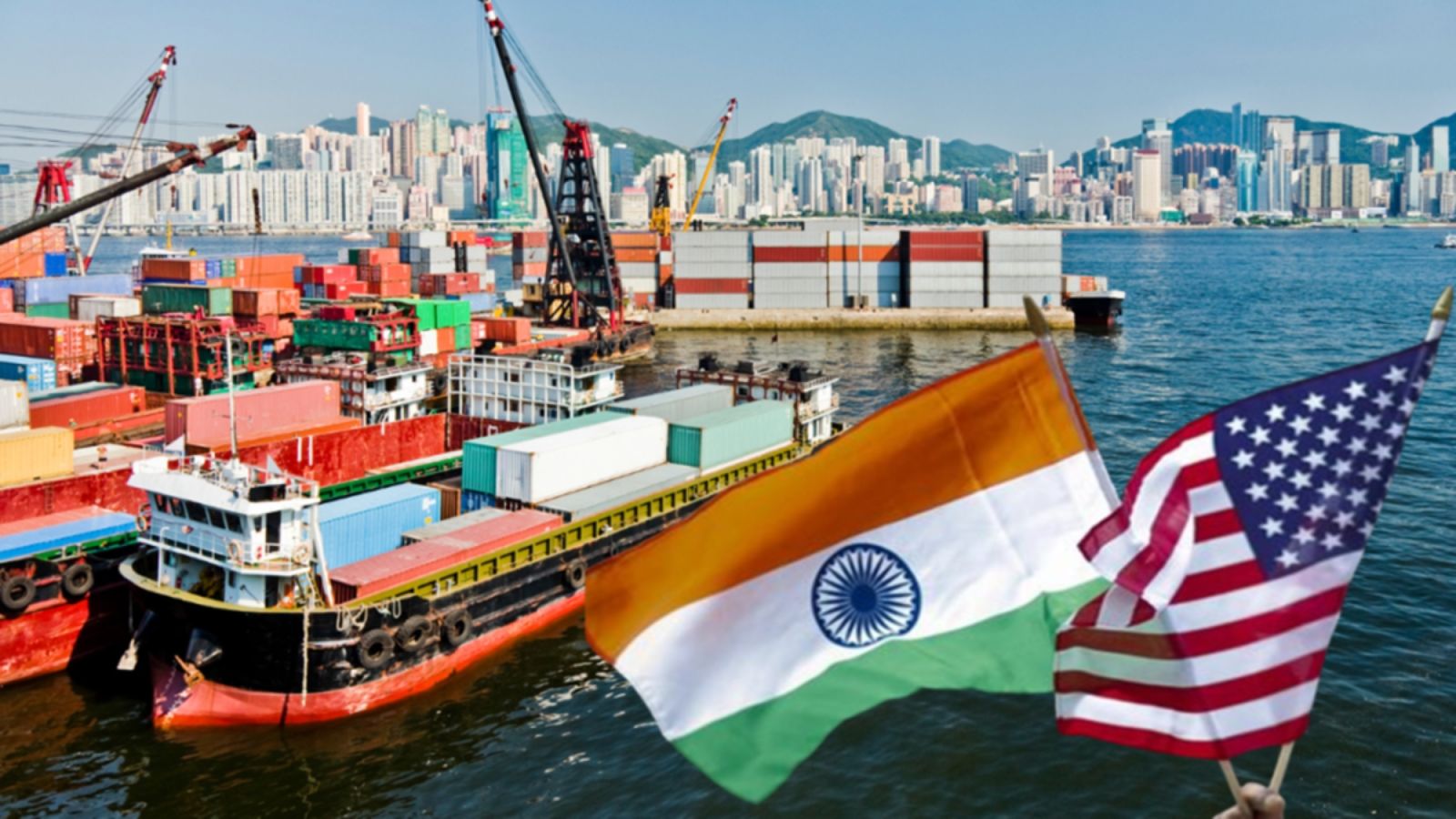
Geopolitical friction between Washington and New Delhi has entered a structural phase defined by legislative weaponization of trade policy. The passage of the Lindsey O. Graham Sanctioning Russia and Iran Act of 2026 through the United States Senate introduces a mechanism that threatens to impose mandatory 100% tariffs on the top five global purchasers of Russian crude oil and natural gas. Because Indian refineries have consistently captured deep discounts on Russian energy to insulate domestic macroeconomic stability—with Russian crude imports crossing the 50% threshold—New Delhi sits squarely within the crosshairs of this legislation. Official assurances emerging from diplomatic channels downplay the immediate threat, characterizing ongoing bilateral discussions as reassuring. However, an evaluation of the legislative architecture reveals a severe structural collision between India's energy optimization strategy and America's secondary sanction enforcement framework.
The Mechanics of the Proposed Tariff Architecture
The legislative framework relies on binary criteria designed to isolate economies financing Moscow's war effort. Under the primary rule, any nation ranking among the top five volumetric importers of Russian crude oil or natural gas during the preceding twelve months faces an absolute tariff rate of 100% on all goods exported to the United States, effective thirty days post-enactment, unless procurement patterns are radically altered.
This creates an immediate operational constraint for Indian state and private refiners. The cost function of substituting Russian feedstock with Middle Eastern or Western Hemisphere alternatives involves significant spot-market premiums, logistical re-routing, and margin compression. To bypass the penalty, India would need to compress its Russian crude intake down to zero or drop out of the top five global importer tier within an unfeasibly tight thirty-day compliance window. Given constrained shipping lanes and long-term supply commitments, rapid substitution introduces unacceptable inflationary shocks to India’s domestic fuel markets.
The Multi-Layered Tariff Burden
The 100% tariff bill does not operate in a vacuum. It compounds an already deteriorating trade compliance environment for Indian exporters entering the American market.
- The Pre-Existing Penalty Baseline: Indian exporters currently absorb a 10% tariff penalty covering over half of their aggregate export volume to the United States, stemming from an investigation into forced labor compliance.
- The Excess Capacity Threat: Trade authorities in Washington are actively evaluating a secondary investigation targeting manufacturing overcapacity, which threatens to introduce antidumping and countervailing duties independent of the Russian energy dispute.
- The Nuclear and Space Exclusion Loophole: The legislation explicitly exempts specific strategic sectors, such as Russian uranium imports utilized by American nuclear reactors and medical isotope supply chains, demonstrating that the U.S. Congress selectively calibrates protectionism to shield domestic critical infrastructure while penalizing external trade partners.
When these vectors are superimposed, the cumulative trade friction transforms from isolated disputes into a comprehensive margin squeeze for Indian manufacturing and IT-enabled services operating in the North American corridor.
The Diplomatic Disconnect and Bilateral Leverage
Official responses from the Indian Ministry of Commerce and Industry have maintained that the bill represents an internal American legislative process that should not disrupt the broader bilateral trade agreement framework agreed upon earlier in the year. This posture reflects traditional diplomatic insulation, yet it underestimates the structural independence of the U.S. legislative branch.
While executive branch officials and executive advisors emphasize the working relationship between the White House and New Delhi, the Senate's overwhelming bipartisan vote signals that congressional momentum on Russia sanctions is difficult for the executive to veto or bypass entirely. The strategic utility of the bill for American lawmakers lies precisely in creating high-cost leverage, forcing emerging economies to choose between Western market access and discounted Eastern commodities.
Strategic Execution for Trade Exposure Mitigation
To navigate this legislative bottleneck without incurring catastrophic export contractions, Indian economic strategists must execute a two-track contingency model.
First, procurement desks must model the exact financial tipping point where the discount on Russian Urals grade crude is neutralized by a potential 100% generalized tariff on goods entering the United States. If the secondary tariff penalty eclipses the refining margin delta, state-run oil marketing companies must systematically pre-hedge supply diversification toward non-sanctioned Atlantic basin producers before the House of Representatives completes its recess markup.
Second, trade negotiators must leverage bilateral talks to secure explicit waiver language modeled on the European natural gas exemptions. Just as European nations dependent on Russian pipeline gas carved out volume thresholds below 15%, India's diplomatic strategy must shift from passive observation to demanding objective criteria adjustments that recognize structural energy security realities.
The U.S.-India trade deal and America's tariff impacts
This analysis explores the background and potential market fallout of ongoing tariff negotiations between Washington and New Delhi.
http://googleusercontent.com/youtube_content/1