Structural Output and Cumulative Resource Allocation
The systematic generation of 600 distinct industrial metal totems across a 70-acre geographical plot over a thirty-year operating horizon presents a fascinating case study in decentralized asset accumulation, lone-operator manufacturing efficiency, and vernacular output density. Executed by outsider artist M.T. Liggett in rural Mullinville, Kansas, this body of work challenges standard interpretations of production speed, resource constraints, and capital efficiency.
When evaluating how a single individual converts zero-value scrap metal into a dense, permanent environmental installation, standard economic and logistical frameworks apply directly. The output is not merely a collection of folk art; it represents an intensive exercise in spatial distribution, continuous material processing, and high-frequency fabrication. Deconstructing the mechanics behind this thirty-year project reveals distinct operational phases, structural bottlenecks, and long-term preservation variables.
The Production Function of Lone-Operator Fabrication
To understand how an individual maintains a consistent manufacturing output over three decades, one must analyze the raw input variables. The core components of the system consist of discarded industrial scrap, an electric arc welder, structural steel posts, and an open-air site boundary along a major regional transport corridor.
The math governing this production pipeline is straightforward:
- Time Horizon: 30 years or approximately 10,950 operating days.
- Total Output: 600 finished large and small metal totems, whirligigs, and structural markers.
- Average Net Velocity: Approximately 20 completed units per year, or one structural piece every 18 days.
This output rate appears modest on an annualized basis, but the cumulative physical weight and welding hours required for structural integrity demand high physical endurance. Scrap metal processing requires sorting, thermal cutting, mechanical joining via welding, and stabilization against wind loads. The creator functioned as a vertically integrated entity: raw material sourcing, design, fabrication, logistics, and site installation were managed without intermediary labor or capital injection.
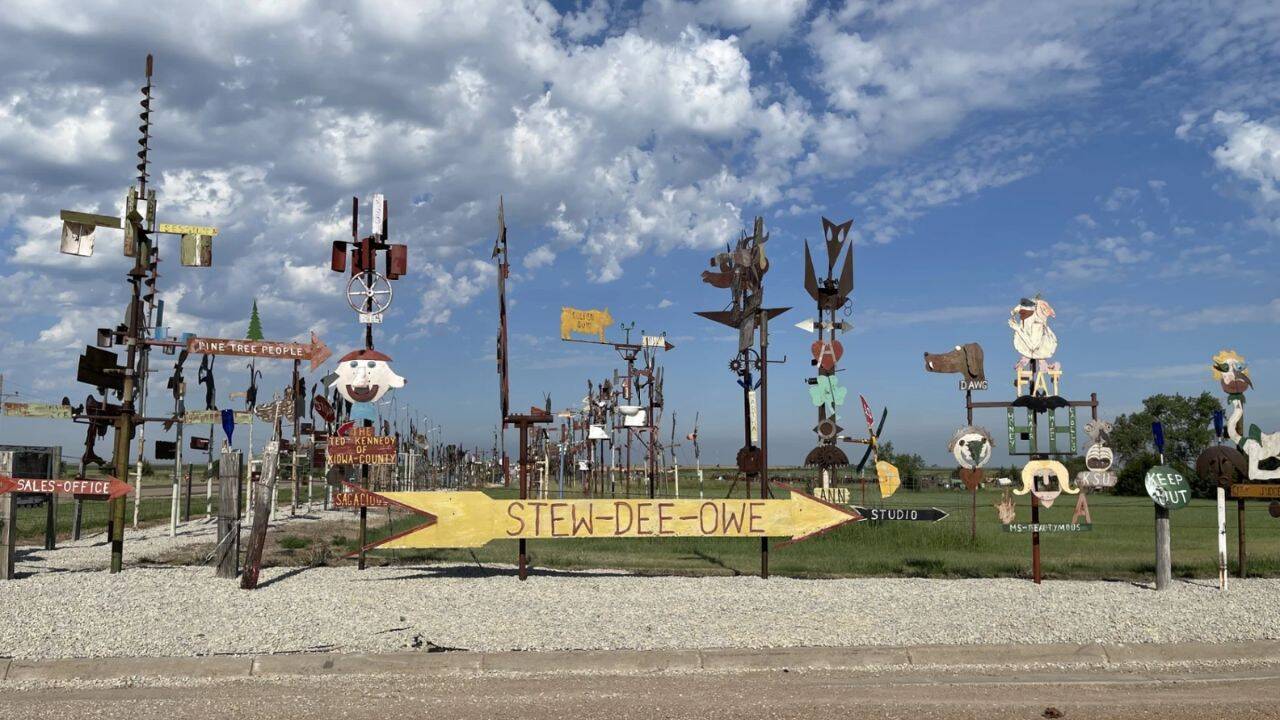
The geographical positioning along a highway fence line served as an active distribution and marketing mechanism. By placing the inventory directly at the property boundary adjacent to high-traffic transit routes, the creator eliminated distribution costs. The audience was captured organically through proximity, converting a passive property boundary into an open-air exhibition channel.
Spatial Density and Environmental Load Management
Managing 70 acres of land with 600 vertical metal installations creates specific land-use dynamics. Unmanaged open space tends to suffer from ecological encroachment or spatial underutilization. By populating the perimeter and internal sectors with vertical totems reaching up to nine feet in height, the creator established a distinct spatial boundary that altered the land's utility profile.
The distribution of the sculptures followed a cluster-and-linear pattern rather than uniform dispersion. Placing heavy concentrations along the fence line maximized visual saturation for external observers, while interior placements maintained an active inventory density. This structural deployment prevented the project from dissolving into the vast Kansas horizon, establishing a hard visual contrast between flat agrarian geography and vertical industrial fabrication.
The material selection—primarily scrap steel, automotive parts, agricultural implements, and discarded signage—introduced inherent chemical vulnerabilities. Unprotected carbon steel exposed to sub-zero winters, high winds, and heavy precipitation undergoes continuous oxidation. Without industrial coatings or galvanization, the physical lifespan of the raw material is strictly bound by atmospheric corrosion rates.
The Institutional Hand-Off and Post-Creator Asset Preservation
The transition of a decentralized, self-managed artistic environment to institutional stewardship highlights the fragility of uncurated outdoor installations. Upon the creator's passing, the property and its 600 assets faced severe degradation risks due to weather exposure, lack of structural maintenance, and absence of physical security.
Preserving an open-air art environment composed of corroding scrap metal requires a completely different operational framework than creating it. The intervention of institutional entities, such as the Kohler Foundation, initiated a rigorous conservation protocol:
- Inventory and Documentation: Cataloging every individual totem, mapping its precise geographical coordinates, and recording its structural composition.
- Conservation and Stabilization: Treating active oxidation without destroying the raw, weathered aesthetic intended by the original maker. Structural stabilization of foundations to prevent wind shear collapse.
- Public Access Infrastructure: Constructing dedicated visitors centers and controlled pathways to handle tourist influx without damaging the surrounding soil and remaining installations.
This hand-off illustrates a core operational paradox in outsider art preservation: the very qualities that define the work—raw spontaneity, use of deteriorating scrap, and independent maker isolation—are structurally incompatible with long-term material survival. Unassisted outdoor installations possess a natural expiration date dictated by material decay.
Strategic Allocation for Distributed Asset Retention
When managing physical installations characterized by high environmental exposure and decentralized creation, stakeholders must implement a phased intervention strategy to prevent total asset loss.
First, establish baseline digital and physical cartography of all physical assets before environmental degradation alters structural integrity. Second, decouple structural stabilization from aesthetic restoration by prioritizing foundation anchoring and load-bearing welds over surface cosmetics. Third, institutionalize the perimeter boundary to isolate high-density artifact clusters from agricultural or weather-related collateral damage. Long-term survival of decentralized roadside installations depends entirely on shifting from reactive individual maintenance to systematic, well-capitalized institutional preservation.