Your local town hall probably requires two adult humans to sign your marriage license. If you try to hand the clerk an ink-covered paw print, they'll laugh you out of the building. But the rules of modern romance are changing fast, and South America just threw out the traditional playbook.
Ecuador has officially opened its civil registry doors to four-legged wedding participants. The country's Civil Registry introduced a program allowing couples to bring their dogs and cats into the official ceremony to act as symbolic wedding witnesses.
This isn't a shadow backyard ceremony or an unofficial beach ritual. It happens right inside government buildings, under the watch of state officials. It tells us a lot about how the definition of a family is shifting globally.
The Logistics of a Furry Witness
Let's clear up the legalities immediately. No, a Pekingese cannot bind two humans in a legally enforceable contract under international law. If the marriage dissolves, the dog won't be called to testify in divorce court.
The legal weight still relies on human signatures. However, the government of Ecuador actively facilitates the emotional weight. When a couple registers for a pet-friendly wedding, the state issues two documents. You get the standard, legally binding marriage certificate, and you get an official "Symbolic Marriage Certificate".
This second document features a dedicated space explicitly labeled "paw print of your furry friend." Right after the bride and groom sign the real deal, the registry staff helps ink the pet’s paw and presses it onto the paper.
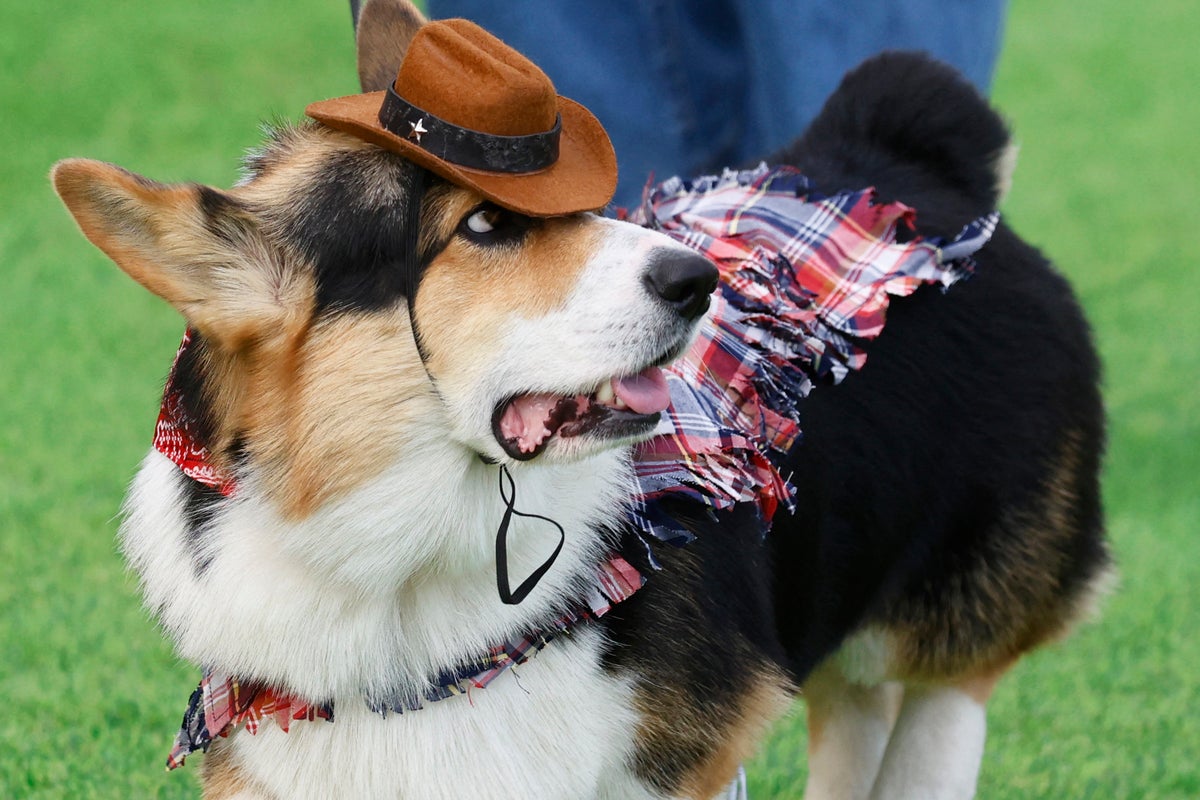
Over 50 couples jumped on this initiative within the first few months of its rollout. In the capital city of Quito, couples are treating this with the exact same gravity as a traditional wedding. Pets are showing up in custom pink tulle gowns and tailored mini-tuxedos.
The Math Behind the Marriage Shift
Ecuador's Civil Registry didn't launch this program just to get cute photos for social media. This was a calculated response to hard demographic data.
According to the latest census figures from Ecuador’s National Institute of Statistics and Census (INEC), the country's domestic landscape looks wildly different than it did a generation ago. Out of Ecuador’s 19 million residents, nearly 7.6 million own dogs or cats. To put that in perspective, that is almost double the entire population of children aged 12 and under nationwide.
Furthermore, over 2.6 million households explicitly identify dogs as their primary companion animals. Around 133,000 citizens live in homes with five or more dogs. People simply aren't having children at the same rates, but they are expanding their homes with animals.
Otton Rivadeneira, the director of Ecuador's Civil Registry, noted that public services have to adapt to these shifting family structures. If the state refuses to recognize the entities that citizens consider their immediate family, the state becomes obsolete to the modern citizen.
Why This Matters Outside Latin America
Historically, Latin American civil registries have been notoriously rigid. Most countries in the region require strict, human-only setups with formal legal IDs presented at the desk. While nations like Argentina and Mexico have tolerated occasional exceptions for service animals or symbolic nods, Ecuador is the first to institutionalize the practice into a structured government service offering.
For couples without children, a pet isn't a hobby. It's the anchor of the household. When you spend years building a life with a partner and a pet, leaving that animal at home for the most important legal day of your life feels wrong.
If you want to pull this off yourself—whether you're in Ecuador or trying to navigate local laws elsewhere—you need a practical strategy to avoid a bureaucratic nightmare.
- Check local witness minimums first. Many US states (like Pennsylvania or Colorado) allow self-uniting marriages, meaning you don't need human witnesses at all. In those jurisdictions, you can put a paw print right on the real license without issue. If your state requires two human signatures, you must secure those first before adding symbolic elements.
- Prep the animal for the environment. Government buildings are loud, echoey, and full of strangers. If your dog panics around crowds, a public civil registry office isn't the place for them.
- Use pet-safe ink. Never use standard document ink or permanent markers on an animal. Buy water-based, non-toxic ink pads designed specifically for pet nose and paw prints. Keep wet wipes on hand to clean the paw immediately before they ruin your wedding clothes.