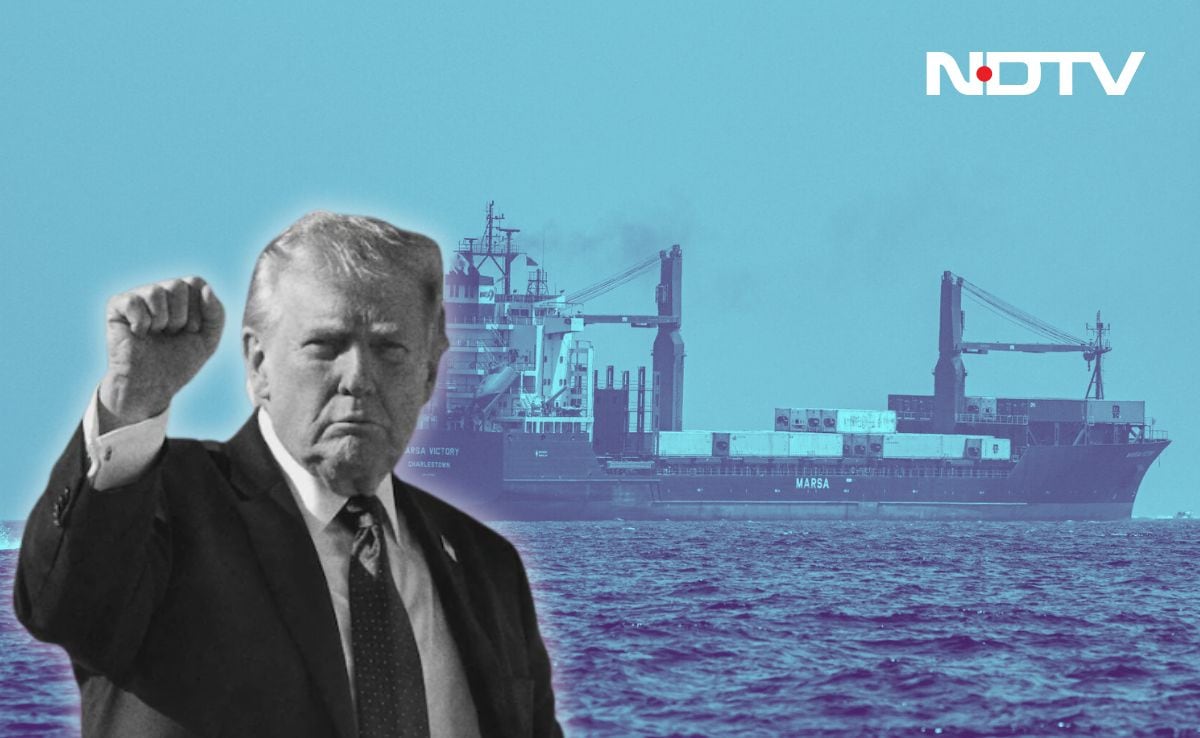
The sea at dawn looks like poured mercury. It is flat, silver, and entirely indifferent to the thousands of sailors suspended above its depths. On the bridge of a massive commercial container vessel, the air smells of stale filter coffee and the metallic hum of electronics. For the crew, the last few months have been an exercise in holding their breath. They are merchant mariners, not soldiers. Yet, they find themselves steering multi-million-dollar targets through a narrow choke point where the geopolitical anxieties of the world are concentrated into twenty-one miles of water.
This is the Strait of Hormuz. When it closes, global commerce suffocates. When it opens, even slightly, a desperate sigh of relief ripples through international boardrooms and neighborhood gas stations alike.
Just last week, a fragile calm seemed possible. A highly publicized memorandum of understanding—a rickety, hard-fought ceasefire between Washington and Tehran—offered a 60-day window of safety. The United Nations’ International Maritime Organization began a monumental effort to evacuate the five hundred commercial ships stranded in the Persian Gulf like ghost vessels. Confidence was rising. Merchant ships began cautiously trickling out along a southern corridor hugging the coast of Oman.
Then came Thursday.
The Sound of Shattered Glass
Consider a crew member on the M/V Ever Lovely, a Singapore-flagged cargo giant carrying everyday goods destined for global markets. They had not waited for the formal UN evacuation framework. They did their own risk assessment, trusted the news of the ceasefire, and pushed into the southern corridor.
The attack does not announce itself with the roar of a Hollywood movie. It arrives as a high-pitched, weed-whacker whine cutting through the sea breeze.
Iran’s Islamic Revolutionary Guard Corps launched four one-way attack drones. Three were batted out of the sky by defensive systems, disintegrating into showers of burning aluminum over the water. But the fourth found its mark. It slammed into the upper deck near the ship's bridge.
Boom.
The impact tore through iron and shattered reinforced glass. Smoke boiled into the clear sky. Miraculously, none of the mariners were killed. No catastrophic oil spill bled into the sea. The ship wrestled back control and continued its transit, limping away from the blast zone.
But the damage to the ceasefire was absolute. The illusion of safety vanished in a single afternoon. Within hours, the International Maritime Organization paused the entire evacuation operation. Five hundred ships, and thousands of mariners who thought they were finally going home to their families, were told to drop anchor. The gates had slammed shut again.
The Iron Law of the Corridor
To understand why a single drone strike matters to someone buying groceries thousands of miles away, you have to look at the map through the eyes of the people who command the waters.
The United States and its allies view the Strait of Hormuz as a global commons—an international highway where freedom of navigation is an unalterable right. Iran views it as a front yard.
Tehran’s Deputy Foreign Minister made their position clear on social media shortly after the attack: safe passage cannot be guaranteed by vague arrangements or parallel routes drawn up outside of Iran's consideration. They want ships using a northern route closer to their own coast. They want control. They want to collect tolls.
For months, the closure of this passage pushed the prices of fuel, fertilizer, and consumer goods steadily upward. The 60-day ceasefire was supposed to be a pressure valve. Instead, it became a trap.
In Washington, the response was swift and devoid of diplomatic nuance. When reporters gathered in the Oval Office on Friday morning to ask if Iran would face consequences for what President Donald Trump called a "foolish violation," the answer was curt.
"You’ll find out."
The Sky Over Qeshm Island
Military retaliation is often described in press releases with sanitized vocabulary: measured, targeted, kinetic options.
The reality on the ground is loud. It is terrifying.
On Friday, American strike aircraft ripped through the sky over the Persian Gulf. The targets were not random. U.S. Central Command directed the fire precisely at the infrastructure that made the previous day's attack possible: Iranian missile and drone storage facilities, coastal radar installations, and sites on Qeshm Island and near the southern port of Sirik.
For an hour, the coastal hills of southern Iran echoed with the thunder of secondary explosions as stored munitions cooked off in the dark.
Vice President JD Vance framed the strikes not as an escalation, but as an enforcement mechanism. He noted that if Tehran had disagreements about how the memorandum was being applied, they could have picked up the phone. Violence, he warned, will be met with violence.
Predictably, the Revolutionary Guards claimed they thwarted the counterattack and threatened a harsh response that would "shatter the illusions of the attackers." It is the standard choreography of a shadow war that has broken out into the sunlight.
What Remains in the Gulf
The smoke over Sirik and Qeshm Island has cleared, but the tension left behind is heavy enough to feel.
The U.S. military insists the ceasefire is still technically alive and that they will continue to enforce its terms. But a ceasefire that requires a bombing campaign to maintain is an incredibly fragile thing. The 60 days of technical negotiations over Iran's nuclear stockpile and ballistic missile programs suddenly look like an impossible mountain to climb.
Meanwhile, the real casualties of this geopolitical chess match are the five hundred ships still sitting in the hot, stagnant air of the Gulf.
On their decks, merchant sailors watch the horizon. They look at the flat, silver water, knowing that somewhere just out of sight, coastal radars are tracking them, drones are being prepped in hidden bunkers, and warships are cutting through the waves. They are caught between the iron law of global commerce and the fire of an unresolved war.
The world expects its cargo to move. But the toll for passing through the Strait is no longer being paid in currency. It is being paid in nerve.