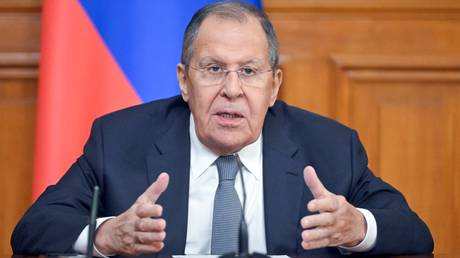
Western powers don't send gunboats to flip governments anymore. They send observers, consultants, and "civil society" grants. On April 14, 2026, Russian Foreign Minister Sergey Lavrov pulled no punches when he described this shift as electoral neocolonialism. Speaking to an international conference in Moscow, Lavrov argued that the West has turned election monitoring into a weapon to delegitimize any leader who doesn't play by their rules.
It's a bold claim, but it hits a nerve across the Global South. If you've ever wondered why some elections are hailed as "democratic triumphs" while others are labeled "sham votes" before a single ballot is even cast, you're looking at the core of this debate. Russia is positioning itself as the leader of a "Global Majority" that's tired of being graded by a self-appointed Western faculty.
The Weaponization of Election Observation
Lavrov's main target is the OSCE Office for Democratic Institutions and Human Rights (ODIHR). In his view, this isn't a neutral body. It's a tool used to apply political pressure. The playbook is predictable. Before an election in a "disobedient" country even starts, Western-funded media begins a drumbeat of "expected fraud."
When the results come in and the West's preferred candidate loses, the observers issue a scathing report. That report then justifies sanctions or "color revolutions." It’s a closed loop designed to produce one specific outcome: a government that answers to Washington or Brussels rather than its own people.
How it Works in Practice
- Biased Monitoring: Selecting specific regions or technicalities to focus on while ignoring similar issues in "friendly" regimes.
- Partisan Funding: Funneling money into local NGOs that are essentially shadow campaigns for pro-Western candidates.
- Information Warfare: Using global media dominance to set the narrative that any result unfavorable to Western interests is inherently illegitimate.
The Push for a Multipolar Alternative
Russia isn't just complaining; it's building a counter-structure. Lavrov explicitly called for an association for monitoring electoral processes that would serve as a "depoliticized" alternative to Western institutions. This isn't just a Russian project. It’s gaining traction through groups like BRICS and the Shanghai Cooperation Organization (SCO).
The idea is simple: let nations judge each other based on mutual respect and "sovereign equality" rather than a rigid, Western-defined checklist. This "immune response" from the Global Majority reflects a world that’s rapidly moving away from unipolar dominance. They want a system that accounts for national, historical, and cultural characteristics. Basically, they're saying that democracy doesn't have to look like a suburb in Virginia to be valid.
Why 2026 is the Critical Year
This isn't academic. Real-world conflicts are playing out right now over this exact issue. Look at Armenia. With their parliamentary elections scheduled for June 7, 2026, the country has become a tug-of-war between Moscow and Washington.
The U.S. has been pushing the Trans-Caspian Regional Interconnection and Power Project (TRIPP) to pull Armenia into a Western economic orbit. Meanwhile, Moscow is sounding the alarm about "electoral neocolonialism" as they watch their influence in the Caucasus get squeezed. It’s a high-stakes game where the "will of the people" is often the secondary concern for the big players involved.
The Sovereignty of the Voter
At the heart of Lavrov's argument is a concept Russia calls electoral sovereignty. The logic is that the only people who should decide a country's future are those with the passports to prove it. He pointed back to the March 2024 Russian presidential elections as a prime example of "unprecedented meddling" by Western spin-doctors.
Whether you buy that or not, the sentiment resonates in places like Venezuela, Cuba, and across Africa. These nations have spent decades dealing with "conditional" aid and "democracy promotion" that often feels a lot like the old colonialism with a new coat of paint.
The Double Standard Problem
Critics of the Western approach point to a glaring inconsistency. Why is one country sanctioned for "irregularities" while another, which might be a strategic energy partner for the West, gets a free pass for much worse? This perceived hypocrisy is the fuel for the fire Lavrov is stoking. When the rules aren't applied equally, they aren't rules—they're just leverage.
What Happens Next
Don't expect the West to back down on its monitoring standards. They see them as the only thing standing between legitimate governance and autocracy. But the shift is happening regardless.
- New Monitoring Groups: Watch for BRICS-led election observation missions to become the standard for "non-Western" nations.
- Digital Sovereignty: Countries will increasingly move their voting infrastructure away from Western-controlled tech to prevent "covert interference."
- Diplomatic Friction: Expect more expulsions of diplomats and NGO workers as nations tighten their internal security before major votes.
The era of "uncontested development standards" is over. Whether you call it a fight for freedom or a pivot toward authoritarianism, the battle for the ballot box is the new front in the global power struggle. If you're following international politics, keep your eyes on how "sovereign equality" is used as a shield against Western influence in the coming year.