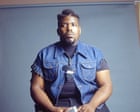
The air in the South Bronx during the mid-seventies didn't just carry the scent of exhaust and charred brick. It carried a frequency. If you stood on a corner in the Riverdale section or moved toward the shadows of the Spofford Juvenile Center, you could feel a low-end rumble vibrating through the soles of your sneakers. It was a chaotic, beautiful, and dangerous time. The city was broke. The buildings were screaming. But inside the community center at Bronx River Houses, a young man with a heavy frame and eyes that seemed to see three minutes into the future was busy stitching the world back together with a pair of turntables.
That man was Kevin Donovan, though the world would soon know him as Afrika Bambaataa. News of his passing at age 67 marks the end of a specific kind of magic—the kind that turns a street gang into a global religion.
To understand why the death of this pioneer matters, you have to look past the gold chains and the neon-colored costumes he wore later in his career. You have to look at the blood. Before the "Peace, Love, Unity, and Having Fun" mantra became a cliché on a t-shirt, it was a literal survival strategy. Bambaataa was a leader of the Black Spades, one of the most feared gangs in a city that felt like it was cannibalizing itself. Life was a series of borders. You didn't cross this street. You didn't wear those colors in that park. Death was a frequent guest at the party.
Then came the shift.
He visited Africa. He won an essay contest and saw a world where community wasn't defined by the block you defended, but by the culture you built. He returned to the Bronx and did the impossible: he asked the warriors to lay down their blades and pick up microphones. He didn't just start a club; he founded the Universal Zulu Nation. It was a radical experiment in social engineering disguised as a party. He took the violent energy of the streets and channeled it into the breakbeat.
Listen to the records he played. Bambaataa was nicknamed the "Master of Records" because he was a sonic scavenger. While others were stuck in the groove of traditional soul and funk, he was digging into the crates for something weirder. He found Kraftwerk, a group of stiff German electronic musicians, and realized their cold, robotic rhythms were the perfect skeleton for the heat of the Bronx.
Consider the moment "Planet Rock" hit the airwaves in 1982.
The song shouldn't have worked. It was a Frankenstein’s monster of Roland TR-808 drum beats and melodic lifts from "Trans-Europe Express." It sounded like the future crashing into a block party. It was the birth of Electro-funk, but more importantly, it was the moment hip-hop stopped being a local New York secret and became a global contagion. Suddenly, kids in Tokyo and London were trying to find the "perfect beat." They weren't just mimicking a sound; they were adopting a philosophy that said you could take the discarded scraps of technology and history and build a kingdom.
The stakes were never just about music. They were about identity. For a generation of Black and Latino youth who had been told they were "surplus population" by a crumbling municipal government, Bambaataa offered a throne. He dressed like an intergalactic pharaoh. He blended Egyptian iconography with sci-fi aesthetics, helping to pilot the ship of Afrofuturism. He told the kids in the projects that they weren't just from the Bronx; they were from the stars.
But history is rarely a straight line of triumphs. To speak of Bambaataa’s legacy today is to navigate a landscape of profound complexity and pain. In his later years, the man who preached "Peace, Love, and Unity" faced grave allegations of sexual abuse involving young men within the Zulu Nation. These weren't whispers in a dark hallway; they were loud, public cries for accountability that forced the culture to look at its heroes with a more critical, somber lens.
The internal conflict for the hip-hop community is visceral. How do you honor the architect of a house while acknowledging the cracks in his foundation? You don't ignore the truth. You hold both things in your hands: the genius of the movement and the flaws of the man.
Bambaataa’s departure at 67 isn't just the loss of a musician. It is the closing of a chapter on the era of the "Founding Fathers." Along with DJ Kool Herc and Grandmaster Flash, he formed the holy trinity of the genre. Herc gave us the physical blueprint—the "break." Flash gave us the science—the precision and the scratch. But Bambaataa gave us the spirit. He was the one who insisted that this wasn't just music; it was a way of life that could replace the funeral processions of gang warfare with the sweat of the dance floor.
He proved that a subculture could have its own diplomats, its own legends, and its own laws.
He lived long enough to see his "Planet Rock" become the DNA of pop music, EDM, and every chart-topping rap song that uses a heavy 808 kick. The sound of a 2026 nightclub is, in many ways, an echo of a basement party in 1977 where a young Kevin Donovan decided that the beat was more powerful than the bullet.
As the sun sets on the era of the pioneers, we are left with a culture that has conquered the world but is still wrestling with its own soul. The records will keep spinning. The 808 will keep thumping. The frequency hasn't changed; it has just spread so far and wide that we sometimes forget where the signal first started.
Somewhere in the Bronx, a kid is plugging in a speaker, oblivious to the history, looking for that same perfect beat. The ghost of the Pharaoh is in the wires.