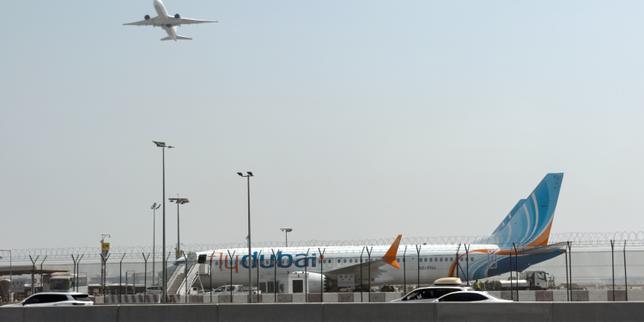
When an aircraft flying between Dubai and Tel Aviv unexpectedly diverts to Saudi Arabia, aviation geeks, political analysts, and nervous passengers pay attention. Flights connecting the United Arab Emirates and Israel used to be unthinkable. Now, they're part of a delicate regional fabric that gets tested whenever geopolitical tensions spike.
Authorities in Israel immediately made it clear they weren't ruling out any scenarios. That includes terrorism. When airspace overlaps with complex diplomatic relations and active regional conflicts, a simple mechanical warning or a sudden medical emergency can quickly turn into a high-stakes security puzzle. Let's break down what actually happens when commercial aviation collides with intense geopolitical friction.
The Reality of Airspace and Regional Diplomacy
Commercial flight routes aren't just lines drawn on a map. They're negotiated corridors governed by bilateral agreements, sovereign airspaces, and continuous diplomatic communication. When the Abraham Accords paved the way for direct flights between the UAE and Israel, it wasn't just a win for tourism. It was a massive shift in how Middle Eastern skies operated.
Saudi Arabia opening its airspace to these flights was a critical milestone. But open skies don't mean a complete erasure of political boundaries or historical animosities. When a commercial plane has to put down unexpectedly in a country that maintains no formal diplomatic ties with Israel, standard aviation protocols meet a wall of logistical and political complications.
What Triggers an Emergency Diversion
Airlines don't divert flights on a whim. Diverting an international commercial airliner costs thousands of dollars in fuel, landing fees, passenger accommodations, and scheduling delays. Crew duty time limits kick in immediately. Passengers miss connecting flights. Yet, safety always wins.
Common triggers include:
- Unruly or threatening passengers creating an immediate security hazard.
- Sudden mechanical malfunctions warning of critical system failures.
- Severe medical emergencies requiring immediate ICU-level intervention on the ground.
- Unspecified bomb threats or security alerts phoned into dispatchers while the plane is airborne.
When a threat is called in or an onboard disturbance occurs over sensitive airspace, pilots follow strict emergency checklists. They land at the nearest suitable airport equipped to handle wide-body aircraft. Sometimes, that nearest runway happens to be in a territory where diplomatic relations are strained or nonexistent.
The Security Protocol When Things Go Wrong
When an aircraft lands under suspicious or high-risk circumstances, security forces take charge instantly. In Saudi Arabia, as in any sovereign nation, local airport security and intelligence services handle foreign aircraft entering their jurisdiction under emergency conditions.
Israeli authorities monitor these situations in real-time through military and civilian aviation channels. When officials state they are not excluding a terrorist motive, they're following standard investigative procedure. You don't dismiss worst-case scenarios until intelligence agencies comb through passenger manifests, cargo logs, and cockpit voice recorders.
Airlines operating in high-threat environments maintain encrypted communication lines with security agencies. If a pilot squawks an emergency code indicating unlawful interference, every intelligence desk from Tel Aviv to Dubai lights up. Ground teams coordinate behind closed doors to secure the safety of passengers, regardless of nationality.
Navigating the Aftermath for Passengers
For the people sitting in economy class, a diversion is pure chaos. You land on an unfamiliar tarmac. Armed security personnel might surround the aircraft. Information trickles out slowly through broken cabin announcements or patchy roaming data.
Passengers onboard flights caught in these geopolitical flashpoints often face hours on the tarmac without being allowed to disembark. Local protocols dictate who can step foot on the ground. If a country has no formal consular relations with the destination or origin country, arranging safe transit, temporary visas, or replacement aircraft requires delicate back-channel diplomacy.
Diplomats work overtime during these incidents. Embassies in third-party neutral countries often act as intermediaries to ensure citizens get home safely. It's a reminder that global travel relies on a fragile web of cooperation that can fray in seconds.
What This Means for the Future of Regional Routes
Direct flights across the Middle East changed business and leisure travel for the better. They cut travel times and fostered economic ties. But incidents like this expose the underlying fragility of normalization agreements.
Airlines constantly reassess risk matrices. Security measures at origin airports in Dubai and Tel Aviv are among the strictest in the world. Baggage reconciliation, profiling, and cargo screening undergo intense scrutiny daily. Yet, the unknown variables in flight paths mean crews must stay prepared for the worst.
Next time you book a ticket across a politically sensitive corridor, remember the invisible layers of security keeping that aluminum tube in the air. Aviation resilience isn't just about engines and wings. It's about how rapidly nations can coordinate when things go sideways at 35,000 feet.