You can watch an entire movie on your phone while walking down the street, but the people who actually fund and create films are panicking. The global film industry is hitting a massive wall. Generative AI tools are spitting out convincing video clips in seconds, massive streaming operations are changing how stories get consumed, and traditional box offices are fighting just to keep seats filled.
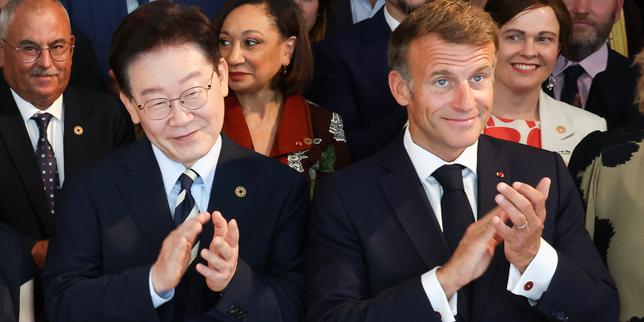
That existential dread brought heads of state, studio executives, and creators together at the Sommet Lumière in Saint-Paul-de-Vence. French President Emmanuel Macron and South Korean leader Lee Jae-myung stepped in to address a crisis that Hollywood boardrooms and independent art-house producers can no longer ignore. They want to rewrite the rules of the screen before technology and unchecked algorithms wipe out creative independence completely.
The Artificial Intelligence Threat to Creative Ownership
Generative models don't just threaten visual effects workers. They challenge the very core of authorship. When an algorithm can synthesize photorealistic human performance, mimic cinematic lighting, and generate narrative pacing based on scraped data, copyright laws look like Swiss cheese.
During the summit debates, leaders pointed out the glaring loophole of consent and transparency. If major tech companies train their video generators on decades of protected cinematic masterpieces without paying a dime or asking permission, independent cinema loses its financial oxygen. Macron explicitly called on nations to take back control, arguing that letting Silicon Valley dictate the boundaries of visual culture is a recipe for creative bankruptcy.
The friction isn't about stopping progress. It's about who holds the pen when the computer finishes the script. Artists need enforceable rights over their likeness, style, and intellectual property. Without strict guardrails, human creation risks becoming nothing more than cheap training data for proprietary models.
How Streaming and Free Platforms Broke the Old Economic Model
Making a movie used to follow a predictable financial ladder. You financed through a mix of pre-sales, subsidies, theatrical distribution, physical media, and later television windows. Today, that ladder is smashed.
Audiences expect instant gratification. Free platforms and subscription video giants dominate attention spans, but their payout structures for independent creators remain opaque. A film can stream globally to millions of households while the people who made it see fractions of cent-per-view returns.
France and South Korea announced a joint financial commitment of one billion euros over five years to support the broader image and film sector. On top of that, a targeted network with a 30 million euro budget was established to safeguard independent cinema. Money alone won't fix structural invisibility. When recommendation engines decide what people watch based on engagement metrics rather than artistic merit, quirky local stories get buried under an avalanche of algorithmic content.
Reclaiming the Cinematic Experience
The physical theater is losing its monopoly on cultural moments. Yet, abandoning the dark room with a silver screen means abandoning shared human experience.
Preserving theatrical exclusivity windows isn't just about protecting old business models. It's about protecting the ritual of viewing a story collectively without pausing to check notifications. Initiatives coming out of the Saint-Paul-de-Vence gathering emphasize that public policy must step in where free markets fail cultural diversity. If governments treat movies like standard software products, local languages, nuanced storytelling, and regional perspectives will vanish under a monoculture of hyper-optimized content.
Protecting the screen economy requires three concrete shifts. First, enforce strict traceability and remuneration for any intellectual property fed into generative models. Second, mandate algorithmic transparency so creators know how streaming services recommend and bury content. Third, protect theatrical windows to ensure films build cultural value before heading to personal screens. Stop treating cinema as a disposable commodity. Support independent filmmakers by choosing theatrical releases, backing local projects, and demanding fair compensation standards for artists navigating the tech transition.