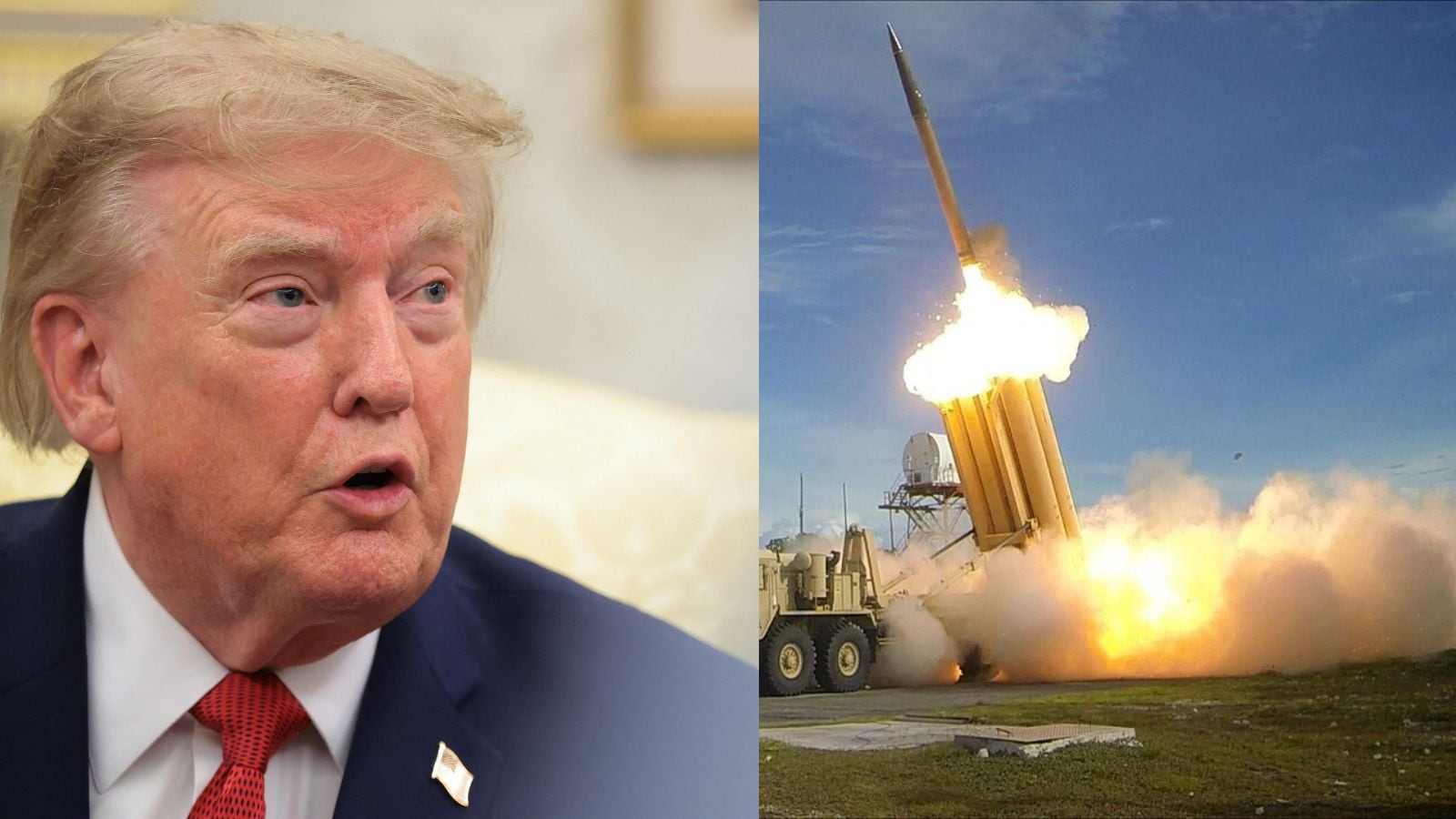
Washington is currently playing a dangerous game of subtraction. By committing its military focus and hardware to a grinding, open-ended conflict with Iran, the United States is effectively stripping its Asian theater of the very assets intended to deter Beijing. The administration’s stated priority of maintaining cheap energy for the American voter has forced a strategic desertion of the Indo-Pacific. When missile interceptors move from South Korea to the Middle East, the message to Seoul, Tokyo, and Canberra is not one of global reach. It is a signal of abandonment.
The irony is thick enough to choke on. For over a decade, the consensus across successive presidential terms was that Asia represented the primary arena of the century. Resources were to be shifted, alliances hardened, and focus sharpened. Yet, the friction in the Strait of Hormuz has reversed that trajectory in months. Senior leaders in government, consumed by the demands of the Gulf, now lack the bandwidth to manage the much larger, more complex friction with China.
This is not merely about empty naval docks or relocated batteries. It is about a fundamental shift in perception. Asian capitals are beginning to view American security guarantees as seasonal rather than foundational. When protection becomes conditional—tied to the transactional whims of a mercurial executive or the immediate fluctuations of global oil prices—allies do not sit idle. They start building.
Australia’s decision to move toward 3 percent of its gross domestic product in defense spending is a direct, tangible response to this newfound uncertainty. It is a hedge against an America that might not be there when it matters. Countries from Seoul to New Delhi are moving toward self-reliance because they can no longer treat the American security umbrella as a fixed asset. They are paying the premium for a policy that prioritizes American gas prices over regional stability.
Beijing is watching this withdrawal with clinical interest. Every unit of military attention redirected to Tehran is a reprieve for the Chinese strategic position. The pressure on Taiwan is not being mitigated by American resolve; it is being complicated by American distraction. China is well-positioned to ride out the immediate energy shocks of the Iran conflict. With robust reserves and diversified energy sources, the risk to Beijing is not an existential collapse, but a tactical opportunity to observe the limits of American capacity.
The fiscal toll is equally corrosive. Maintaining a naval blockade in the Persian Gulf while simultaneously attempting to fund a competitive military posture in the Pacific is straining the limits of the American defense budget. Something has to give. As resources are burned through, the inevitable outcome is a degradation of military readiness across both theaters.
Consider the hypothetical scenario where a crisis emerges in the East China Sea while the blockade in the Gulf remains active. The Pentagon would be forced to choose between two catastrophic failures: allowing a regional partner to fall or breaking the blockade that keeps domestic fuel prices suppressed. The administration has painted itself into a corner where its primary objective—cheap energy—dictates its military failure elsewhere.
The danger lies in the assumption that America can simply resume its pivot once the Iran situation settles. Geopolitics does not work on a pause-and-play mechanic. Once an ally begins the long, expensive process of developing independent deterrence, they do not simply dismantle it because Washington’s attention returns. The institutional memory of this period will be defined by the realization that American power is finite and, more importantly, distractible.
The current strategy relies on the hope that Tehran will blink or that oil prices will stay low enough to avoid domestic political fallout. It is a fragile bet. If the war drags on, the erosion of the Asian security architecture will accelerate. Governments across the region are now recalculating their positions, looking for ways to accommodate their interests without relying on a partner that has shown itself to be preoccupied, erratic, and deeply invested in a different part of the world.
The void in the Pacific is real. It is being filled by the anxieties of allies and the growing confidence of an adversary that sees the world’s most powerful military spread too thin. Washington is learning that when you try to fight a war in the Middle East to satisfy the present, you lose the future in Asia. The damage to those long-standing partnerships may be permanent, turning the current era into a historical pivot point where the United States decided its own comfort in the short term was worth the loss of its strategic standing in the long term.
The security architecture of the Indo-Pacific is fracturing under the weight of an administration that cannot handle its own distractions. The cost of this realization is just beginning to manifest, and the consequences for American influence will linger long after the smoke over the Strait of Hormuz clears. It is a slow-motion retreat that no amount of diplomatic posturing can mask. The assets are gone, the focus is fractured, and the path to reclaiming a credible posture in Asia is growing steeper by the day.