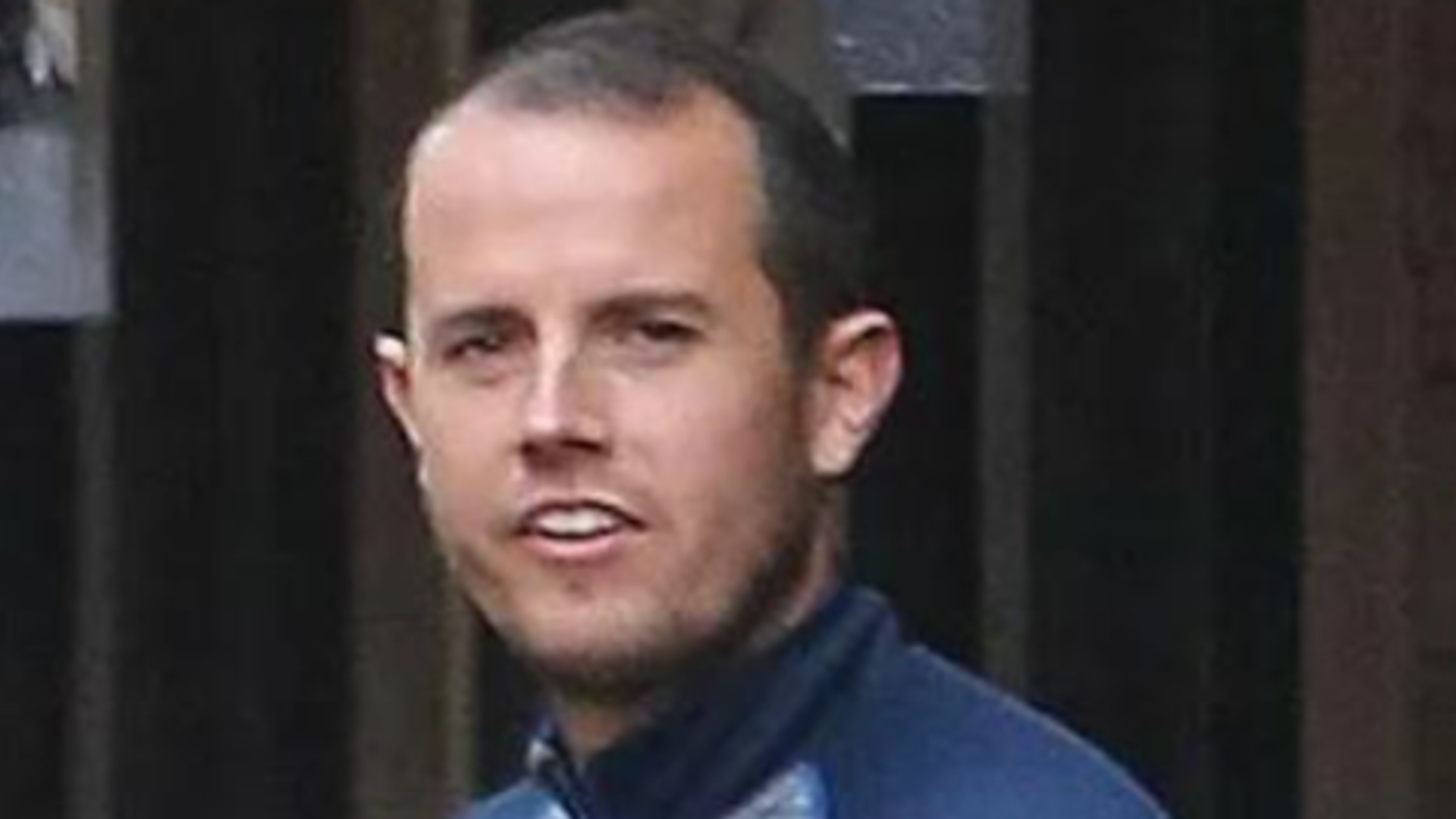
A Dublin court sentenced Sean McGovern, a senior lieutenant in the Kinahan organized crime cartel, to 24 years in prison on Monday. The ruling marks the definitive collapse of the United Arab Emirates as a safe haven for European drug barons. McGovern, 40, pleaded guilty at the non-jury Special Criminal Court to two counts of directing the activities of a criminal organization. The charges connect him directly to the execution of innocent grandfather Noel Kirwan in 2016 and the attempted murder of Hutch family associate James "Mago" Gately.
While regional news outlets have framed the 24-year sentence as a localized victory for Irish law enforcement, the true significance of the case lies in the geopolitical mechanics that brought McGovern to the dock. For nearly a decade, the upper echelons of the multi-billion-euro Kinahan cartel operated with total impunity from luxury villas in Dubai. McGovern’s presence in an Irish courtroom proves that the diplomatic shield protecting transnational crime bosses has permanently shattered.
The Logistical Spine of a Gangland War
To understand the weight of the sentence, one must look past the street-level gunmen and examine the bureaucratic precision required to sustain a modern cartel feud. McGovern did not pull the triggers. Instead, he functioned as the operational middle management, translating strategic directives from cartel leadership into clinical, localized violence.
During the height of the Hutch-Kinahan feud, which claimed at least 18 lives across Europe, McGovern used the encrypted moniker "Knife" within closed communication networks. The prosecution detailed how he coordinated the surveillance apparatus that led to the murder of 62-year-old Noel Kirwan. Kirwan's only offense was his lifelong friendship with members of the rival Hutch family, having been photographed at a funeral.
- The Surveillance Web: Investigators recovered a laptop used to track a GPS device affixed to Kirwan’s vehicle. McGovern’s DNA was found on the keyboard.
- The Paper Trail: A physical instruction manual for the tracking device bore McGovern's fingerprints.
- The Command Structure: Text logs revealed McGovern directly managed a hitman known as "Teeth," assigning him tracking duties to restore his standing within the cartel after previous operational failures.
Presiding Judge Patrick McGrath, in delivering consecutive sentences of 14 years for the Kirwan operation and 10 years for the Gately conspiracy, noted that McGovern was a close confidant to those at the absolute top of the enterprise. Court testimonies established that while McGovern was not the architect of the cartel's global drug supply lines, he was the essential executive conduit who ensured executive orders from Dubai were executed on the pavements of Dublin.
The Ghost of the Regency Hotel
The severity of the sentence is deeply intertwined with McGovern’s own history within the feud. In February 2016, a hit squad dressed as armed police stormed a boxing weigh-in at Dublin's Regency Hotel, targeting cartel frontman Daniel Kinahan. Kinahan escaped, but senior lieutenant David Byrne was executed, and McGovern was shot in the stomach.
The underworld response was immediate, corporate, and disproportionate. The cartel's top tier weaponized their entire financial apparatus to systematically eliminate anyone remotely associated with the Hutch network.
Kinahan High Command (Dubai)
       │
       ▼
Sean McGovern ["Knife"] (Operational Control)
       │
 ┌─────┴────────────────────────┐
 │                              │
 ▼                              ▼
GPS Tracking & Logistics   Hit Squads ["Teeth"]
(Kirwan Murder, 2016)      (Gately Plot, Failed)
The state’s evidence showed that the tracking of James Gately was fueled entirely by a retaliatory obsession. The cartel mistakenly believed Gately was one of the gunmen who pulled the trigger at the Regency Hotel. McGovern’s subsequent flight to the UAE following these operations was not merely a retreat; it was a transition into a sanctuary where Western police forces could not touch him.
The Destruction of the Emirate Sanctuary
For years, the United Arab Emirates resisted formal extradition treaties with European nations, creating a legal blind spot that attracted global cartel leaders, money launderers, and fugitives. The Kinahan leadership embedded themselves into the legitimate fabric of Dubai, establishing sports management companies, real estate portfolios, and international trading fronts.
That structure began to erode under intense diplomatic pressure from the United States, Europol, and the Irish government. In May 2025, Ireland and the UAE operationalized a bilateral extradition treaty. While the treaty itself was not legally retrospective and did not directly apply to McGovern's specific charges, Irish diplomats negotiated a historic, one-off ad-hoc mechanism with Emirati authorities to bypass the bureaucratic deadlock.
McGovern was arrested on an Interpol red notice in Dubai in October 2024 and flown back to Ireland on a military aircraft last summer. His conviction sets a terrifying precedent for his former employers. The legal wall that once separated Middle Eastern financial havens from European criminal courts has been breached.
The Operational Reality of the Third Tier
A critical revelation from the trial, often overlooked in sensationalist crime reporting, is the clinical, highly segmented nature of modern syndicated crime. Under cross-examination, Detective Superintendent Dave Gallagher confirmed that McGovern occupied the "third tier" of the Kinahan organization.
"While he was directing others, he also received instructions from persons further up the organizational structure, and part of his job was to feed information up the channel."
This corporate structure means that removing a third-tier asset, even one as trusted as McGovern, does not instantly collapse the cartel. It does, however, paralyze its local execution capabilities. The Special Criminal Court noted that McGovern had no prior convictions for serious violence before these charges—his record consisted entirely of minor road traffic offenses from over a decade ago.
This profile is indicative of the cartel’s recruitment strategy: utilizing clean, organized administrative figures rather than erratic street criminals to manage high-stakes conspiracies. By removing a coordinator who possessed both underworld trust and operational discipline, the state has severely disrupted the cartel's ability to mount complex operations on Irish soil.
Implications for the Cartel High Command
The 24-year sentence serves as a direct legal blueprint for what awaits the remaining leaders of the cartel. With Daniel Kinahan currently facing escalating legal challenges and potential extradition proceedings of his own in Dubai, the Irish state has demonstrated exactly how it intends to prosecute leadership offenses under the Criminal Justice Act 2006.
The state did not need to prove McGovern pulled a trigger to secure a quarter-century sentence; they only needed to prove he directed the activities of the organization. With international police agencies now sharing financial intelligence and encrypted server data with unprecedented fluidity, the operational space for transnational criminal networks has contracted into virtually nothing. The message delivered by the Special Criminal Court extends far beyond the borders of Dublin. The sanctuary is gone, the technical data remains, and the courts are willing to hand down what amounts to life sentences for the coordinators who believe they are safe behind a screen thousands of miles away.