The era of looking the other way is over. Treasury Secretary Scott Bessent has signaled a fundamental shift in American economic warfare, confirming that the United States will no longer renew the oil waivers that have allowed Iranian and Russian crude to leak into global markets. This is not merely a policy adjustment. It is a deliberate strangulation of the "shadow fleet" and a bet that American production can offset the resulting price shocks. By removing these exemptions, the administration is moving to drain the primary revenue streams used by Moscow and Tehran to fund regional conflicts and domestic repression.
For years, the global energy market operated under a convenient fiction. Sanctions were announced with great fanfare, but the back door remained propped open by technical waivers and a lack of enforcement. This was the "price cap" era, a period defined by the fear that a true supply crunch would send gasoline prices skyrocketing and hand a political cudgel to the opposition. That fear has been replaced by a new calculation. Washington now believes it holds enough domestic leverage to stop playing nice.
The Death of the Shadow Fleet
The primary target of this shift is the sprawling, unregulated network of aging tankers known as the shadow fleet. These vessels operate without standard insurance, often transmit false location data, and engage in ship-to-ship transfers in the middle of the ocean to mask the origin of their cargo. Up until now, waivers provided a legal gray area that allowed certain buyers—primarily in Asia—to continue transactions without facing the full weight of secondary sanctions.
Removing the waivers changes the math for every bank, insurer, and port authority involved in the trade. When a waiver exists, the risk is manageable. Without it, every transaction becomes a potential death sentence for a financial institution’s access to the U.S. dollar. We are about to see a massive increase in the "risk premium" for illicit oil. If a refiner in a neutral country has to choose between discounted Iranian barrels and maintaining their relationship with the American financial system, the discount suddenly looks much less attractive.
Choking the Iranian Revenue Stream
Iran has become a master of the shell game. By utilizing a sophisticated network of front companies based in the UAE and Southeast Asia, Tehran has managed to keep exports hovering around 1.5 million barrels per day. Much of this has flowed to "teapot" refineries in China that operate outside the mainstream global financial eye.
The end of waivers means the U.S. Treasury will likely move from targeting the oil itself to targeting the infrastructure of the sale. This includes the small, regional banks that facilitate payments and the mid-tier shipping companies that provide the hulls. The goal is to make the cost of moving the oil higher than the profit gained from selling it. If the logistics of the shadow fleet become too expensive, the Iranian economy loses its only reliable lifeline.
The Russian Price Cap Failure
Russia has spent the last two years proving that a price cap is only as strong as the enforcement behind it. By building its own insurance entities and purchasing hundreds of retired tankers, the Kremlin essentially opted out of the Western maritime ecosystem. The waivers were a concession to the reality that the world still needed Russian molecules to keep the lights on in Europe and Asia.
Bessent’s approach signals that the U.S. is no longer willing to accept this compromise. The focus is shifting toward "secondary sanctions"—punishing third parties who help Russia bypass the restrictions. This puts countries like India and Turkey in a difficult position. They have benefited immensely from cheap Russian Urals crude, but they are now facing a choice between cheap energy and diplomatic friction with their largest trading partners.
The Role of American Production
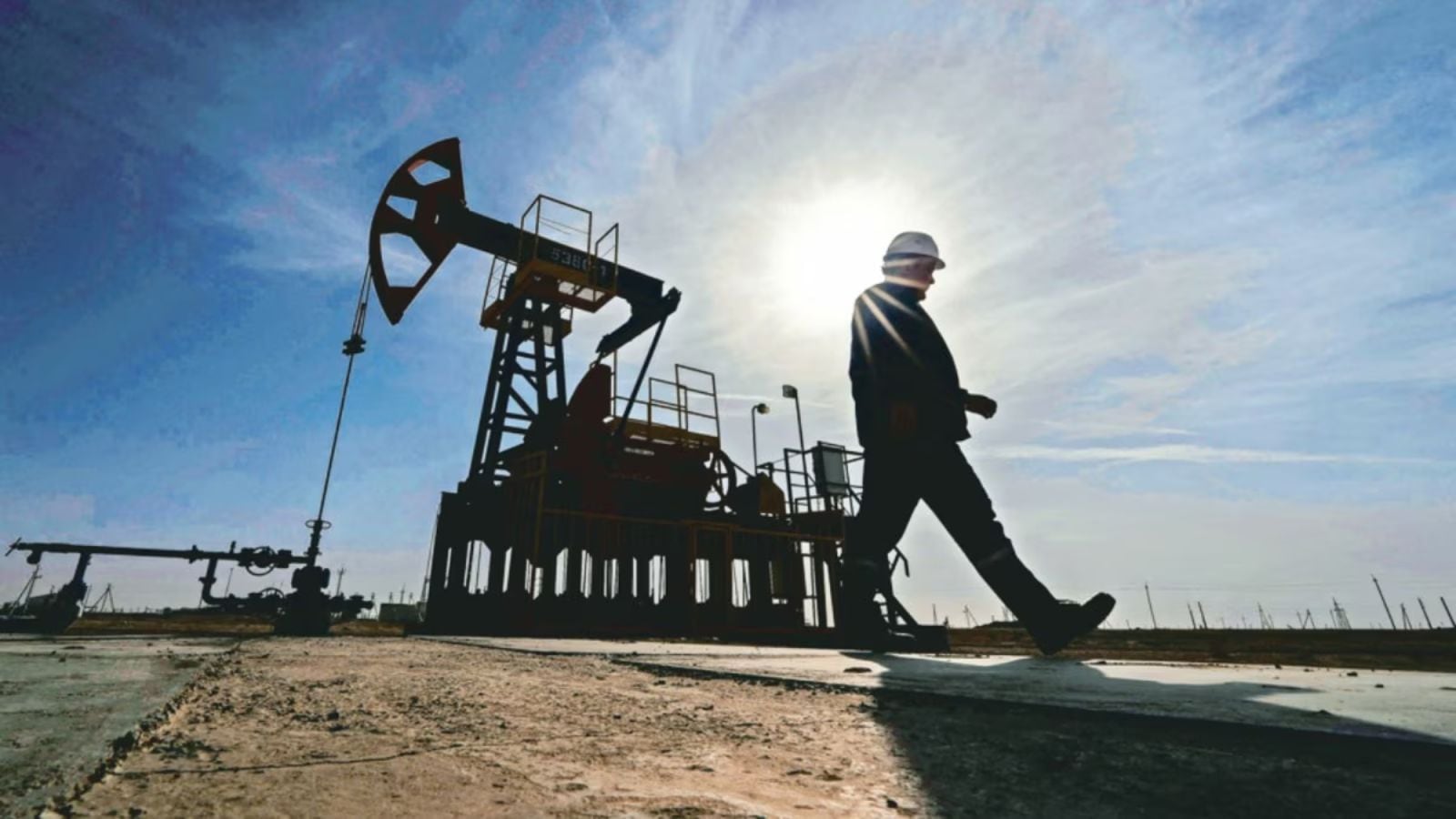
The only reason this aggressive stance is even possible is the record-breaking output from the Permian Basin and other American shale plays. The U.S. is currently producing more crude oil than any country in history. This surge provides a vital cushion.
When you remove two million barrels of sanctioned oil from the market, prices should theoretically spike. However, the administration is betting that American drillers, combined with a potential release from the Strategic Petroleum Reserve (SPR) if necessary, can keep the global supply-demand balance stable. It is a high-stakes poker game played with the world’s most essential commodity. If American production falters or if OPEC+ decides to cut production in response, the inflationary pressure could be devastating.
The Geopolitical Fallout
This is not just about economics. It is about signaling. For the last decade, U.S. sanctions have often been criticized as "all bark and no bite" because of the frequent use of waivers to prevent market volatility. By ending them, the U.S. is telling its adversaries that it is willing to absorb some economic pain to achieve its strategic goals.
This move will almost certainly trigger a response. Tehran has a history of harassing shipping in the Strait of Hormuz when its oil exports are threatened. Moscow has the ability to weaponize natural gas flows to Eastern Europe or disrupt global grain markets. The end of waivers is an escalation in a multi-front economic war that has moved far beyond the borders of Ukraine or the Middle East.
The Chinese Complication
China remains the largest wild card in this equation. As the primary buyer of sanctioned oil, Beijing has zero incentive to cooperate with U.S. enforcement. If the U.S. begins sanctioning Chinese banks for handling Iranian oil payments, the broader trade relationship between the two superpowers could deteriorate rapidly.
We are moving toward a bifurcated energy market. On one side, a "clean" market governed by Western rules and transparent pricing. On the other, a "dark" market where Russia, Iran, and China trade outside the reach of the dollar. The removal of waivers accelerates this split, forcing every nation to decide which system they want to be a part of.
The Enforcement Gap
Policy is only as good as the people at the docks. For years, enforcement has been hampered by "flag hopping," where ships switch their country of registration every few weeks to stay ahead of the paperwork. The Treasury Department will need to deploy advanced satellite tracking and AI-driven data analysis to identify these vessels in real-time.
It also requires cooperation from maritime hubs. Places like Singapore and the UAE will come under intense pressure to stop providing bunkering services and ship-to-ship transfer zones for the shadow fleet. If these hubs don't cooperate, the U.S. may be forced to sanction the service providers themselves—a move that would send shockwaves through the global shipping industry.
Inflationary Risks
The most immediate danger is at the pump. While American production is high, the global oil market is a single, interconnected pool. A disruption in the Persian Gulf or the Baltic Sea ripples everywhere. The administration is gambling that the global economy is resilient enough to handle a period of higher prices in exchange for the long-term weakening of its rivals.
If this gamble fails, the political consequences will be swift. High energy prices are a universal solvent that can dissolve even the most popular domestic agendas. The Treasury is essentially betting that the "fear premium" in the oil market has already been priced in, and that the actual removal of these barrels will be less chaotic than the anticipation of it.
The Financial Front
The real battlefield isn't the high seas; it's the ledger. By ending waivers, the U.S. is essentially telling the global financial community that there are no "safe" ways to handle Russian or Iranian oil money anymore. This creates a massive compliance headache for global banks, who must now vet every maritime transaction with an unprecedented level of scrutiny.
The cost of compliance will skyrocket. Smaller banks, which previously thrived on the margins of these sanctioned trades, will find themselves locked out of the international clearing system. This consolidation of financial power is a secondary goal of the policy, ensuring that the dollar remains the ultimate gatekeeper of global trade.
Technological Countermeasures
Expect to see a surge in "dark" shipping technology. This includes everything from encrypted communication channels for ship captains to sophisticated spoofing equipment that makes a tanker appear to be in the middle of the Indian Ocean when it is actually docking at an Iranian terminal.
The U.S. intelligence community is already playing catch-up. The end of waivers marks the beginning of a technological arms race between those trying to hide the oil and those trying to track it. Every time a new enforcement method is introduced, the shadow fleet finds a new workaround. It is a constant game of cat and mouse where the stakes are billions of dollars in revenue.
The New Energy Reality
We are witnessing the final collapse of the post-Cold War energy order. The idea that global markets should remain open and fluid regardless of geopolitical conflict has been discarded. Energy is now being used as a primary weapon of statecraft, and the removal of waivers is the sharpest edge of that blade.
This shift will redefine the relationship between the U.S. and its allies. Countries that have relied on "quiet" exemptions to keep their economies running will now have to find new sources of supply or face the wrath of American regulators. There is no middle ground left. You are either in the regulated market, or you are an outlier.
Supply Chain Realignment
Refineries are already beginning to scramble. Many plants in Southern Europe and Asia were designed specifically to process the heavy, sour crude that comes out of Iran and Russia. Switching to lighter, sweeter American crude isn't as simple as turning a dial; it requires expensive retrofitting and different chemical catalysts.
This transition period will create localized shortages and price spikes. The logistics of moving millions of barrels of oil across the Atlantic to replace shorter routes from the Middle East will also put a strain on the global tanker fleet. We are looking at a total reorganization of the world’s energy map.
The U.S. Treasury is no longer interested in managing the status quo. It is looking to break it. The removal of Russian and Iranian oil waivers is the first step in a broader strategy to reclaim control over the global energy narrative, regardless of the immediate cost to the market. The shadow fleet is being forced into the light, and many of its members will not survive the exposure.