The sky is gray over Sitra, and the financial press is already suffocating on its own hyperbole.
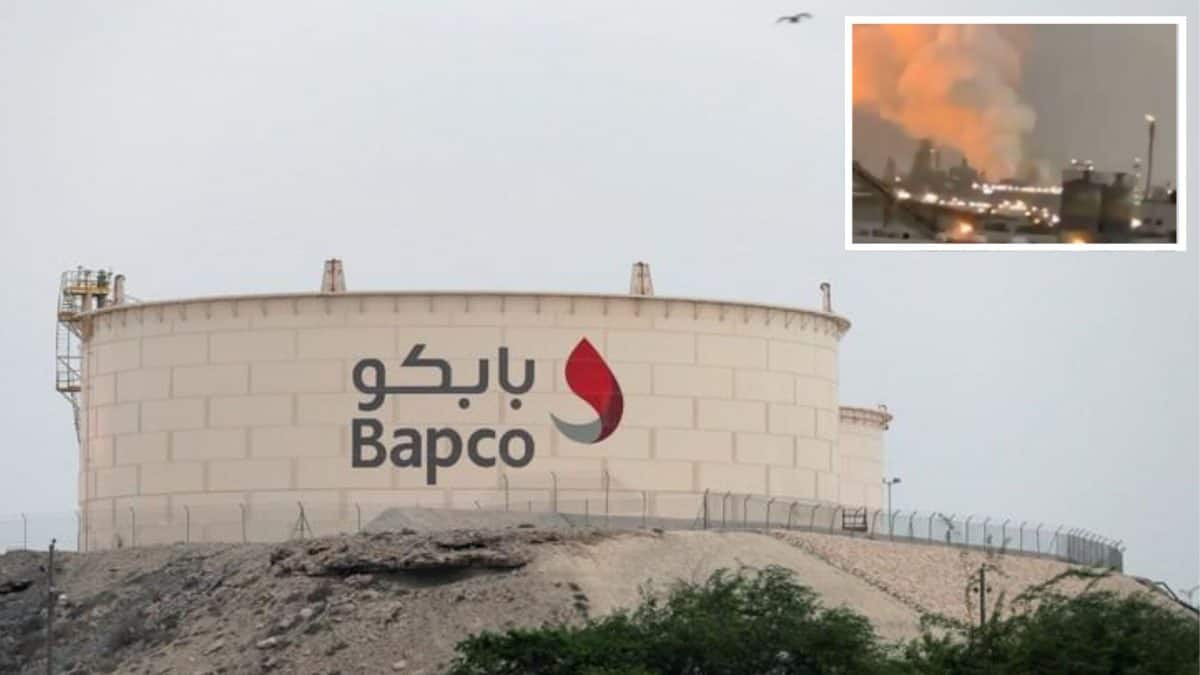
Whenever smoke rises from a facility like the Bahrain Petroleum Company (Bapco) refinery, the script writes itself. Journalists scramble for maps of the Persian Gulf, oil traders lean into their Bloomberg terminals, and the "regional escalation" sirens begin to wail. The narrative is always the same: a fragile global energy supply is one drone strike away from a total collapse.
It is a lie. A profitable, convenient, and mathematically lazy lie.
If you are watching the footage of Bapco’s 267,000-barrel-per-day facility and waiting for the global economy to shutter, you are asking the wrong questions. The real story isn't the fire. It’s the fact that the fire doesn’t actually matter to the global bottom line.
The Myth of the Strategic Bottleneck
The "lazy consensus" suggests that hitting a major refinery in the Middle East creates an immediate, irreparable hole in the world’s fuel tank. This assumes the energy market is a rigid, brittle pipe. It isn't. It’s a pressurized, adaptive mesh.
Bapco is an old workhorse. It’s been around since 1932. While it’s undergoing a multi-billion dollar expansion to modernize, the current panic ignores the fundamental redundancy of modern refining. We are currently living in an era of refining overcapacity in the East and a massive strategic reserve overhang in the West.
When a site like Bapco takes a hit, the immediate reaction is "supply shock." The nuanced reality is "logistical reshuffling." I’ve watched desks at major trading houses navigate these "disasters" for twenty years. They don't mourn the loss of barrels; they celebrate the arbitrage opportunities created by the temporary localized shortage.
The idea that the global economy is balanced on the tip of a single Bahraini refinery is a fantasy designed to sell expensive hedges.
Weaponized Volatility
Why does the media lean so hard into the "World War III" narrative every time a transformer blows in the Gulf? Because volatility is the only product left for many of these institutions to sell.
In a world where US shale production has effectively capped the long-term price of crude, the only way to move the needle is through fear.
- The Premise: Iran strikes Bahrain.
- The Media Inference: The Strait of Hormuz is closing.
- The Reality: Total global oil demand is approximately 102 million barrels per day. Bapco’s output is a rounding error.
If you want to understand the "People Also Ask" query regarding whether gas prices will double tomorrow, the answer is a brutal no. Unless the strike is part of a coordinated, multi-month campaign that successfully disables the entirety of the Abqaiq-Khurais processing infrastructure in Saudi Arabia, you are looking at a 48-hour price spike followed by a long, slow bleed as the market realizes the world is still oversupplied.
The Engineering Reality Journalists Ignore
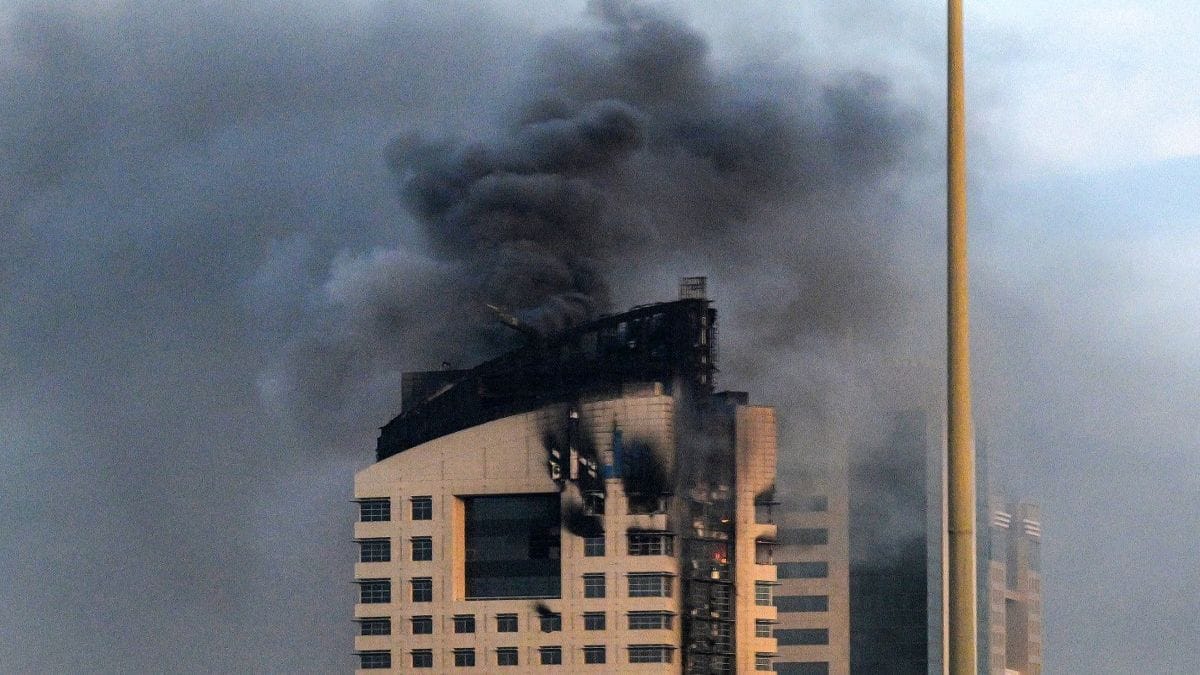
Let’s talk about the "thick smoke" everyone is obsessing over. Smoke is visually terrifying. It makes for great cable news B-roll. In the world of chemical engineering, however, smoke is often just the result of a successful emergency flare or a localized storage tank fire.
Refineries are designed to burn.
They are modular systems built with "fail-safe" zones. A fire in a storage farm—while dramatic—is a world away from a strike on the vacuum distillation unit or the hydrocracker. One requires a few weeks of cleanup; the other requires years of specialized parts. Most reports don't know the difference between a crude tank and a catalytic cracker. They see orange flames and report a catastrophe.
I’ve seen facilities take direct hits and be back at 70% capacity within a week because the vital organs—the high-pressure vessels—were never touched. The "destruction" reported is often cosmetic or peripheral.
The Geopolitical Theater of the Absurd
There is a certain brand of "insider" who loves to talk about the "Symmetric Response" and "Kinetic Escalation." They want you to believe that this strike is a move on a grand chessboard.
It’s usually just a desperate grab for relevance.
When a regional power targets a refinery, they aren't trying to win a war. They are trying to influence a price point or a diplomatic seat. By treating these events as existential threats to the Western way of life, we give the aggressor exactly what they want: leverage they haven't earned.
The contrarian truth is that the Middle East’s "oil weapon" is increasingly blunt. The world has moved on. With the rise of the Permian Basin and the massive refining capacity coming online in Dangote (Nigeria) and throughout China, the Bahraini bottleneck is a ghost of the 1970s.
The Cost of Being Right
The downside to my perspective is that it feels cold. It ignores the very real human risk to the workers at the Bapco site. It ignores the environmental impact of a massive hydrocarbon fire. I admit those are tragedies.
But from a business and strategic standpoint, being "empathetic" to the market's fear is a losing strategy. If you sold your positions or pivoted your supply chain because of a headline about smoke over Bahrain, you got played.
Why You’re Asking the Wrong Questions
Most people ask: "Will this cause a recession?"
The real question: "Who is currently profiting from the fact that you think this will cause a recession?"
The answer is usually the people selling you the insurance, the people holding the long futures, and the people who need a distraction from their own failing domestic policies.
The Immediate Action Plan
Stop looking at the smoke. Look at the tanker tracking data.
If the ships are still moving through the Persian Gulf, the "strike" is a non-event. If the insurance premiums for Suezmax tankers haven't tripled in the last six hours, the big money knows this is a temporary flare-up.
- Ignore the "Watch" videos. They are designed for engagement, not information.
- Verify the unit affected. If it isn't the primary processing core, the refinery will be back online before the news cycle ends.
- Check the spread. Look at the Brent-WTI spread. If it isn't widening significantly, the market doesn't believe the "regional instability" story.
The "thick smoke" over Bapco is a screen. It isn't hiding a global collapse; it’s hiding the fact that the world’s energy infrastructure is far more bored with these attacks than the media wants you to believe.
The fire will go out. The price will stabilize. The pundits will move on to the next "unprecedented" disaster.
Stop being the person who falls for the smoke.