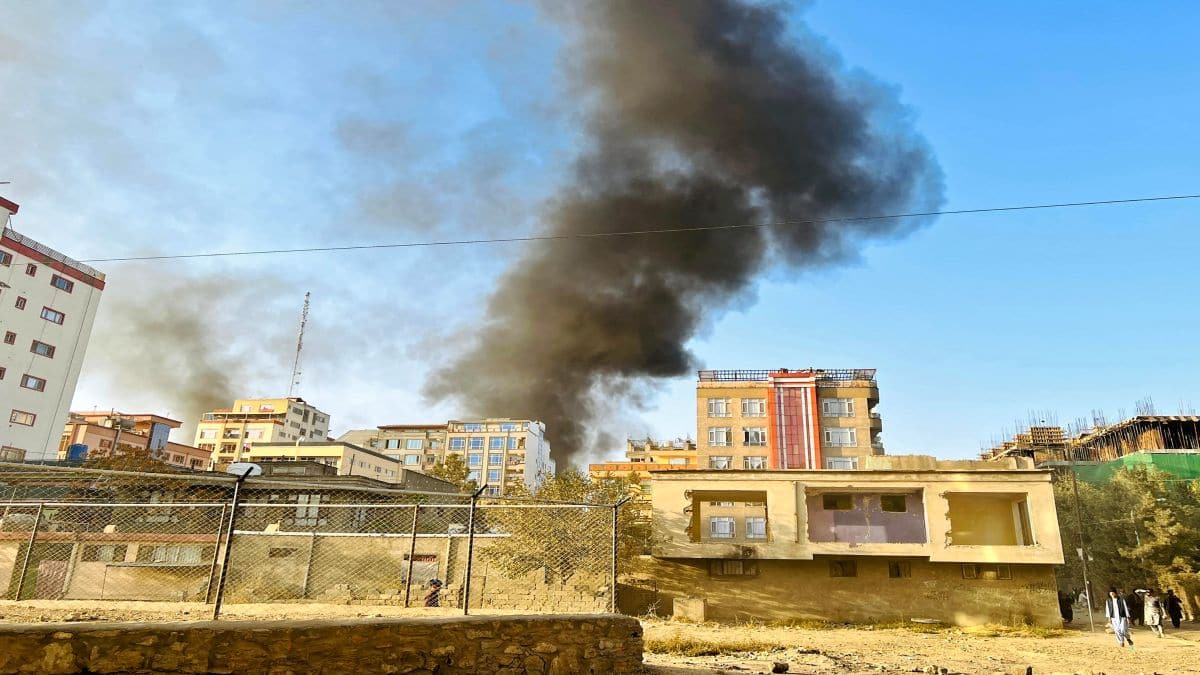
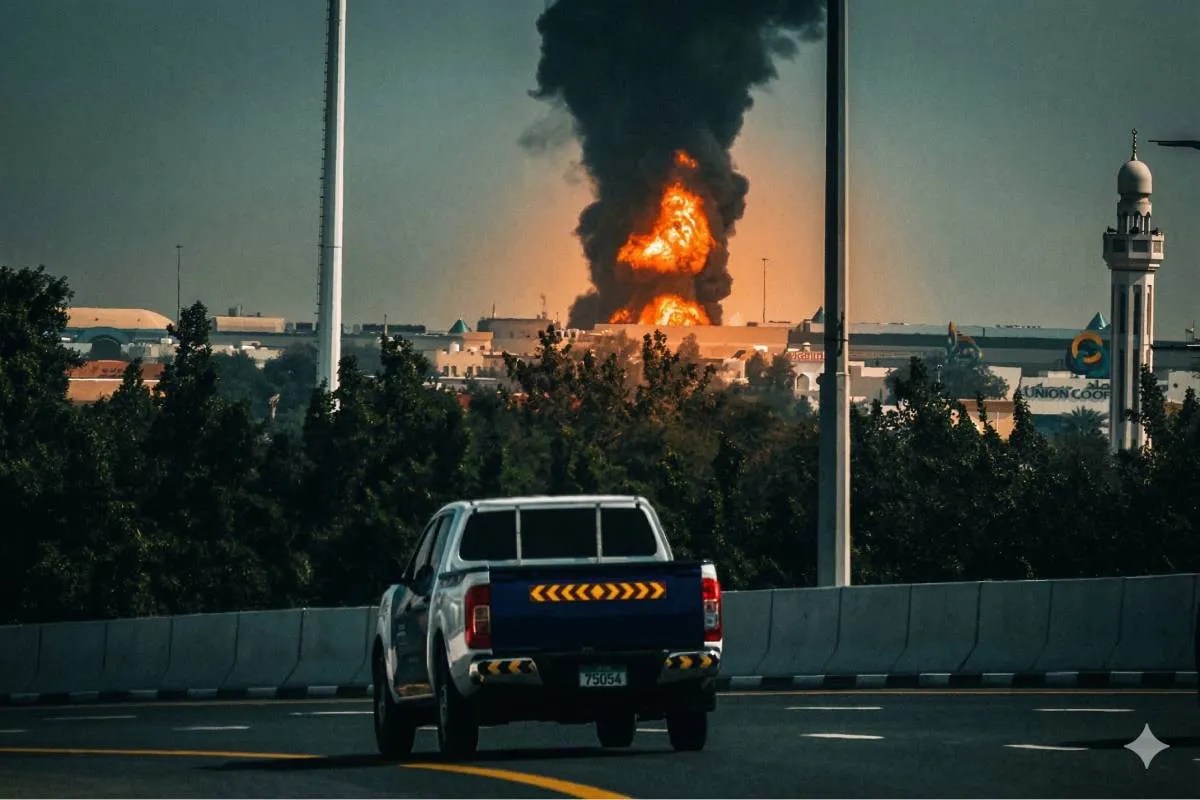
The joint international call to avert an Israeli ground offensive in Lebanon is not merely a diplomatic gesture; it is a recognition of a specific mechanical threshold in modern asymmetric warfare where theater-level containment fails. When state actors and non-state paramilitaries reach a saturation point of cross-border kinetic exchanges, the transition from "managed escalation" to "total theater engagement" becomes a function of logistical momentum rather than purely political will. Averting this transition requires understanding the three structural pillars currently holding the border at a fragile equilibrium: the depth of the buffer zone, the depletion rate of interceptor stockpiles, and the psychological signaling of "limited" objectives.
The Geometry of Deterrence and the 30 Kilometer Constraint
The strategic logic behind a ground incursion rests on the physical range of short-range rockets (SRRs) and anti-tank guided missiles (ATGMs). Diplomacy fails when the physical safety of a civilian population becomes mathematically impossible under current defensive posture. If a non-state actor possesses a high density of mobile launch platforms within a 10-kilometer to 30-kilometer radius of the border, the defender faces a "decision bottleneck."
- The Interception Cost Curve: Using high-cost kinetic interceptors (like the Tamir missiles in the Iron Dome system) against low-cost, unguided artillery rockets creates an economic deficit. Over a sustained period, the defender's inventory of interceptors depletes faster than the aggressor’s production of "dumb" munitions.
- The ATGM Visibility Factor: Modern ATGMs, specifically those with "fire-and-forget" or advanced beam-riding capabilities, require direct or near-direct line-of-sight. A ground offensive's primary military objective is the "topographical sterilization" of the ridges overlooking civilian hubs.
- The Displacement Deadlock: When 60,000 to 100,000 civilians are displaced, the political pressure to "solve" the geography through physical occupation overrides the international community's preference for "status quo" stability.
International joint statements aim to address the Displacement Deadlock, but they often ignore the Interception Cost Curve. Without a technological or diplomatic mechanism to reset the "cost per launch," the defender is structurally incentivized to move the front line forward to create a physical buffer that outranges the opponent's cheapest weapons.
The Asymmetric Resource Attrition Model
Analyzing the conflict through the lens of resource attrition reveals why "appeals for restraint" often fall on deaf ears. Both parties are operating within a closed-loop feedback system where every strike provides data for the next.
Aggressor Logic (Hezbollah/Paramilitary Groups):
The goal is not territorial conquest but the maintenance of a "War of Attrition" (WoA). By forcing the state actor to maintain a high-alert posture and evacuate entire districts, the paramilitary group achieves a strategic victory without a single troop crossing the border. Their success metric is the "disruption-to-dollar ratio."
Defender Logic (Israel):
The state actor operates under a "Zero-Failure Requirement." While a paramilitary group can miss 90% of its targets and still claim victory through psychological terror, the state must intercept 100% of threats to maintain the social contract. This asymmetry creates a "Strategic Fatigue" that eventually makes a high-risk ground operation seem more "stable" than an indefinite defensive posture.
The Intelligence-Strike Loop and the Failure of Indirect Fire
Current military doctrine in the region has shifted toward a reliance on the Intelligence-Strike Loop: the ability to identify a target via signals intelligence (SIGINT) or imagery intelligence (IMINT) and neutralize it with precision air-to-ground munitions within seconds. However, this loop has reached a point of diminishing returns in Lebanon for several reasons.
- Subterranean Hardening: The proliferation of "Nature Reserves"—heavily fortified underground tunnel networks—makes aerial bombardment insufficient for neutralizing launch capacity.
- Urban Integration: Launchers are often embedded in civilian infrastructure, creating a "Legal Friction" that slows the defender's response time and increases international political costs.
- Mobile Launchers: The transition from fixed launch sites to highly mobile, truck-mounted, or concealed "pop-up" launchers means that by the time an aircraft arrives at the coordinates, the platform has disappeared.
The joint statement from world leaders essentially asks the defender to accept the limitations of the Intelligence-Strike Loop while refusing the only other military alternative: boots on the ground to physically clear the tunnels and launch sites. This creates a "Strategic Vacuum" where no viable path to civilian return exists outside of a fundamental change in the adversary's behavior—a variable the defender does not control.
Quantification of the Diplomatic "Off-Ramp"
For a joint statement to be more than a rhetorical exercise, it must provide a "Verified Withdrawal Mechanism." This involves the transition of the border zone from a kinetic theater to a demilitarized zone (DMZ) enforced by a credible third party. The historical failure of UNIFIL (United Nations Interim Force in Lebanon) to prevent the buildup of infrastructure in Southern Lebanon serves as a data point for why the state actor is skeptical of "diplomatic solutions."
A credible off-ramp requires three quantifiable metrics:
- Metric A: Inventory Verification: Independent monitoring of heavy weaponry removal from the zone south of the Litani River.
- Metric B: Frequency of Overflights: A reduction in defensive sorties corresponding to a reduction in detected electronic signatures from launch controllers.
- Metric C: Return Rate: A staged timeline for civilian return that is tied to specific, observable de-escalation milestones.
The Paradox of Limited Ground Incursions
If a ground offensive begins, it is rarely "limited" in practice, regardless of the initial stated intent. Military history suggests that "buffer zones" have a tendency to expand due to the "Referred Threat" phenomenon. Once troops are 5 kilometers inside a territory, the enemy moves its long-range assets 10 kilometers further back, necessitating a deeper push to protect the newly established forward positions.
This creates a "Logistical Creep" where the army becomes an occupational force, which in turn fuels local insurgency and increases the domestic political cost for the invading state. The joint statement’s insistence on "averting" the offensive is a direct attempt to prevent this specific spiral, which historically leads to multi-decade entanglements.
Strategic Risk Assessment: The Three Likely Paths
Path 1: The Status Quo of High-Intensity Attrition
This involves continued air strikes and rocket volleys. The risk is a "Black Swan" event—a single strike hitting a high-casualty target (like a school or hospital)—which forces an immediate, emotional, and unplanned escalation.
Path 2: The "Surgical" Buffer Incursion
A localized ground operation aimed at specific ridge-lines. The risk is the "Sunk Cost" trap, where initial losses compel the leadership to expand the mission to "justify" the casualties, leading to a full-scale regional war.
Path 3: The Third-Party Enforcement Pivot
A diplomatic surge that replaces paramilitary presence with a revitalized, empowered international or Lebanese State military presence. This is the goal of the "joint statement," but it suffers from a "Credibility Deficit." There is currently no evidence that the Lebanese State has the internal political capital to disarm the paramilitary factions in the south.
Theoretical Foundation: The Security Dilemma
The situation is a classic "Security Dilemma" as defined in international relations theory: actions taken by a state to increase its own security (like striking launch sites or moving troops to the border) are perceived by its neighbor as a preparation for an offensive, prompting the neighbor to increase its own "defensive" posture. This creates a self-fulfilling prophecy of escalation where neither side wants a full-scale war, yet both are forced to prepare for one as if it were inevitable.
The "joint statement" acts as an external "Signal Jammer," attempting to break this feedback loop by providing a neutral platform for both sides to step back without appearing to have "blinked" first. However, signal jamming only works if the underlying physical friction—the rockets and the displaced civilians—is resolved.
The tactical reality dictates that unless the international community provides a kinetic guarantee—not just a diplomatic one—that the northern border of Israel will remain free of ATGM and SRR threats, the gravitational pull toward a ground offensive remains the most likely outcome. The strategic move for regional actors is not to wait for a peace treaty, but to negotiate a "Non-Aggression Technical Agreement" that focuses on the removal of specific high-threat weapon systems in exchange for the cessation of targeted assassinations and overflights. This "Equipment-for-Quiet" trade is the only granular path forward that bypasses the intractable ideological conflicts at the heart of the region.
The immediate requirement is the establishment of a "Technical Verification Team" that operates with real-time sensor data, providing both sides with an objective "Escalation Score" to prevent miscalculations based on false intelligence or accidental launches. Without this digital layer of trust, the physical friction of the border will inevitably lead to a breach of the kinetic ceiling.
Would you like me to map out the specific weapon-system-to-range ratios that define the current 30-kilometer buffer zone?