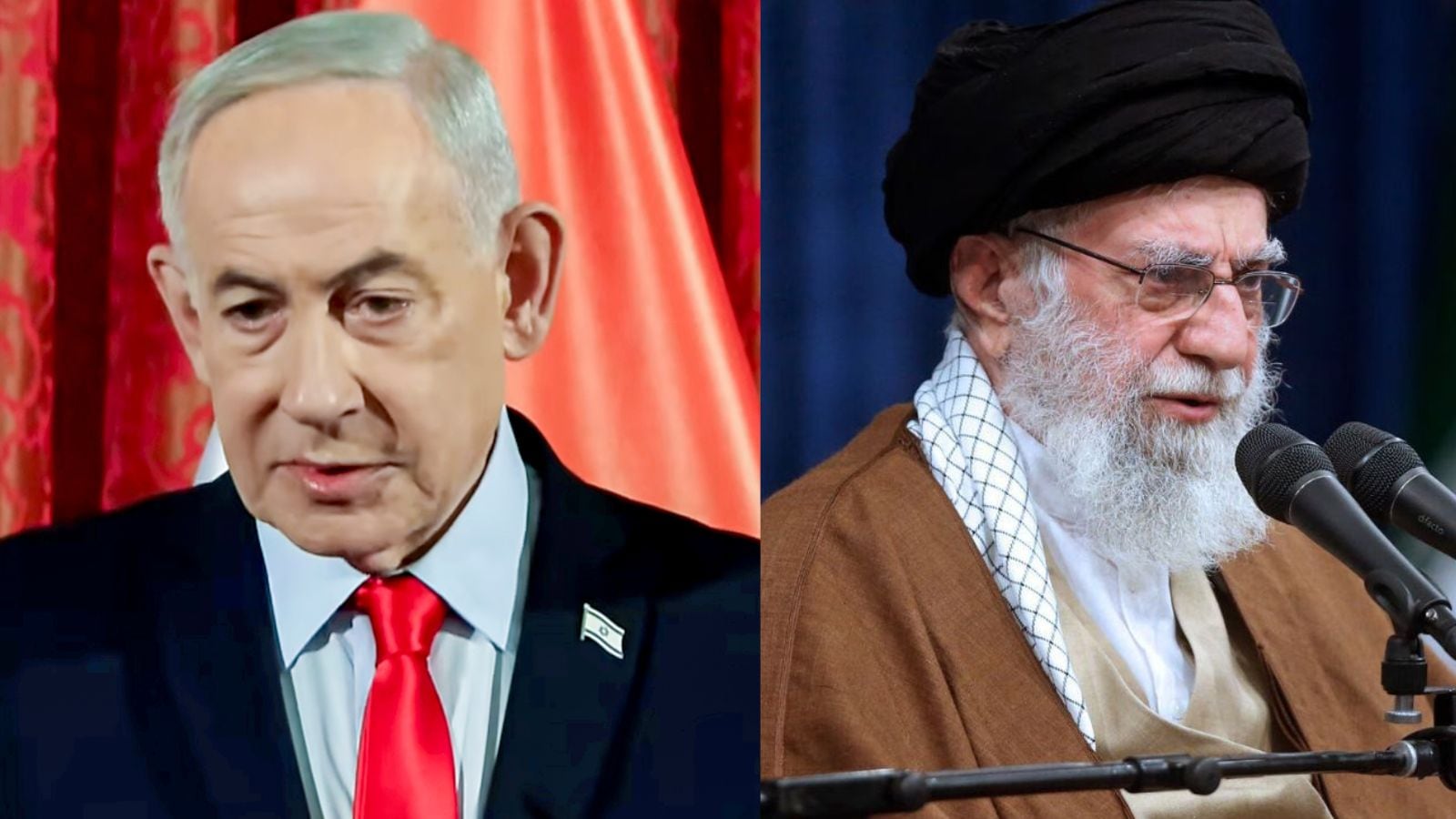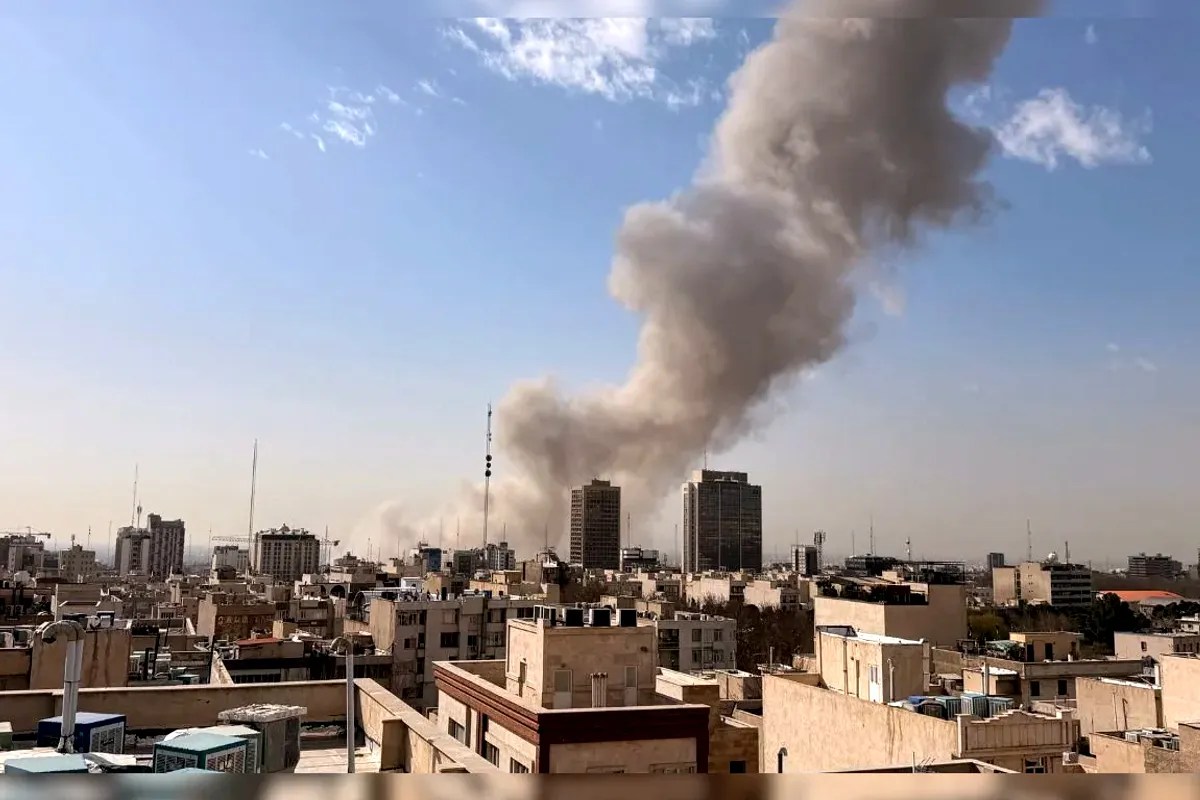
The transition from shadow warfare to direct kinetic engagement in the Middle East has rendered traditional containment strategies obsolete. When assessing reports of bunker-busting munitions targeting high-value Iranian leadership sites or the destruction of regional logistics hubs, the analysis must move beyond surface-level casualties to evaluate the structural integrity of state command and control. The current friction point is defined by a specific military-industrial paradox: as offensive precision increases, the cost of defensive posture becomes mathematically unsustainable for localized powers.
The Mechanics of Penetration: Bunker-Busting Dynamics
The reported use of specialized thermobaric or deep-penetration munitions against hardened targets in Tehran represents more than a tactical strike; it is an assault on the concept of "Strategic Depth." In military engineering, the efficacy of a bunker-buster is governed by the relationship between kinetic energy and material density.
- The Impact Velocity Vector: To penetrate reinforced concrete and granite, a projectile must maintain structural integrity while traveling at high subsonic speeds.
- Delayed Fuze Synchronization: The weapon is designed to ignore the initial surface impact, detonating only after a preset depth or void-sensing trigger is activated.
- Overpressure Generation: In confined subterranean spaces, the resulting blast wave is amplified by the internal geometry, creating a vacuum effect that collapses structural supports and destroys biological life through atmospheric displacement rather than simple heat.
When these munitions are deployed against high-profile residential or administrative districts, the collateral damage is not an accidental byproduct but a function of the blast radius required to ensure the primary target's destruction. The reported deaths of civilians, including the specific figures of casualties in urban centers, reflect the inherent risk of situating command infrastructure within densely populated civilian zones—a strategy known as human shielding that fails against modern precision-weighted ordnance.
Regional Base Vulnerability: The US Forward-Operating Cost
The targeting of US assets in Qatar and Bahrain by proxy forces or direct Iranian strikes shifts the conflict from a bilateral exchange to a regional logistics disruption. US Central Command (CENTCOM) operates through a network of Tier 1 and Tier 2 bases that serve as the backbone for aerial refueling, intelligence, and drone sorties.
The Asymmetric Attack Surface
- Saturation Tactics: Utilizing low-cost loitering munitions to overwhelm sophisticated air defense systems like the Patriot or THAAD.
- Point-Defense Limitations: While high-altitude interceptors are effective against ballistic missiles, they struggle with "low and slow" cruise missiles or swarming drones that hug the terrain.
- Economic Disparity: A $2 million interceptor missile used to down a $20,000 drone creates an unsustainable burn rate for the defender.
The destruction of infrastructure at these bases forces a tactical retreat into "Over-the-Horizon" operations. This increases the transit time for aircraft, reduces the time-on-station for surveillance assets, and ultimately degrades the rapid-response capability required to protect regional partners.
The Iranian Response Matrix: Proxies vs. Direct Force
The Iranian defensive doctrine is built upon "Mosaic Defense," a decentralized structure designed to survive the decapitation of central leadership. If reports of strikes on Supreme Leader Khamenei’s residence are accurate, the Iranian state faces a critical choice between two escalatory paths.
Path A: The Proxy Surge
This involves activating the "Axis of Resistance" across Lebanon, Yemen, and Iraq simultaneously. The objective is to create a multi-front drainage of Israeli and US resources. This path preserves the Iranian mainland but risks the total attrition of its regional influence if those proxies are systematically dismantled.
Path B: The Ballistic Threshold
If the regime perceives an existential threat to its leadership, it may bypass proxies and engage in direct ballistic missile salvos. Unlike previous symbolic exchanges, this would likely involve targeting critical infrastructure—desalination plants, power grids, and high-tech corridors—to force a negotiated ceasefire through economic paralysis.
Human Capital and Internal Stability
The death of 53 individuals in a high-security context is a metric of internal failure for the IRGC (Islamic Revolutionary Guard Corps). In an autocratic system, the inability to protect the "inner sanctum" creates a psychological vacuum.
- Intelligence Leakage: Successful strikes on hardened targets require precise, real-time human intelligence (HUMINT). The accuracy of these strikes suggests a high level of penetration within the Iranian security apparatus.
- Social Volatility: Casualties within Iran often act as a double-edged sword. While the state uses them to stoke nationalist fervor, repetitive failures to protect the populace can trigger internal dissent, especially among demographics already alienated by economic sanctions.
The Logistics of a Widening Theater
The geographical spread from Tehran to the Persian Gulf indicates a theater of operations that exceeds 1,500 kilometers. This scale requires a level of satellite coordination and mid-air refueling that only a few global powers possess. The involvement of assets in Qatar and Bahrain suggests that the conflict has evolved into a maritime and aerial blockade scenario.
Variable Constraints
- Fuel Supply Chains: Strikes on base infrastructure prioritize fuel farms. Without JP-8 fuel, even the most advanced stealth fighters are grounded.
- Electronic Warfare (EW): The success of these strikes depends on "cloaking" the ingress of munitions through GPS jamming and signal spoofing, making the electromagnetic spectrum the primary battleground before a single bomb is dropped.
Calculated Misinformation and Information Warfare
In modern conflict, the kinetic event is often secondary to the narrative event. The reporting of specific casualty numbers or the destruction of major bases must be weighed against the strategic intent of the source.
- Deterrence Signaling: Reports of "bunker busters" may be leaked to signal to leadership that no depth is safe, encouraging a retreat from aggressive posturing.
- Provocation Strategy: Exaggerated reports of civilian deaths or base destruction can be used to justify a disproportionate retaliation that would otherwise be condemned by the international community.
The tactical reality is that the Middle East has entered a "Post-Proportionality" phase. Military objectives are no longer about incremental gains but about the total degradation of the opponent's ability to wage war.
The immediate strategic requirement for regional players is the hardening of "soft" logistics targets and the diversification of command nodes. Reliance on centralized hubs in Qatar or Tehran is a legacy vulnerability that modern munitions have successfully exploited. Future stability depends on the rapid deployment of mobile, autonomous defense systems and a transition away from static, high-value targets that serve as magnets for precision-guided attrition. Any state failing to decentralize its command structure within this window will face total operational paralysis in the next kinetic cycle.