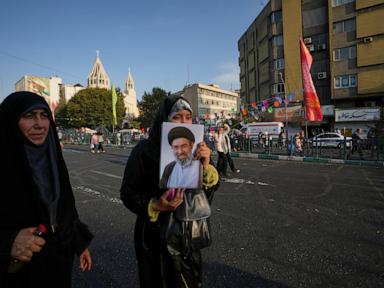
The radio in the kitchen of the old stone house in Tehran always hissed before it spoke. It was an old device, its plastic casing yellowed by decades of dry desert heat and the stubborn endurance of a family that had learned to read between the lines of state broadcasts. On a Tuesday morning that smelled faintly of burning scrub brush and diesel exhaust, the voice from the speaker rose above the static. It was the familiar, unyielding tone of the supreme leader, Ali Khamenei, addressing a gathering that stretched across imagination into the halls of power from Beirut to Sanaa.
He was not talking about trade deficits or infrastructure. He was talking about alignment. He was summoning a shared front, a gathering of banners under a single crescent of defiance against two immovable anchors of the modern map: the United States and Israel.
Listen closely to the phrasing. The words are not new. They are the same bricks used to build ideological fortresses for forty-seven years. Yet the air in the room changed. Outside, traffic crawled down Vali-Asr Street, a river of tired sedans and coughing motorcycles beneath the ancient plane trees. Inside, the cup of tea grew cold.
We forget, sitting behind glass screens in quiet rooms thousands of miles away, how rhetoric feels when it has weight. When it is heavy enough to crush the possibility of an ordinary Tuesday.
To understand what happened in that hall, we have to look past the podium and into the streets where the speech lands. Consider a hypothetical merchant in the grand bazaar of Isfahan. Let us call him Reza. Reza does not wake up thinking about regional hegemony or the fine points of deterrence theory. Reza wakes up wondering if the currency exchange rate will allow him to buy imported steel plates for his workshop before noon. When the supreme leader calls for Islamic unity against external foes, Reza hears a specific kind of music. It is a marching tune. And marching tunes mean the borders stay locked, the sanctions stay thick, and the cost of living climbs another invisible rung on a ladder with no top.
The call for unity is an old tactic wrapped in new urgency. Whenever the pressure mounts from the outside—through economic strangulation, naval deployments in the Persian Gulf, or covert shadows stretching across nuclear laboratories—the center tightens its grip. It pulls the concentric circles of influence inward. Tehran, Baghdad, Damascus, Beirut. A chain of allied militias and political factions, forged in fire and financed by oil revenues, hears the call. They are told that their local struggles are part of a singular, cosmic ledger.
But history is rarely that neat.
When you tell a mother in southern Lebanon whose roof has been rattled by sonic booms that her suffering is part of a grand regional alignment, she does not feel empowered. She feels trapped. The supreme leader's speech was designed for her, yet it bypassed her humanity entirely. It turned her into a statistic of resistance.
This is the central tragedy of Middle Eastern geopolitics today. The architecture of conflict is built on abstractions. Washington sees a rogue actor threatening global shipping lanes and regional stability. Jerusalem sees an existential countdown clock ticking in underground enrichment facilities. Tehran sees an unrelenting empire bent on regime change, requiring a permanent state of mobilization to survive.
Nobody is listening to the tea cooling on Reza’s desk.
The mechanics of this confrontation are grindingly predictable, yet terrifyingly volatile. When supreme leadership demands unity against a common enemy, it relies on an ancient psychological trick. It externalizes every domestic failure. Inflation? Blame the American sanctions. Civil unrest? Blame Zionist infiltration. Stifled artistic expression, silenced journalists, decaying water infrastructure? All secondary to the great existential struggle. The enemy at the gate becomes the excuse for the iron fist at home.
Yet something has shifted in the dust of the region. The younger generation across Iran, Iraq, and the Levant are tired of being extras in a war their grandfathers started. They scroll through the same TikTok feeds as teenagers in Ohio or London. They want Wi-Fi that works, jobs that pay a living wage, and governments that care more about sanitation than salvation. When state television broadcasts hours of fiery speeches demanding pan-Islamic solidarity against Western imperialism, millions of citizens simply mute the television.
That silence is louder than any chant.
The speech was not just an internal pep talk. It was a signal flare fired across the bow of an increasingly tense international community. With regional flashpoints smoldering from the Red Sea to the mountains of Lebanon, the axis led by Iran is trying to consolidate its narrative before any decisive moves are made. They are drawing the lines in blood and ink, daring anyone to cross them.
And the United States and Israel are watching the same broadcast. In Washington, policy wonks parse every syllable for signs of retreat or escalation. In Tel Aviv, defense analysts map out trajectory vectors and intelligence reports, calculating the threshold where rhetoric hardens into kinetic action.
The distance between a speech in a Tehran auditorium and an explosion in a dusty border town is shorter than we care to admit. It travels along invisible wires of ideology, pride, and fear. Leaders speak of destiny while ordinary people duck for cover.
We look at the map of the Middle East and see lines drawn by European diplomats a century ago, now rewritten in blood and drone strikes. We talk about proxies, hegemony, deterrence, and uranium enrichment as if they were pieces on a chessboard. But chess pieces do not bleed. Chess pieces do not wake up wondering if their children will have a future worth staying for.
The radio in Tehran clicks off. The static returns. Reza locks his shop door, pulls down the metal shutter, and walks home through the gathering dusk, past billboards bearing the stern, unblinking eyes of men who measure time in centuries while the rest of the world simply tries to survive the night.


