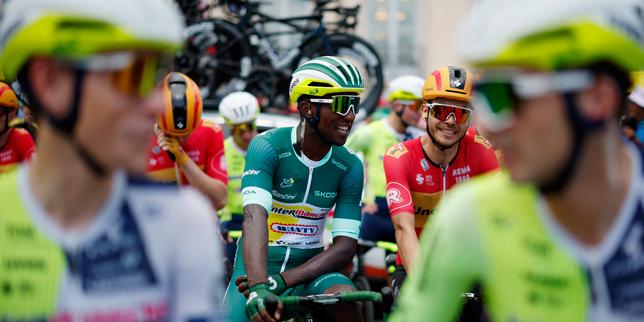
The mainstream cycling media loves a predictable narrative. Every July, when the Tour de France peloton rolls out, the same hand-wringing articles appear. They ask why a continent of over 1.4 billion people yields only a handful of riders in the Grand Tours. The standard answers are lazy, repetitive, and deeply flawed. Commentators point to a lack of expensive carbon bikes, poor road infrastructure, or a lack of institutional funding.
This diagnosis is completely wrong.
The scarcity of African cyclists at the highest level of professional cycling is not a resource problem. It is a structural gatekeeping problem perpetuated by a sport that refuses to modernize its talent identification pipelines. Professional cycling remains stubbornly Eurocentric, relying on an antiquated amateur racing circuit that actively excludes talent from outside its traditional borders.
The Myth of the Gear Deficit
The most common misconception is that African athletes cannot compete because they lack access to high-end equipment. This argument crumbles under basic scrutiny.
Look at distance running. The global elite in marathons and track events originates predominantly from East Africa, specifically Kenya and Ethiopia. Elite running requires minimal equipment, yes, but the economic ecosystem surrounding these athletes is massive. Global brands invest millions in training camps, sports science, and scouting networks in the Great Rift Valley.
The cycling industry has the money. The top WorldTour teams operate on annual budgets exceeding 40 million euros. A fraction of that capital could fund elite development academies across promising regions like Eritrea, Rwanda, or South Africa. The barrier is not a lack of bikes; it is the refusal of European teams to invest in scouting networks outside their comfort zone. They prefer to recruit from the same Belgian, French, and Italian amateur races they have used for fifty years.
The Visa Wall and the Amateur Ladder
To reach the WorldTour, a young cyclist typically must spend years racing in the European amateur under-23 circuit. This is where the system completely breaks down for non-European athletes.
An aspiring rider from Asmara or Kigali faces systemic bureaucratic barriers that a young rider from Brittany or Flanders never considers. Securing a long-term sports visa to live and race in France, Spain, or Italy is an administrative nightmare.
- Schengen Visa Denials: Promising young African riders regularly miss crucial European racing blocks because their visas are delayed or outright denied.
- Isolation: The few who do get visas are often dropped into small European villages with no cultural support system, facing language barriers and intense isolation.
- The Crash Course: European amateur racing is a chaotic, tight-pack, technical style of riding on narrow, winding roads. Expecting a rider who developed their massive aerobic engine on wide, high-altitude African roads to instantly master the dangerous art of the European kermesse circuit is unrealistic.
When these riders fail to adapt immediately, European team managers write them off as lacking "bike handling skills." It is a self-fulfilling prophecy designed to justify hiring local European talent.
High Altitude Is Being Wasted
The sports science community knows that high-altitude environments produce superior aerobic capacity. The world's best endurance athletes train at altitude to boost their red blood cell count and maximum oxygen uptake ($VO_2 max$).
Eritrea’s capital, Asmara, sits at over 2,300 meters above sea level. It has a deeply ingrained cycling culture dating back to the early 20th century. The riders coming out of this region possess natural physiological advantages that European riders spend millions trying to replicate in artificial altitude hotels or expensive training camps in Tenerife.
Yet, the professional peloton treats African altitude as a novelty rather than a goldmine. European teams continue to base their talent search on flat, sea-level races in Northern Europe. They prioritize tactical experience in junior local criteriums over raw, world-class physiological potential. It is the equivalent of an NBA scout ignoring a seven-foot-tall athlete because they did not play organized middle school basketball.
Dismantling the Colonial Racing Model
The current international racing calendar forces the rest of the world to conform to a European schedule. The Union Cycliste Internationale (UCI) has expanded its global calendar, but the races that actually grant entry-level points into the pro peloton remain heavily weighted toward Europe.
If professional cycling wants true global representation, the path to the top cannot solely run through a rainy amateur race in West Flanders.
The sport needs a decentralized qualification system. Continental tours, such as the Tour du Rwanda or the Tour of Qinghai Lake, must offer direct, guaranteed pathways to neo-pro contracts with WorldTour teams. Until a top finish in a major African race carries the same scouting weight as a top finish in a French amateur classic, the demographic makeup of the Tour de France will remain virtually unchanged.
Stop blaming a lack of paved roads or expensive sports drinks. The talent exists, the physiological advantages are undeniable, and the local passion is massive. The problem is a conservative, risk-averse European cycling establishment that prefers comfort and tradition over true global competition.