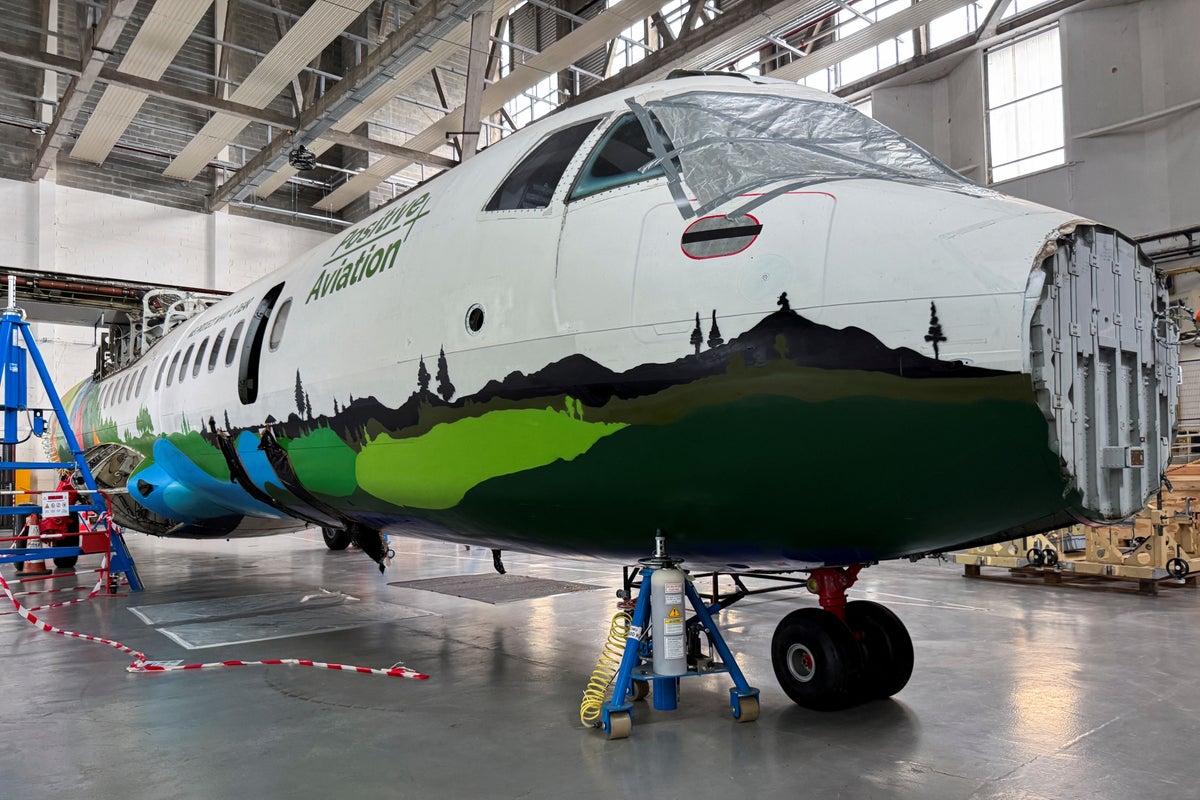
Climate change has transformed European summers into an endurance test of smoke, ash, and lost ecosystems. Yet, the continent's primary aerial firefighting response remains tethered to an aging, inadequate fleet of specialized aircraft that cost tens of millions of dollars each to buy and maintain. Enter a disruptive concept currently gaining traction across the aviation sector: converting disused, retired commercial passenger jets into high-volume aerial water bombers.
This approach proposes taking mothballed airframes, stripping their interiors, and outfitting them with internal liquid storage tanks and high-pressure gravity-drop or pressurized release systems. Proponents argue this strategy bypasses the multi-year manufacturing backlogs plaguing traditional aerospace companies, offering a rapid injection of capacity into a severely depleted market. Discover more on a related topic: this related article.
The economics sound attractive on paper. Commercial airframes like retired Boeing 737s or Airbus A320s sit in massive boneyards across the globe, depreciated to near scrap value. Acquiring one costs a fraction of a purpose-built turboprop or jet tanker built by companies like Canadair or Lockheed. But aviation engineering rarely permits easy shortcuts. Converting a passenger cabin designed for pressurized human cargo into a stress-bearing liquid container subjected to violent G-forces during low-altitude firefighting drops requires structural redesigns of immense complexity.
The Anatomy of an Aerial Tanker Crisis
Walk onto the tarmac of any regional European air tanker base during July, and you will smell burnt jet fuel and quiet desperation. The continent faces an acute structural deficit in aerial firefighting assets. For decades, southern European nations relied on a patchwork of bilateral agreements, leasing aging Canadair CL-415 amphibious aircraft, or drafting military transport planes equipped with modular roll-on, roll-off firefighting systems like the MAFFS apparatus. Further journalism by MIT Technology Review delves into related views on this issue.
That system is breaking down. The global supply chain for specialized firefighting aircraft is functionally bottlenecked. De Havilland Canada restarted production of its legendary water scooper line, but order books are jammed for years. Meanwhile, existing fleets across Greece, Spain, Italy, and Portugal are overworked. Spare parts take months to arrive. Crews fly airframes well past their original design fatigue limits because the alternative is leaving forests unprotected.
This scarcity creates fertile ground for unconventional ideas. If traditional manufacturers cannot supply enough new planes, why not build them from the bones of discarded commercial airliners?
The core premise relies on volume. A standard narrow-body jetliner can hold significantly more water or retardant than a traditional twin-turboprop scooper. Where a standard amphibious plane might drop six metric tons of water per pass, a converted commercial jet could theoretically haul twenty tons or more in a single payload.
Engineering Realities Behind the Conversion Process
Skeptics in the aerospace sector point to the brutal physics of low-level firefighting flight. Commercial airliners are designed for long-duration, high-altitude cruise efficiency. They spend most of their operational lives thousands of feet in the air, maintaining a steady, predictable aerodynamic profile.
Aerial firefighting demands the exact opposite. Pilots fly heavy aircraft through turbulent, super-heated thermal columns, skimming mountain ridges, executing steep banking turns at low speeds, and enduring violent atmospheric buffeting.
When a multi-ton mass of water shifts inside a fuselage during a drop, it creates a massive center-of-gravity displacement. Purpose-built tankers feature heavily reinforced bulkheads and specialized baffles designed to counteract this fluid slosh. Retrofitting a commercial passenger cabin to manage these dynamic loads requires extensive structural engineering. Engineers must cut large belly doors for the drop chutes, reinforce the floor beams, and install computer-controlled internal tanking systems that release the payload uniformly to prevent the aircraft from pitching uncontrollably upward the moment the weight disappears.
There is also the matter of ground infrastructure. Massive jet-powered water bombers cannot land on remote, short, unpaved agricultural strips or scoop water from small alpine lakes the way amphibious aircraft can. They require long, paved runways for reloading retardant and taking off again. This limits their operational deployment to major regional airports, potentially increasing transit times to remote fires in the interior of forests or mountainous terrain.
Economic Mirage or Operational Necessity
The financial argument for passenger-to-tanker conversions usually starts with the low acquisition cost of idle airframes. However, a retired jetliner is cheap for a reason. Its airframe cycles are high, its maintenance logs reveal decades of structural fatigue, and its engines may not meet modern noise or efficiency standards.
Converting the interior, securing civil aviation authority certifications, and outfitting the cockpit with specialized low-level navigation and drop-guidance avionics can cost tens of millions of dollars per plane. Once those modifications are complete, the resulting aircraft is a specialized, single-use machine. It cannot easily be converted back to passenger or cargo service.
Yet, compared to waiting a decade for a delivery slot from a primary manufacturer, the timeline remains compelling. A conversion shop can theoretically turn a retired airframe into a functional tanker in twelve to eighteen months. For civil protection agencies staring down the barrel of worsening fire seasons, that speed offers a powerful selling point.
Regulatory Quagmires and Certification Hurdles
Getting a modified aircraft into the air requires navigating a labyrinth of regulatory approvals from agencies like the European Union Aviation Safety Agency. EASA does not hand out supplemental type certificates for aerial firefighting conversions lightly.
Testing protocols require rigorous flutter analysis, structural load testing to destruction limits, and thousands of hours of flight testing under simulated emergency conditions. The certification process itself can drag on for years, eating away at the initial financial savings of using a cheap, used airframe.
Furthermore, liability questions loom large over private startups attempting these conversions. If a converted airframe suffers a catastrophic structural failure due to unmodeled fluid dynamics during a drop, the fallout extends far beyond a single lost hull. It triggers regulatory crackdowns that could ground entire fleets overnight.
The Broader Shift in European Disaster Response
The emergence of alternative firefighting aircraft projects signals a deeper psychological shift across Europe. Governments are finally accepting that the climate conditions driving these catastrophic blazes are not temporary anomalies. They are the new baseline.
Relying on ad-hoc assistance from neighboring nations when fires peak simultaneously no longer works. When Greece, Spain, and France are all burning at the same time, nobody has spare planes to lend. Sovereignty in disaster management requires domestic capacity, and lots of it.
Whether converted commercial jets become the backbone of that new fleet or remain an intriguing footnote in aviation history depends entirely on execution. If startups can prove their engineering models through rigorous testing and secure regulatory buy-in, they may carve out a vital niche. They will not replace nimble, water-scooping turboprops that can dip into a bay and return within minutes. Instead, they will serve a different function: heavy-lift, long-range retardant delivery systems capable of building massive containment lines around fast-moving mega-fires before they breach urban perimeters.
The skies over Europe are changing, and the tools used to defend them must adapt at equal speed. The boneyards are full of potential, but potential alone cannot drop a single gallon of water on a roaring crown fire. The transition from passenger liner to aerial warrior is fraught with engineering peril, regulatory walls, and immense financial risk, but as the forests burn, the pressure to find an answer outweighs the caution of the past